We’re not going to ask you to read the entire 24 pages of the Washington Supreme Court’s 5-4 opinion in Gonzales v. Inslee, No. 1000992-5 (Sep. 28, 2023), in which the court seriatim rejects every challenge to the Governor’s Co-19 emergency eviction moratorium for tenants, which allowed tenants who did not pay rent to remain in occupation for the up to 15 months the moratorium was in place.

Instead, we’re going to focus only on the takings challenge under the Washington Constitution. The plaintiffs asserted a physical takings claim, based on their right to exclude nonpaying tenants. Rejecting the argument (as several other courts have done), the Washington court concluded that the moratorium on evictions was merely regulation of the “voluntary relationship” between an owner and tenant.

Hang on, you say, what do you mean “voluntary relationship?” If I am an owner, yes, I voluntarily handed over the keys
Continue Reading PruneYard Revisited: Washington SCT Says No Physical Occupation Taking In State’s Eviction Ban – You Invited Tenants In, So Forcing Owners To House Them For Free Is Merely Regulating That Voluntary Relationship

Why is it, you ask, that the ALI-CLE Eminent Domain & Land Valuation Litigation Conference (scheduled next February 1-3, 2024, in New Orleans) is an event that seems to be growing in popularity and attendance. In recent years, we have standing room only in the Conference halls, and have sold out the hotel block. After all, this is a pretty niche area of law. So what gives?

When we were in Austin earlier this year, we thought it might be nice to try and answer that question. We asked Conference participants why they come, year-after-year (and in Austin, despite massive travel disruptions). Yes, it is the various venues (Nashville, Austin, Scottsdale, Palm Springs, to name a few recent locations), and yes, it is the excellent and useful programming.

But as we suspected it is more than that. As the above video notes

Continue Reading ALI-CLE’s Eminent Domain & Land Valuation Litigation Conference (Feb 1-3, 2024, New Orleans): Why Attend? Here’s Why.

The buried lede in the U.S. Court of Appeals for the D.C. Circuit’s opinion in Valancourt Books, LLC v. Garland, No. 21-5205 (Aug. 29, 2023) is that the government doesn’t have that big of a role in copyrights, at least in the bare minimum of copyright protections.

We’re no copyright experts (that’s an understatement), but we knew the basics here: in order to have a copyright and all the rights that entails, the owner need do nothing more than fix the work in a tangible medium. No formalities are necessary, including publication. As the court put it, “[c]opyright thus accrues automatically upon creation of an original work in a tangible medium, and creators need not take any further action such as publication or registration to gain the protection.” Slip op. at 4.

You may register your copyright to obtain certain other benefits — for example, registration is prima facie

Continue Reading DC Circuit: US Copyright Office’s Requirement To Turn Over Copies Is A Taking

In Masloka v. Public Utility District No. 1, No. 101241-1 (Aug. 3, 2023), the Washington Supreme Court held that a takings claim did not automatically transfer to a new property owner when the property was sold.

Your first reaction might be like ours, “what about Palazzolo!?” Didn’t that case say that transfer of property after an alleged taking does not wipe out the transferee’s right to assert a takings claim:

Were we to accept the State’s rule, the postenactment transfer of title would absolve the State of its obligation to defend any action restricting land use, no matter how extreme or unreasonable. A State would be allowed, in effect, to put an expiration date on the Takings Clause. This ought not to be the rule. Future generations, too, have a right to challenge unreasonable limitations on the use and value of land.

Palazzolo, 533 U.S. at 607.

So

Continue Reading Washington: “The right to inverse condemnation belongs to the property owner at the time of the taking; the right does not pass to a subsequent purchaser unless expressly conveyed.”

Here’s the latest in an issue we’ve been following.

Let’s say the government thinks you have committed a crime (or someone else has). To investigate, it seizes property as evidence or potential evidence. But after things wrap up and it no longer needs the property as evidence, the government doesn’t return it to its owner. Taking or no taking?

Some courts say it could be a taking. Others say no.

In Jenkins v. United States, No. 22-1378 (June 28, 2023), the U.S. Court of Appeals for the Federal Circuit said maybe. Or at least it isn’t not a taking simply because the government was lawfully exercising its police power. And if there may be open questions about the whether the owner sought recovery of the property through available procedures or outright abandoned it, then a court entering summary judgment for the government isn’t right.

Most of the

Continue Reading CAFED: Just Because The Govt Seized Property As Evidence Doesn’t Mean It Can Keep It Without Compensation

Twister
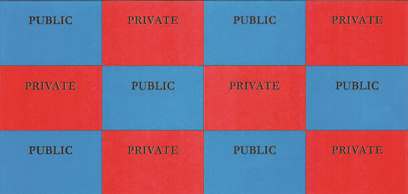
Your mission: go from blue squares to blue squares
without touching any of the red squares

Check out this Order from the U.S. District Court for the District of Wyoming in a case that presents a very interesting — some might say metaphysical — property issue; an issue we were not really aware of until one of our law students brought it up a few months ago.

The diagram above is from the court’s Order, and depicts the “checkerboard” land ownership patterns in the relevant area of Wyoming. Hunters, who wanted to hunt on public BLM-managed land (blue) adjacent to Iron Bar’s private property (red) needed a way to get to the public hunting grounds without trespassing on Iron Bar’s private property. That meant no touching of the red squares.

The hunters’ journey is called “corner crossings” because, well, they are crossing the land at the corners of the boundaries.

Continue Reading Twister: Can You Get There From Here At “Corner Crossing” Properties?

When a court’s opinion (even a trial court’s opinion) starts out with the epigram, “‘Freedom and property rights are inseparable, you cannot have one without the other.’- George Washington,” you know you are in for a ride.

So begins the opinion of the Clay County, Iowa District Court in Navigator Heartland, LLC v. Koenig, No. EQCV034863 (May 3, 2023). The issue was the validity under the Iowa Constitution of Iowa’s precondemnation entry statute, which allows pipeline condemnors to enter property for land surveys:

After the informational meeting or after the filing of a petition if no informational meeting is required, a pipeline company may enter upon private land for the purpose of surveying and examining the land to determine direction or depth of pipelines by giving ten days’ written notice by restricted certified mail to the landowner as defined in section 479B.4 and to any person

Continue Reading Iowa Trial Court: Pipeline Precondemnation Entry Statute Is Facially Unconstitutional

Here’s the latest in a case we’ve been following since its inception, this cert petition seeking Supreme Court review of the U.S. Court of Appeals for the Second Circuit’s affirming the district court’s dismissal of a complaint alleging that New York (state)’s sweeping amendments to its Rent Stabilization (rent control) statute effected categorical and Penn Central takings:

Petitioners’ physical-takings claims would have been allowed to proceed if they were brought in the Eighth Circuit. That is because the Eighth Circuit has correctly held that property owners plead a physical taking under Cedar Point where a law prohibits them from terminating a tenancy at the end of a lease term. See Heights Apartments, LLC v. Walz, 30 F.4th 720, 733 (8th Cir. 2022), reh’g en banc denied, 30 F.4th 720. But the Second Circuit held here—as has the Ninth Circuit—that the physical-takings principles articulated in Cedar Point are

Continue Reading New Cert Petition: Forcing Owners To Rent To Tenants Indefinitely Is A Categorical Taking

Here’s an article for your Monday reading, Bethany R. Berger, Property and the Right to Enter, 80 Wash. & Lee L. Rev. 71 (2023).

Here’s the abstract:

On June 23, 2021, the Supreme Court decided Cedar Point Nursery v. Hassid, holding that laws that authorize entry to land are takings without regard to duration, impact, or the public interest. The decision runs roughshod over precedent, but it does something more. It undermines the important place of rights to enter in preserving the virtues of property itself. This Article examines rights to enter as a matter of theory, tradition, and constitutional law, arguing that the law has always recognized their essential role. Throughout history, moreover, expansions of legal exclusion have often reflected unjust domination antithetical to property norms. The legal advocacy that led to Cedar Point continues this trend, both undermining protections for vulnerable immigrant workers in this case

Continue Reading New L Rev Article: “Property and the Right to Enter” (Bethany Berger)

PXL_20230414_184043420
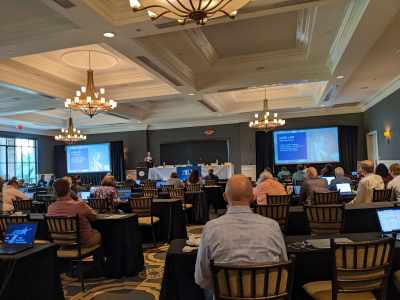
Good crowd.

Here are the cases and other materials we spoke about on Friday at the 22d Annual Texas Eminent Domain Conference, in Austin. A big thank you to the Planning Chairs and to our friends at CLE International for the speaking invite.

The other cases discussed are in your materials!

PXL_20230415_011347576
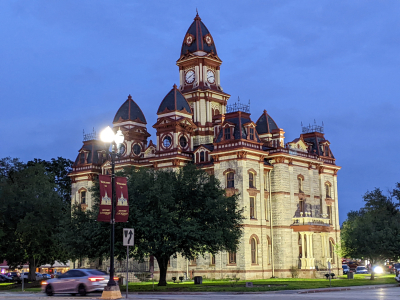
The nearby Caldwell County Courthouse. A classic.

PXL_20230414_190735641
Why did no one tell me that Jabba’s Palace is in Austin?Continue Reading Links And Materials From The 22d Annual Texas Eminent Domain Conference