Yesterday, our friends and colleagues at the Institute for Justice (Diana Simpson and Bob McNamara) welcomed us to their studios to record an episode of the Short Circuit” podcast.

We talked property, takings, Virginia oysters, the cert petition about Colorado eminent domain abuse, and how the Supreme Court of the Republic of the Philippines would handle cases like Berman v. Parker and Hawaii Housing Authority v. Midkiff

Listen in, and subscribe to the podcast (we don’t miss an ep). 

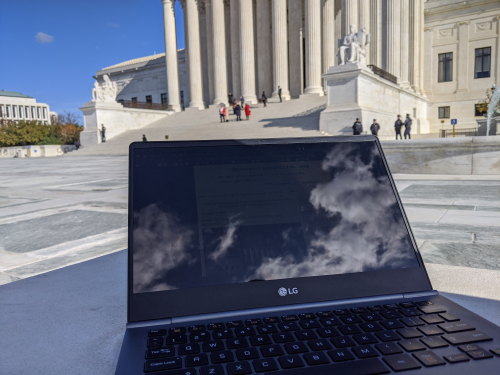
And yes, we really did write up yesterday’s blog post from the Supreme Court steps. Proof:
IMG_20191203_125502 (1)Continue Reading We Join IJ’s “Short Circuit” Podcast To Talk Virginia Oyster Takings, Colorado Wild Eminent Domain Abuse Cert Petition, And Berman International

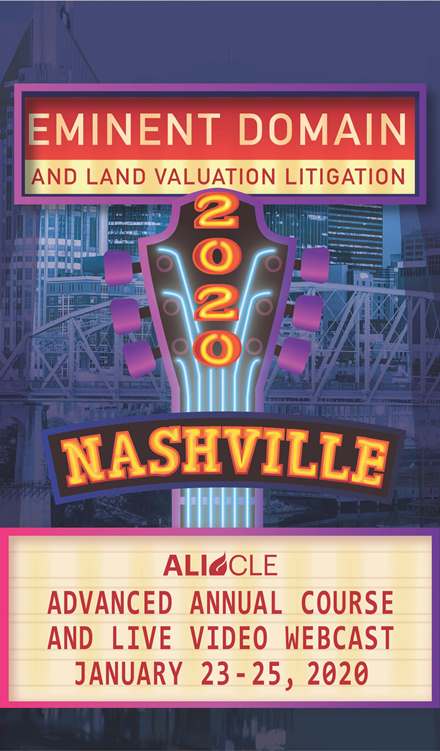
We were not as creative as our colleague Paul Henry (see below), but our Planning Co-Chair Joe Waldo and I wanted to personally invite you to join the “big guns” in our area of law at the 37th Annual ALI-CLE Eminent Domain and Land Valuation Litigation Conference, January 23-25, 2020, in Nashville, Tennessee.

We’ve assembled an excellent faculty, and an agenda that covers the hot topics of the day. Go here to view the complete faculty list and agenda. Water rights, Knick, appraisal, ethics, civil rights, and a whole lot more in three days of the longest (and we think best) conference in our area of law. Also, for those new to the field, Andy Brigham and Jack Sperber are again leading their “Eminent Domain 101” program. A great way to learn the topic, or for experienced lawyers to get a quick refresher on the basics. Your registration

Continue Reading Don’t Miss Out: Join The “Big Guns” And Secure Your Space At ALI-CLE’s Upcoming Eminent Domain & Land Valuation Litigation Conference (Jan 23-25, 2020, Nashville)

Here’s the video of (most, but not all of) the recent session featuring four lawprofs discussing “Originalism and Constitutional Property Rights” at the Federalist Society lawyers’ meeting. 

Interesting debate, all about the text of the Fifth and Fourteenth Amendments, the “original public meaning of the Takings and Due Process clauses, and all that heady stuff. Here were our major takeaways:

  • Professor Somin argued that decisions like Kelo and Berman are not consistent with the original public meaning of the terms of the Takings Clause. 
  • Professor Merrill asserted there’s a good textualist argument that the Public Use Clause is not a limitation on the government’s power to take. If there’s a private benefit taking, that is best handled by other parts of the Constitution (such as due process).
  • Also, from Prof. Merrill: between Kelo and the backlash, the backlash was the “true constitutional moment.”
  • Professor Lazarus thought the regulatory


Continue Reading What Is The Original Public Meaning Of The Fifth (And Fourteenth) Amendments?

Here’s the cert petition in a case we’ve been following since it was decided in the property owner’s favor by the Colorado Court of Appeals.

In Carousel Farms Metro. Dist. v. Woodcrest Homes, Inc., 444 P.3d 802 (Colo. App. 2017), the court invalidated an attempt to exercise eminent domain to take property which the owner had refused to sell to developer Carousel Farms. Carousel Farms needed the parcel because without it, Carousel Farms’ agreement with the local municipality to allow the development (known as — you guessed it — Carousel Farms), could not go forward. In response to the owners’ refusal to sell, Carousel Farms formed an entity which under Colorado law has the power of eminent domain, named — get this — the Carousel Farms Metropolitan District. (Protip: if you are forming an entity with the power of eminent domain in order to take property for private

Continue Reading Hawaii Pretext Case At Center In New IJ Cert Petition: Actual Reason For Taking Trumps Stated Reason

Registration underway, so come join us! Agenda full of hot topics in takings and appraisal law! The best national faculty! Renew friendships, and make new colleagues! And Nashville! 

Download the brochure and make your plans for January. (Don’t wait, we’ve sold out the past three years.)Continue Reading Register Now! ALI-CLE Eminent Domain And Land Valuation Litigation Conference (Nashville, Jan 23-25, 2020)

Philly

You recall the property law trope that publicly-owned land isn’t generally subject to claims of adverse possession, at least when the government owns the land in its public capacity? 

Well, like a lot of things, that rule isn’t ironclad. At least not in Pennsylvania, where the Commonwealth’s Supreme Court (Eastern District) just held, in City of Philadelphia v. Galdo, No. J-46-2019 (Sep. 26, 2019), that Philadelphia was “not immune from a claim of adverse possession” because “the property was not devoted to public use during the twenty-one year prescriptive period.” Slip op. at 1. 

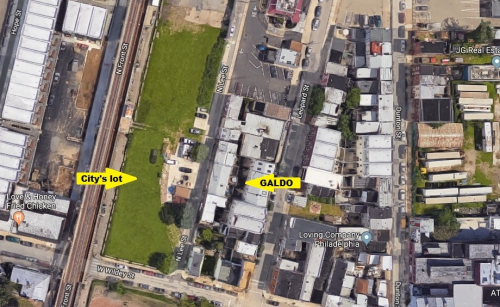
The city owns a vacant lot which it acquired decades ago by eminent domain for “transit purposes.” Galdo later purchased the house across the street. The city never developed the property and the transit line was rerouted. Over time the city viewed the lot as surplus property, and “has not performed any maintenance, grass butting, grading, or landscaping.” Slip op. at 3. Predictably, the parcel attracted the usual nuisances: “prostitutes” and “derelicts,” trash, weeds, and the line. 

Galdo didn’t appreciate this, and over time he did things like clear the weeds, poured a concrete slab, parked vehicles, and built a fire pit and picnic area. But he didn’t pay taxes on the parcel, nor did he obtain permits for any of the work. Sounds a lot better than the blight of city ownership.

Eventually, the city wanted to sell the parcel. That fell through, but apparently the failed transaction brought Galdo’s improvements to the city’s attention, and after Galdo refused to comply with the city’s notices to remove the improvements, the city sued to eject him from the land. Galdo asserted in a counterclaim that title should be quieted in him, because he had adversely possessed the property for more than the 21 years which the Pennsylvania statute requires. “Galdo contended that he had been in continuous and exclusive possession of the Parcel without the City’s consent or authorization since September of 1989. He further asserted that the Parcel had not constituted a public use since 1976.” Slip op. at 5. 

The court tried the case, and ruled against Galdo. The court accepted the city’s claim that it was immune from adverse possession claims (meaning the evidence about Galdo’s uses was irrelevant) on two grounds, both tied to the exercise of eminent domain by which it had acquired the land. First, because the city had acquired the land as an agent of the Commonwealth, for its construction of a highway, it was not subject to adverse possession. Second, the fact the property was acquired for public use by eminent domain meant that it was devoted to public use and therefore also not subject to adverse possession (under Pennsylvania law, property devoted to public use cannot be adversely possessed). Slip op. at 6.

The appeals court disagreed, and concluded that municipalities do not enjoy “total immunity” from adverse possession claims. The court held that although the property may have been originally acquired for public use, that was a different question of whether it had used the property for the public during the prescriptive period. That, predictably, was not the end of it.

The Pennsylvania Supreme Court affirmed, concluding that the city was not immune from Galdo’s claim for adverse possession. The point of adverse possession is to see that land doesn’t lie fallow, and to incentivize owners to make use of it, or risk losing it to those who do. As Howard Mansfield notes, “the quiet citizen must keep out of the way of the exuberantly active one.” And Mr. Galdo, it appears, has been exuberantly active and the city has not. Also known in Playground Law as “you snooze, you lose.”  As for the idea that a subject cannot run out the clock against the sovereign king, the court held that Philadelphia is a municipality, and only the Commonwealth is a sovereign. 

The exception to the rule that municipalities can have their property adversely possessed is if they are devoting the property to public use. The court agreed with the appeals court which concluded that although the parcel was undoubtedly acquired for public use initially, that public use appears to have “lapsed” when the transit line was rerouted. Slip op. at 17-18. The fact that the city viewed the parcel as surplus meant it was not using it. And, importantly, the city conceded that a public use can lapse or be abandoned. Citing the eminent domain code, the court held that in some circumstances, a condemnor may abandon the public use for which property is taken. 

The case turned on the city’s assertion that as long as it continued to hold the property for possible resale, it was using it for the public. Thus, it argued, everything else was not relevant:

On a more global scale, it is the City’s view that once it acquires property fora public use, it can retain that property in perpetuity without being subject to adverse possession claims so long as it does so for the putative purpose of resale, without any obligation to maintain such property and regardless of whether the land continues to function in its dedicated capacity.

Slip op. at 18. The court rejected the argument. The policy of active use of land trumps that, and there’s no authority for the idea that holding property for resale is a public use. Slip op. at 19 (“The reason necessitating the sale of the property is because the public use no longer exists. Absent the public use, a municipality’s holding of abandoned property, here for decades, offers no benefit to the public.”).

If remedying blight can be a public use (see, for example, Berman), then holding property that is or about to become blighted isn’t a public use:

Absent the public use, a municipality’s holding of abandoned property, here for decades, offers no benefit to the public. Under such circumstances, the public is not occupying the property in any way, no tax dollars are being received from the property, and the neighborhoods in which the dormant properties are located risk the threat of becoming blighted. This scenario constitutes the opposite of devoting property to a public use as the indefinite holding of abandoned municipal property is detrimental to those tax payers who own property nearby and to the community at large.

Slip op. at 19. 

The court acknowledged that Galdo has a high factual burden (the city doesn’t need to have done all that much in the 21 years to preserve its ownership), but held that if he can meet the burden, the property is his. The court remanded for a trial. 

A final thought: might this case be one of be careful what you wish for? If he is successful as acquiring the title to the property from the city, one can see how the city might not just let this go, and that Galdo may have to do something about those unpermitted structures on the land, and start paying property taxes. You know, the usual things that owners of property are subject to. Code compliance can be a very burdensome thing, and the city can exact a lot of retribution for getting burned in this case and on the larger issue.  

City of Philadelphia v. Galdo, No. J-46-2019 (Pa. Sep. 26, 2019) 

Continue Reading A Different Form Of “Public Use” – City Land Subject To Adverse Possession Claim

800px-Seal_of_the_Supreme_Court_of_the_Republic_of_the_Philippines.svg

Reading through the opinion of the Supreme Court of the Philippines in City of Manila v. Roces Prieto, No. 221366 (Aug. 29, 2019), there is a lot there that will look familiar to U.S. lawyers, specifically U.S. eminent domain lawyers.

Viz.: It is up before the Court on a petition for certiorari, there was an effort to voluntarily acquire the properties, an “expropriation” lawsuit gets filed when that didn’t work, and the City deposited estimated compensation and sought a writ of immediate possession from the trial court. That court balked because the deposit amount didn’t comply with the requirements of the statute, but once the City fixed that problem, the court allowed immediate possession. Sounds very familiar. 

The takings were in furtherance of something called the Land-for-the-Landless program, which this article describes as a process by which “[t]hrough expropriation, the city government buys private properties that are then

Continue Reading Berman International – Philippines Supreme Court: Takings Must Undergo “Painstaking” Judicial Scrutiny

Https _cdn.evbuc.com_images_60905186_142376048408_1_original

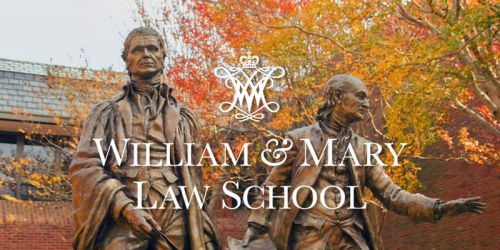
Chief Justice Marshall (L) and Professor Wythe (R) request the pleasure of your company at the 16th Brigham-Kanner Property Rights Conference at the William & Mary Law School, in Williamsburg, Virginia, Thursday and Friday, October 3-4, 2019. Register here, and make your plans to join us. 

The Conference’s main event is the awarding of the Brigham-Kanner Property Rights Prize to Professor Emeritus Steven J. Eagle, recognizing his lifetime of work and scholarship about property law and property rights. Here’s the official announcement:

The annual Brigham-Kanner Property Rights Conference is presented by the William & Mary Property Rights Project and is named in recognition of Toby Prince Brigham and Gideon Kanner for their lifetime contributions to private property rights. The conference is designed to bring together members of the bench, bar, and academia to explore recent developments in the law that affect property rights. The Brigham-Kanner Property Rights Conference began

Continue Reading Space Still Available: Brigham-Kanner Property Rights Conference, Oct. 3-4, 2019

Barista’s note: today’s post is mostly by Benming Zhang, one of my William and Mary law students. He likes property, land use, takings, state and local government law, and related subjects. And he walks the walk: his day job is serving as an elected member of the Williamsburg, Virginia, city council. (It is his night job, actually, since he’s a full-time student, and the council meets mostly in the evenings)  This post is built on his summary of the case, and includes my edits and comments.

Welcome to our conversation. 

——————————-

RT: In Starkville Lodging, LLC v. Mississippi Trans. Comm’n, No. 2018-CA-01405-COA (Aug. 27, 2019), the Mississippi Court of Appeals did what most courts do with public use and necessity challenges — it rejected them. Not too surprising, I suppose, given the highly deferential standard of review (“well nigh conclusive,” as the Supreme Court noted in

Continue Reading Miss App: Taking Of Road To Access A Single Parcel Is For Public Use