A law journal article worth reading (short, not too many distracting footnotes) on takings theory.

In Imperfect Takings, 46 Fordham Urban Law Journal 130 (2019), Professor Shai Stern writes about what he calls the “three safeguards” in eminent domain (due process, public use, and mandatory compensation), and how to evaluate the legality of takings when all three are not accomplished perfectly. He argues that his balancing model “allows the government to exercise its expropriation power properly even in imperfect circumstances, while still sufficiently protecting property owners and society from abuse of that power.”

Our thinking: in our experience, none of the bars for the three safeguards are all that high, so we are not convinced this model is new. Because this is what courts already do, no? In Kelo for example, the majority mostly shrugged its shoulders at a stricter reading of the public use requirement because it was

Continue Reading New Article: Imperfect Takings

The Arizona Corporations Commission has authority to regulate the sale, lease, assigning, mortgage of a public utility’s assets, including when those assets are “otherwise dispose[d] of.” These transactions need the Commission’s approval. 

The city intended to exercise eminent domain to take the assets of a water utility. This sure looked like a “friendly” condemnation: the city and the utility entered into a letter of intent “documenting the City’s intent to condemn substantially all the assets” of the utility, and “negotiations between the City and [the utility] were intended to result in condemnation, not a sale.”

But the city and the utility did not seek Commission approval. A developer objected, asserting the municipality’s condemnation of the utility was covered by the “otherwise dispose of” language. The Commission agreed, concluding that it could regulate the condemnation, and ordered it to be halted until the Commission approved it. 

In City of Surprise v. Arizona

Continue Reading Arizona: Eminent Domain Isn’t Voluntary (Even A “Friendly” Condemnation)

0401191044b_HDR

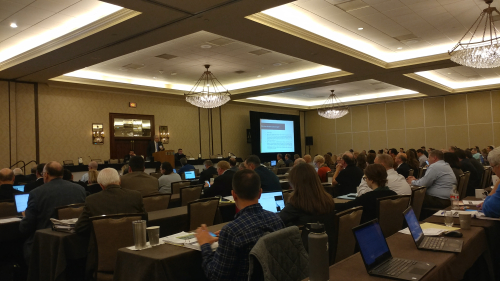
Great crowd today in Austin for CLE International’s Eminent Domain seminar, co-chaired by our colleagues Chris Clough, Sejin Brooks, and Christopher Oddo. We spoke about “National Trends and Developing Issues in Eminent Domain.” 

Here are the cases I referred to which are not included in your written materials:


Continue Reading Materials And Links From Today’s Austin Eminent Domain CLE

2wnyt3

Pop quiz: Quick! Name the races in the Triple Crown of horse racing… There’s the Kentucky Derby (check) … the Belmont Stakes (check) … and … oh yeah, the Preakness Stakes. We always almost forget that last one. 

But the City of Baltimore sure hasn’t. Because the home city of Pimlico racetrack and the aforementioned Preakness Stakes has sued the owner of the race and track in eminent domain, to take the race so it doesn’t leave town like the Colts did when they bolted for Indianapolis literally in the middle of the nightFool me twice, says Baltimore … shame on me!

Read that again. Baltimore is trying to condemn a horse race. A freaking horse race. (Before we posted this, we checked our calendar to make sure it wasn’t April 1. Suspected we were getting pranked. Nope. Then we checked with news sources. Found a bunch.

Continue Reading All Your Race Are Belong To Us: Baltimore Is Condemning The Preakness Stakes (We’re Serious)

IMG_0123

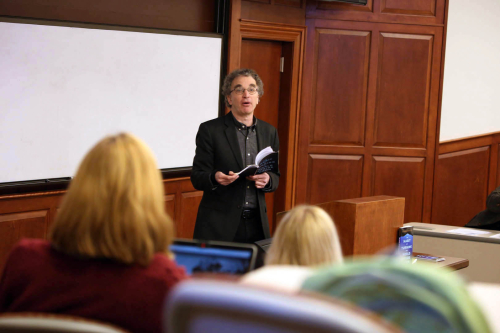
Last week, author Howard Mansfield joined us at the William and Mary Law School for two sessions about his recently-published book, “The Habit of Turning the World Upside Down – Our Belief in Property and the Cost of That Belief.”  His book is about property, property rights, and what he has discovered about how these ideas are processed by the American psyche.

The first session was open to the entire student body, faculty, and public, and the highlight was Mr. Mansfield reading some of his favorite passages from his book. The second session was a student-only chat about some of the themes that he emphasizes. 

If you were not able to join us in-person, listening will be able to give you a sense of why we think this book is a timely rumination on what “property” means, both good and not-so-good. 

If you can’t stream the audio above, Continue Reading Audio: Readings From “The Habit of Turning The World Upside Down”

Our colleague Dwight Merriam was recently interviewed on the radio about issues surrounding the existing and proposed wall and fence along portions of the southern border.

If you want to get educated on this issue, here’s the quick way to do it.

Dwight discusses funding, emergency powers, the Declaration of Taking Act, and other topics. You may not be practicing where border wall issues are among your cases. But trust us: even so, if you tell people you are an eminent domain lawyer at a cocktail party, the first thing someone is going to ask is what your thoughts are on the border wall. Doesn’t matter if you are in a state far from the border. And if you aren’t familiar with the border wall issues and able to chat about them, they will conclude you are a bad eminent domain lawyer. So get educated! Here’s your chance. 

Dwight has

Continue Reading Dwight Merriam Interviewed On Border Wall Legal Issues

The South Carolina Constitution, like the Fifth Amendment and just about every other state constitution, prohibits takings of “private property” without just compensation. See S.C. Const. art. I, § 13(A).

But does that govern the situation where the owner of the property allegedly taken by a city and the State DOT by creating sinkholes is a county? In other words, is property owned by a county “private” property? (We’ve been down this road before, as noted in this post.)

In Georgetown County v. Davis & Floyd, Inc., No. 5627 (Feb. 13, 2019), the South Carolina Court of Appeals answered no. There, the County asserted an inverse condemnation claim against the City of Georgetown and SCDOT, alleging that “while engaged in a joint water drainage project, [they] altered the water table, causing sinkholes to form and damaging public buildings and real property owned by the County.” Slip

Continue Reading SC App: County-Owned Property Isn’t “Private Property,” So No Inverse Claim Against State DOT

17CA0595-PD

Here’s the latest in a case we’ve been following, involving what Colorado calls “bad faith” condemnations. 

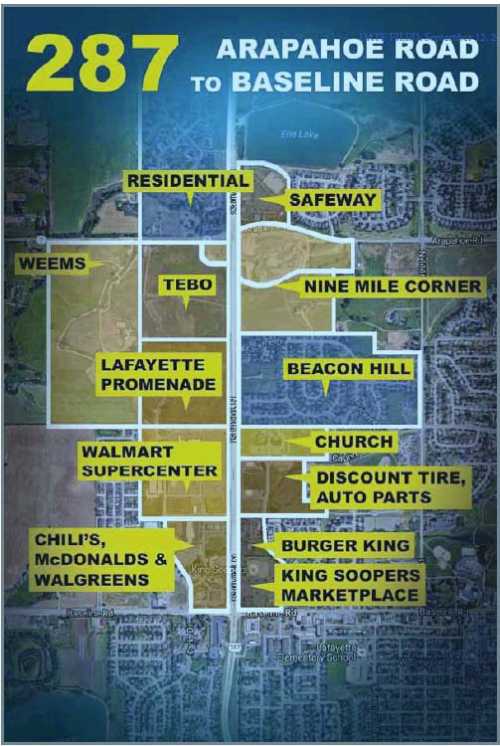
In this order, the Colorado Supreme Court has declined to review the Court of Appeals’ conclusion that a taking ostensibly to preserve open space and a buffer zone between two municipalities, was an invalid exercise of the eminent domain power because the true reason for the taking was to prevent the condemnee-municipality from luring a big-box retailer, King Sooper, to its territory and away from the condemnor’s. 

So even though the case has ended with a whimper and not a bang, this does mean that the Court of Appeals’ hard look at the actual motives of the condemnor — and not merely its stated purpose — is the way to do things. The court examined the factual record, and not just the stated reasons for the taking, and tested whether the condemnor’s

Continue Reading Colorado Supreme Court Denies Cert In “Improper Motive” Condemnation

Psweather

If you didn’t register to attend the 36th Annual ALI-CLE Eminent Domain and Land Valuation Litigation Conference later this week in Palm Springs, California, well then, shame on you!

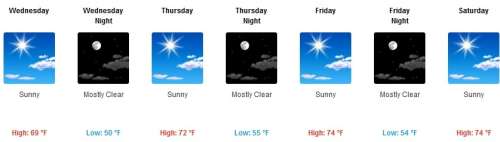
According to the National Weather Service, while you and the rest of the country is freezing, we’ll be enjoying the balmy desert climes, and discussing the topics we love: eminent domain, redevelopment, relocation, regulatory takings, trial and appeal strategies, doctrinal changes on the horizon, hot topics (border wall, pipelines, wildfires, and flooding), and others. 

Featuring a national faculty (many new to the ALI-CLE dais), and attendees from the entire spectrum of practice, academia, and the bench. 

If you are not joining us, be sure to follow along on the blog (we will post updates daily), and on Twitter (@invcondemnation, @ALI_CLE #EminentDomain2019). And plan on joining us in 2020, when we’ll be in a new city (by

Continue Reading ALI-CLE Palm Springs (72º, Sunny) Here We Come

Don’t Miss the 2019 Eminent Domain Litigation Conference from American Law Institute CLE on Vimeo.

Check out this sound blurb, produced by the good media folks at ALI-CLE, about the upcoming Eminent Domain and Land Valuation Litigation Conference. (And no, we didn’t record this in a jazz club; although I wish we had.)

There’s still time to register, and come and join us in Palm Springs. Continue Reading Hot (Eminent Domain) Topics, Cool Jazz