


Wright_home_place

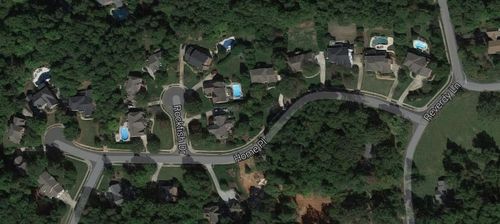
In Town of Matthews v. Wright, No. COA14-943 (Apr. 21, 2015), the North Carolina Court of Appeals invalidated a taking, the stated purpose of which was to make a portion of a private road into a public street. 

A taking to open a private road to the public? That sure does sound like a public use or purpose, no? And had the court of appeals stopped there and not delved deeper, and had the case not had the history which it did, the result might have been different. 

The facts which led the court to that conclusion are worth reading for yourself, but here’s the summary: the homes of the Wrights and five neighbors are located on a dead-end street, Home Place, which connects to the public street system at Revedery Lane. Home Place was originally a private street, but the Town believed there was an implied dedication, and treated

Continue Reading NC App: No Public Use Or Benefit When Town, Fueled By Improper Motive, Condemned Private Street To Make It Public

The first sign that the opinion wasn’t going the way of the Golden State Water Company — a private utility that provides water to the City of Ojai, California — was right there in the first paragraphs, which contain the one-two punch of labeling the company both a monopolist, and one that price gouges about California’s most sensitive subject these days, water.

The opinion is infused with the flavor that Golden State positively deserved to have its property taken by eminent domain:

Monopolists have long been unpopular in this country. When King George III’s choke hold on government led to intolerable levels of taxation, he was forced to divest his holdings. At the end of the nineteenth century, Congress passed the Sherman Antitrust Act with only a single dissenting vote. (26 Stat. 209, as amended, 15 U.S.C. §§ 1-7.) Introducing his landmark bill, Senator Sherman summed up the prevailing sentiment:

Continue Reading Cal App: Municipality Free To Form Community Facilities District To Take Over Water Utility

In 2011, Missouri adopted a statute that looks to us like a slightly modified “right to farm” law:

The statute supplants the common law of private nuisance in actions in which the “alleged nuisance emanates from property primarily used for crop or animal production purposes.” Unlike a common law private nuisance action, section 537.296 precludes recovery of non-economic damages for items such as loss of use and enjoyment, inconvenience, or discomfort caused by the nuisance. Instead, the statute only authorizes the recovery of economic damages in the form of diminution in the market value of the affected property as well as documented medical costs caused by the nuisance.

Under Missouri common law, nuisance claims arising from farming activities are considered temporary nuisances. A few days after the statute went live in 2011, Bohr Farms fired up what is known in the business as a “CAFO” (Concentrated Animal

Continue Reading Missouri: Statute Which Supplants Common Law Farm Nuisance Claim Is Not A Taking

Grasping_hand

To put on your to-buy, to-read list: lawprof Ilya Somin‘s forthcoming book about the Kelo case and the aftermath, available on June 5, 2015. (We’re in the process of organizing some book talk events with Prof Somin in the fall, and if you have suggestions for venues or want to host one, let us know.) 

Pre-order from Amazon here. The reviews are very good:

“Somin’s thorough rebuttal of the constitutional reasoning and philosophical implications of the Supreme Court’s Kelo decision demonstrates why that ruling was a constructive disaster: It was so dreadful it has provoked robust defenses of the role of private property in sustaining Americans’ liberty.”
 

(George F. Will, journalist and Pulitzer Prize winner)

“By dint of his uncommon thoroughness, Ilya Somin has become the leading and most persuasive critic of the Supreme Court’s ill-fated 2005 Kelo decision.  His close examination of the case’s factual backdrop

Continue Reading New Book Forthcoming: “The Grasping Hand: Kelo v. City of New London & The Limits Of Eminent Domain” by Ilya Somin

Here’s one that just rolled in, from the Iowa Supreme Court. In Clarke County Reservoir Comm’n v. Edwin D. & Deloris A. Robins Revocable Trust, No. 14-0774 (Apr. 10, 2015), the court held that the Commission did not have the power of eminent domain because several of its members were private actors. The court also concluded that the post-judgment withdrawal of those members did not moot the property owner’s appeal.

Property owners are entitled to strict compliance with legal requirements when a government entity wields the power of eminent domain. These legal requirements help protect against abuse of the eminent domain power. We strictly construe statutes delegating the power of eminent domain and note the absence of a clear legislative authorization for a joint public-private entity to condemn private property.

For the reasons elaborated below, we hold a 28E commission with members lacking the power of eminent domain cannot

Continue Reading Iowa: “Liberty Requires Accountability” – Delegation Of Eminent Domain Power Strictly Construed, And Commission With Private Members Could Not Take Property

A few years ago, in Gallenthin Realty Development, Inc. v Borough of Paulsboro, 191 N.J. 344 (2007), the New Jersey Supreme Court held that in order to target property for redevelopment as “blighted,” the government must show that it is in such condition that it “negatively affects surrounding areas” by promoting conditions that can develop into blight. In that case, the targeted property was mostly undeveloped wetlands, and the “blight” of which it stood accused was the owner’s failure to put it to a more intensive economic use. But that was not sufficient to support a blight finding, and the court held that the government must have done more than simply recited the standards for blight redevelopment, and declare they were met. 

We were going to do a complete write-up of the New Jersey court’s latest foray into blight and redevelopment, 62-64 Main Street LLC v. City of Hackensack

Continue Reading New Jersey: When Designating Blight, Baby Can Be Tossed Without First Showing The Bathwater’s Dirty

It’s not often that we say a law review article is a “must-read.” But this one definitely is, especially for all you regulatory takings mavens: David L. Callies, Through a Glass Clearly: Predicting the Future in Land Use Takings Law, 54 Washburn L. Rev. 43 (2014). A pdf of the article is posted here

From the Introduction:

The subject of takings—the government taking of an interest in real property, either through eminent domain or through the exercise of the police power—has been the subject of continuous litigation for nearly a century. The past ten years have been particularly fruitful, as litigants struggle with the meaning and extent of the Fifth Amendment’s Public Use Clause and the extent to which the overzealous exercise of the police power can sufficiently deprive a landowner of rights in property so that the property has been “taken” by regulation, ever since Justice Holmes

Continue Reading New Law Review Article Worth Reading: “Through a Glass Clearly: Predicting the Future in Land Use Takings Law”

IMG_1534

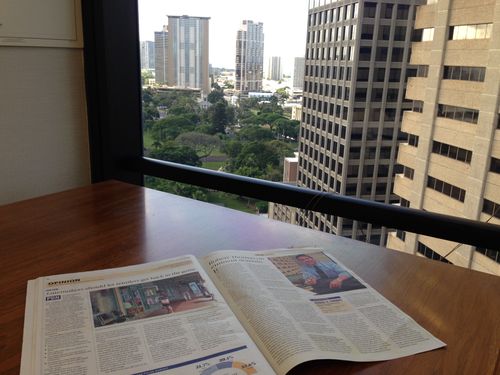
We can’t reproduce the entire interview, and the link to the online version is behind a partial paywall, but here are the highlights of a recent interview, where A. Kam Napier, the Editor-in- Chief of Pacific Business News, came by and chatted with us about eminent domain, property rights, and the Honolulu rail project.  

  • Robert H. Thomas thinks it’s no accident that the Fifth Amendment in the Bill of Rights protects not only the right to due process for people accused of a crime but also the same rights for people who own property the government would like to take. The right of the people to be secure in their private property was that essential to the Founders.
  • “’The Kelo decision was a direct result of the Midkiff decision, where essentially any public purpose that the government advances is going to be enough [to take the


Continue Reading Pacific Business News Report On Eminent Domain And The Honolulu Rail

A couple of noteworthy conferences upcoming, one in-person, the other a “webinar” format:

  • The first is “Kelo: A Decade Later” at the U. Connecticut Law School, Friday, March 20, 2015, from 8:30 am – 4:30 pm. The conference promises to “look back at the decision and its repercussions,” and includes the lawyers for Ms. Kelo and the City of New London. “The conference will then explore the role of eminent domain in government planning generally. What role does and should eminent domain play in economic development?  What is the impact of post-Kelo changes to state law?  Does eminent domain have distinctive impacts on low income communities?  Leading scholars and practitioners in law, planning, sociology, and economics will explore these questions.” We note that our Connecticut Owners’ Counsel colleague Dwight Merriam is one of those “leading practitioners,” and will be moderating a panel entitled “Eminent Domain and Economic Development”


Continue Reading Upcoming Conferences – Kelo In Connecticut, APA And The ESA

Frequent readers know that we just love the Australian comedy film “The Castle,” which tells the tale of one man’s legal fight to save his family’s home from the abusive exercise of eminent domain power. (See “Kelo Down Under,” our review.) The case is played for laughs and in the end, the homeowner naturally prevails, the private benefit is quashed by Australia’s High Court, and all’s well that ends well.

Those of us who practice this kind of law understand that real life doesn’t always — or even often — work out the way it does in the movies: the good guys may not always prevail, and even when things are looking up, the road ahead may be filled with many unexpected bumps and turns. 

So it is in “Leviathan,” the latest film from Russia’s Andrey Zvyagintsev.

Not that we would expect

Continue Reading Movie Review: Leviathan – “The Castle” Gone Bad