Looks like eminent domain and Hawaii are in the news today. Here’s what we’re reading:

Continue Reading Tuesday Round-Up: Hawaii In The Eminent Domain Spotlight
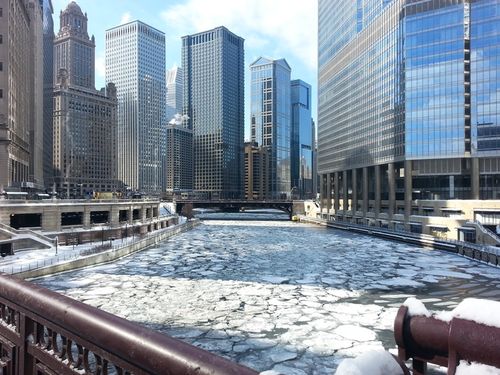
Mich Ave 2-6-2014

We’re at the ABA Midyear meeting in sunny Chicago, so we have our to-read links posted today instead of a new case digest. Our fingers are too frozen to post anything more:

  • No well. No way (from The Garden Island, Kauai’s daily newspaper, a story that just sums up how some decisions get made in one little corner of paradise).


Continue Reading Things To Read In Chicago When You’re Freezing

We often jokingly suggest that in eminent domain, “it’s good to be the King!” quoting that eminent eminent domain scholar Mel Brooks. We think this catchphrase aptly describes the “most awesome grant of power,” City of Oakland v. Oakland Raiders, 220 Cal. Rptr. 153, 155 (Cal. App. 1985), under which the condemnor has a very nearly unfettered ability to take property.

But in recent decision from the Missouri Court of Appeals it was good to be the landowner — the owner of a Burger King restaurant — because it had the good sense to hire Robert Denlow, our Owners’ Counsel colleague (and occasional Sunday golf partner) (that’s Bob in the above video, a 2013 interview). In City of North Kansas City v. K.C. Beaton Holding Co., No. WD76068 (Jan. 14, 2014), the Missouri Court of Appeals, Western District, held that the city, a

Continue Reading Sometimes, It’s Good To Be The (Burger) King: General Power Of Eminent Domain Does Not Include Blight Elimination

DSCF1604

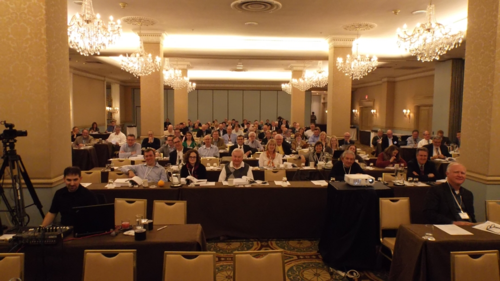
This morning, I joined my Owners’ Counsel colleagues Leslie Fields and Joe Waldo (the programming co-chairs), and more than 100 fellow eminent domain experts in New Orleans under the auspices of ALI-CLE at our annual gathering for the start of 2 1/2 days of legal education. 

Joe and Leslie asked me to join Professor James Ely to speak about “The Full and Perfect Equivalent for Just Compensation: The Historical Context and Practice.” Professor Ely led us off with a crash history of just compensation, starting with the Magna Carta and where we’ve been, and then handing it off to me for the “where we are and where we may be going” segment.

Just to prove to you all that while in New Orleans, I really did show up and not get distracted by the many (many) distractions that this city can offer, the above is a

Continue Reading A Dispatch From The ALI-CLE Eminent Domain Conference (With Links)

Next week, we’ll be in New Orleans for the 2014 edition of the ALI-CLE Eminent Domain program, now in its 31st year. 

As usual, my Owners’ Counsel colleagues Leslie Fields and Joe Waldo (the programming co-chairs) have put together a fantastic 2.5 day of programming, taught by expert faculty.  At 11:00 a.m. on the first day of the program, I will be joining Professor James Ely to speak about “The Full and Perfect Equivalent for Just Compensation: The Historical Context and Practice.” 

Should be fun. If you are not joining us in-person, ALI-CLE is producing it as a live webcast, and will make the coursebook and video and audio available for later listening or viewing. 

More details here, or download the brochure here, or below. 

31st Annual Eminent Domain and Land Valuation Litigation, ALI-CLE Program (CV023) (Jan. 23-25, 2014) New Or…

Continue Reading 31st Annual ALI-CLE Eminent Domain And Land Valuation Litigation (New Orleans)

If you were to try to predict the result in an appeal before the Ninth Circuit where the lead plaintiff is the “Alliance for Property Rights and Fiscal Responsibility,” the defendant is a municipality, and knowing nothing else, you’d probably have guessed wrong in this case.

In Alliance for Property Rights and Fiscal Responsibility v. City of Idaho Falls, No. 12-35800 (Dec. 31, 2013), the three-judge panel ruled unanimously in favor of the Alliance, holding that the city did not have the power to take property outside of its territory for the purpose of constructing electric transmission lines.

The panel (N.R. Smith, Schroeder, Thomas), held that the city lacked the power to take easements for power lines when state law did not delegate it the authority to act extraterritorially. The court started with the black-letter rule that munciipalities are creatures of state law, and cannot exercise powers not delegated

Continue Reading 9th Cir: City Cannot Take Property Outside City Limits

The U.S. Supreme Court has declined to review an interesting case we’ve been following, about that big glass viewing platform over the Grand Canyon.

As we noted here, in Grand Canyon Skywalk Development, LLC v. Sa Nyu Wa, Inc., 715 F.3d 1196 (9th Cir. Apr. 26, 2013), the issues mostly involve exhaustion, but there are some eminent domain questions that made the case worth following.  

The case involved the Hualapai Tribe’s efforts to condemn the rights of the non-Indian developer of the skywalk. A dispute arose between the developer and a corporation chartered by the tribe over a revenue-sharing contract, and while the corporation and the developer were arbitrating their disagreement, the tribe instituted an eminent domain action in tribal court to condemn the developer’s contractual rights.

The Ninth Circuit held that the developer would need to exhaust tribal remedies before the federal court could

Continue Reading Interesting Cert Petition Denied: Can A Tribe Condemn Its Contract With A Nonmember?

Cover_42_3_ The Urban Lawyer, the law review produced by the ABA Section of State & Local Goverment Law has published an article which we wrote with our Damon Key colleagues Mark Murakami and Bethany AceRecent Developments in Eminent Domain: Public Use, 45 Urban Lawyer 809 (2013).

Here’s the Introduction to the article:

IN KELO V. CITY OF NEW LONDON, the United States Supreme Court held that a municipality’s exercise of eminent domain power supported only by claims that doing so would help the local economy was not a per se violation of the Public Use Clause of the Fifth Amendment. The Court’s majority—and especially Justice Anthony Kennedy’s concurring opinion, which provided the fifth vote to affirm—left open the possibility that some takings would not qualify. In the intervening time, however, the Court has not provided any guidance whatsoever about what takings it would consider unconstitutional private-to-private

Continue Reading New Article: Recent Developments in Eminent Domain: Public Use

Homes. Tiny homes. Things have come full circle. Because according to this report from The Day, New London’s daily paper (“Take the steps to pursue Fort Trumbull dreams“), the city’s mayor, in order to remove the “stain” of the l’affiare Kelo, has proposed a “tiny house neighborhood” on the leftover parts of the now-vacant land where regular-sized homes were bulldozed as a Public Use. In other words “Little Pink Houses” were taken from their owners so that even smaller homes can be built in their place:

Mayor Finizio said he would like New London to symbolically overturn Kelo by undertaking a true “public use” of the seized private properties. He offered as an example a parking garage, under discussion recently as a means of meeting the parking demands generated by Electric Boat’s offices in the former Pfizer buildings, the one major project resulting from

Continue Reading Eminent Domain’s Circle Of Life In New London: Guess What Use For The Kelo Property Is Being Proposed?

Be sure to check out this interview with a person we’re proud to call a friend and a colleague, Gideon Kanner, in the most recent edition of Right of Way magazine, a publication of the International Right of Way Association.

A Fierce Advocate for Just Compensation” is a sitdown with Professor Kanner, and covers a lot of ground, so to speak. The entire piece is worth reading, but here’s what a colleague pointed out as perhaps the best part:

If you represent a property owner in an eminent domain case, particularly an inverse condemnation one, you must understand that your client is persona non grata or the law’s “poor relation,” as U.S. Supreme Court Chief Justice William Rehnquist once said. The California Supreme Court once stated in an opinion that it was its duty to keep condemnation awards down, which is a hell of a hurdle to overcome when your task is to persuade the Justices that your client was undercompensated by the court below. So in those not-so-good ol’ days of the 1960s, when I walked into court, I had my job cut out for me. Sometimes, the hostility emanating from the bench was palpable. As Alex Kozinski, Chief Judge of the U.S. Court of Appeals for the 9th Circuit once noted, what property owners in this field often get from the bench is “thinly-disguised contempt.” This is not a line of work for the faint of heart.

We agree.
Continue Reading Why We Fight: An Interview With Gideon Kanner, “A Fierce Advocate for Just Compensation”