


nailhouseThis photo of a “nail house” in Wenling, People’s Republic of China is making the rounds on the internet. The reports (see also here for higher res photos) say that the homeowners refused to take the offers to sell, so the developer built the road around their house. “They are called “nail houses” because the homeowners refuse to be hammered down.”

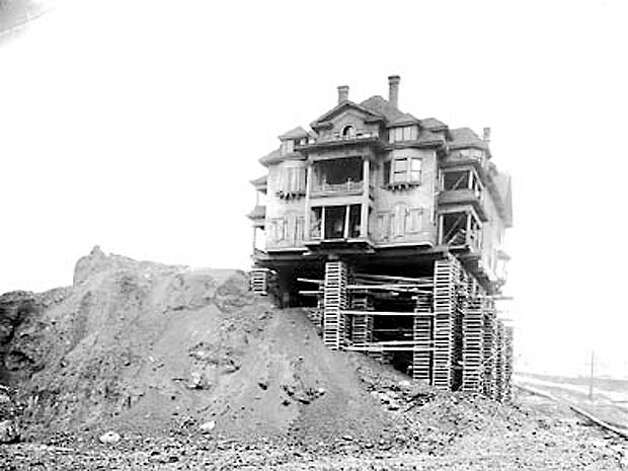
We’ve covered similar circumstances before (here, the “calvacade of homeowner holdouts,” and famous nail houses for example). Indeed, this is not a recent  phenomenon. See Seattle’s Denny regrade, for example. More photos from the Seattle Post-Intelligencer.
dennyregrade

Homeowners who didn’t go along with the Denny regrade project had the hill dug out around them. Photo: Seattlepi.com File / Seattle Post-Intelligencer

Reminds us of the Warner Bros. classic “Homeless Hare,” where Bugs Bunny objects to a developer’s efforts to evict him from his

Continue Reading When All You Have Is A Hammer, Everything Looks Like A Nail House
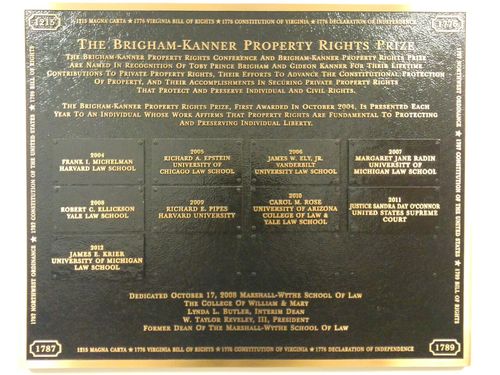
Here are my remarks from last week’s Brigham-Kanner Property Rights Conference at the William & Mary Law School in Williamsburg, Virginia. Our panel spoke on “Property Rights in Times of Economic Crisis,” and included lawprofs James W. Ely (Vanderbilt), William Fischel, (Dartmouth), and Eric Kades (William & Mary). See the complete faculty list and agenda here.

+++++++++++++++++++++++++++++++++++++++

Aloha, I bring you greetings from the land of Midkiff, the land of Lingle.

I practice in the jurisdiction that believed it would cure our economic ills to use eminent domain to bust up the legacy land trusts, and make sure that everyone who owns a home could also own the fee simple interest.

Which they may now do, provided they can afford our median price for a single-family residence, $637,000.

I practice in the jurisdiction that believed that it would be a good idea to try and bring

Continue Reading Professor Ely, You Magnificent Bastard, I Read Your Book!

There’s still time to join us later this week at William & Mary Law School in Williamsburg, Virginia for the 2012 Brigham-Kanner Property Rights Conference, and the award of the B-K Prize to University of Michigan lawprof James Krier for his lifetime contributions to property law scholarship.

The Conference includes a day-long series of discussions on property rights, featuring leading scholars and practitioners. Topics include “The Impact of a Leading Property Scholar,” “The Judiciary’s Role in Shaping Constitutionally Protected Property,” “Property Rights in Times of Economic Crisis,” and “Property’s Moral Dimension.” The day will wrap with a roundtable discussion, “How Fundamental are Property Rights?” The complete agenda is available here.

I will be speaking on the panel about “Property Rights in Times of Economic Crisis,” discussing why property rights are even more important when times are tight.

Register on-line here. If you can’t join us, I will

Continue Reading 2012 Brigham-Kanner Property Rights Conference

Here are links to worthwhile reads, all with a takings flavor:

  • A


Continue Reading Takings Tuesday

In or near Sacramento this week? You may want to attend this free program, sponsored by the American Action Forum:

The American Action Forum will host a panel discussion at the Hyatt Regency in Sacramento on the devastating downturn of the housing market and painful recovery currently facing our nation. There’s no question California’s housing markets and greater economy have been among the hardest hit, yet a comeback seems to be underway. What can California’s story teach the rest of us? Is using eminent domain really a solution to our housing woes?

Join us for a complimentary breakfast as we hear from an exciting group of experts including Douglas Holtz-Eakin, former Director of the Congressional Budget Office, Daren Blomquist, Vice President of RealtyTrac, Richard Green, Director and Chair of the USC Lusk Center for Real Estate, Jed Kolko, Chief Economist at Trulia, Paul Herrera, Government Affairs and Communications Director, Inland

Continue Reading Upcoming Program – The U.S. Housing Recovery: Lessons From California

In the op-ed piece “Eminently reasonable,” Brooklyn lawprof David Reiss writes that “using the power of eminent domain to restructure underwater mortgages is constitutional, beneficial and administratively feasible.”

Local governments across the country are considering an innovative use of eminent domain. They propose to condemn underwater mortgages (those that exceed the fair-market value of the home) in their communities and restructure them so that home­owners can afford their payments and so that the new mortgage is for less than the fair market value of the property. If this proposal is implemented, the local government will pay the owner of mortgages of “underwater” homes the fair market value for the mortgages. The local government will then restructure each mortgage by reducing the principal amount owed to be in line with a mortgage that would be appropriate for the fair market value of the home. This will result in lower

Continue Reading “Eminently Reasonable,” Or Desperate Times Breed Desperate Measures?

We sure wish we could have attended the Cato Institute’s recent Constitution Day program in Washington, D.C., but here’s the next best thing, a video of the presentations on Property Rights, with a review of the recent Sackett and PPL Montana decisions by the Supreme Court, and an update about the state of property rights.

Speakers include our PLF colleague Damien Schiff, lawprof Jonathan Adler, and lawprof Ilya Somin.

We can’t embed the video, but you can watch it here on CSPAN’s site. Continue Reading From Cato Institute’s Constitution Day: Property Rights And The Supreme Court (Video)

Here’s a few reports worth reading:

  • Lt Gov. Gavin Newsom alleges ‘threats’ against mortgage plan – the LA Times reports on California’s Lieutenant Governor (who just happens to have “some ties to Mortgage Resolution Partners” — the private investment group that promulgated the idea of using eminent domain to seize underwater mortgages), who is calling for an investigation of whether those objecting to the plan are “threatening” local governments. “Newsom’s complaint comes after several groups, including the influential Securities Industry and Financial Markets Assn., objected to the eminent domain plan and warned that mortgages could become more expensive for future homeowners living in regions that adopt the plan. The Federal Housing Finance


Continue Reading Thursday’s Worth Reading List