The Connecticut Supreme Court has issued opinions in a trio of closely-watched eminent domain cases. The first two opinions deal with technicalities of eminent domain law, but the third overturns a $12 million jury verdict that the Town of Branford, Connecticut abused its eminent domain power.

In
Town of Branford v. Santa Barbara, SC 18091 (officially released Feb. 16, 2010), the court affirmed that the highest and best use of the property taken was for residential development.

In Town of Branford v. Santa Barbara, SC 18090 (officially released Feb. 16, 2010), the court held that Connecticut’s offer of judgment statute is not applicable to condemnation appeals.

In New England Estates v. Town of Branford, SC 18132 (officially released Feb. 16, 2010), the court overturned the jury’s $12,435,914 jury verdict, because an “unrecorded, unexercised option to purchase the property…is not considered a property interest under Connecticut state law

Continue Reading Connecticut Supreme Court: An Option To Purchase Is Not “Property,” So Optionee Can Be Abused

Aliaba We just wrapped up the annual three-day Festival of Eminent Domain Law, otherwise known as the American Law Institute | American Bar Association’s two CLE conferences, “Eminent Domain and Land Valuation Litigation,”and “Condemnation 101: How To Prepare and Present an Eminent DomainCase.” 

Dana Berliner, Matt Fellerhoff and I spoke about about “Winning Arguments in Challenging the Right toTake and Public Use” in the Land Valuation course, and in the 101course, I presented a session on “Voir Dire: Selecting a Jury in a Post-Kelo Era in a Down Economy” with William Blake and Susan MacPherson.

The depth of talent teaching and attending these courses is unbelievable, so I always learn more at these conferences than I impart. Among the other presenters were our fellow law bloggers Gideon Kanner, Anthony Della Pelle and Edward McKirdy. Internet marketing strategist Jayne Navarre also presented an interesting session on using

Continue Reading ALI-ABA Annual Eminent Domain Conference Wrap-Up

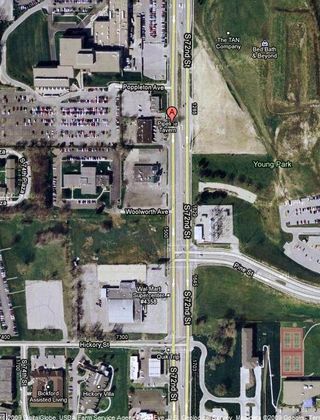
In City of Omaha v. Tract No. 1, No. A-09-323 (Jan. 26, 2010), the Nebraska Court of Appeals held that a post-Kelo “no takings for economic development” statute did not prohibit the city from taking property for a decleration lane on a public road simply because the lane leads to a “well-known national retailer of consumer goods.” (Can we say Wal-Mart?)

Omaha

The statute, Neb. Rev. Stat. § 76-710.04, provides:

   (1)  A condemner may not take property through the use of eminent domain… if the taking is primarily for an economic development purpose.

   (2)  For purposes of this section, economic development purpose means taking property for subsequent use by a commercial for-profit enterprise or to increase tax revenue, tax base, employment, or general economic conditions.

   (3) This section does not affect the use of eminent domain for:

        (a)  Public projects or private projects that make

Continue Reading Nebraska Court Of Appeals: Taking Did Not Violate Post-Kelo Ban On Economic Development Condemnations

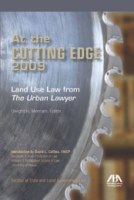
Cutting_edge_2009 One of the benefits of doing your own blog is that every now and then you are allowed to engage in a little shameless self-promotion (what’s this “every now and then?”).

Well, here goes.

The ABA has announced the forthcoming publication of a new book by the State and Local Government Law Section: At the Cutting Edge 2009: Land Use Law from The Urban Lawyer, edited by my colleague Dwight H. Merriam, and which features “[a] compilation of the most recent Section of State and Local Government Law committee reports from The Urban Lawyer.”

What this means is that it contains topical and timely articles about the hottest topics in land use law, including exactions and impact fees, green building laws, ethics in land use, regulatory takings, citizen participation in public hearings, and public use and pretext in eminent domain (the piece I authored).

Here’s the Table

Continue Reading New Book: At the Cutting Edge 2009: Land Use Law from The Urban Lawyer

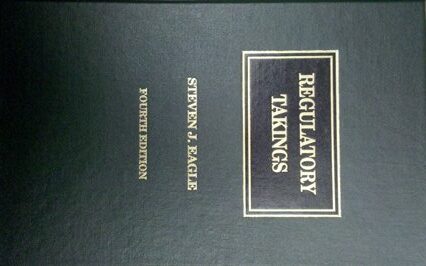
Eagle_reg_takings_cover I just received my copy of the latest edition of Professor Steven J. Eagle‘s definitive treatise Regulatory Takings (Lexis/Nexis, 4th ed. Dec. 2009).

Like the earlier editions, this is a must-have for every land use and property law attorney’s back bookshelf.

Chapters include “Property Rights and Their Sources,” “The Ascendancyof Land Use Regulation,” “Analytical Issues in Regulatory TakingsLitigation,” and “Regulatory Takings Remedies.”

The book is available here (oddly, the Lexis-Nexis web site only has the 3d edition for purchase, but I expect that to be remedied shortly).

From the preface to the fourth edition:

Thisbook is about “regulatory takings,” which is a relatively new term, but not an entirely new idea. The underlying concept is stated simply — government may “regulate” private property, but not to the extent that it constitutes a “taking,” under the United States Constitution, or a state constitution. Owners need not be compensated for losses

Continue Reading Eagle On Regulatory Takings (4th ed. 2009)

The developer in the two condemnation cases arising out of the County of Hawaii’s attemptsto take a Kona family’s property has filed its Answering Brief in the latest phase of County of Hawaii v. C&J Coupe Family Ltd. P’ship.

We posted the County’s Answering Brief here.

We represent the property owner in these appeals, and the brief we filed in November 2009 is posted here. More about thecases here.Continue Reading Developer’s Brief In Hawaii Eminent Domain Abuse Case: Pretext, Actual Purposes, And Private Benefit

The County of Hawaii has filed its Answering Brief in the latest phase of County of Hawaii v. C&J Coupe Family Ltd. P’ship,two condemnation cases arising out of the County’s attemptsto take a Kona family’s property. The brief responds to the Opening Brief which my Damon Key colleagues Ken Kupchak, Mark Murakami, Matt Evans and I filed in November 2009 (available here).

This appeal addresses several issues,but the most critical involve pretext and public purpose, questionsleft open by the U.S. Supreme Court in Kelo v. City of New London,545 U.S. 469 (2005), but which were answered, in part, by the HawaiiSupreme Court in its opinion when these cases were first before thecourt last year. See County of Hawaii v. C&J Coupe Family Ltd. P’ship, 119 Haw. 352, 198 P.3d 615 (2008) (available here)

In that opinion, the court held that a property owner

Continue Reading Government’s Brief In Hawaii Eminent Domain Abuse Case: Pretext, Actual Purposes, And Private Benefit

The New York Times’ “Square Feet” column today posted “Lessons on Limits of Eminent Domain at Columbia,” about the recent decision in Kaur v. New York State Urban Dev. Corp.,2009 NY Slip Op 08976 (Dec. 3, 2009). In that case, the New York SupremeCourt, Appellate Division (First Department) struckdown the attempted taking of land north of Columbia University in NewYork City because of the record reflected the condemnor’s claim the properties are”blighted” was a pretext to mask overwhelming private benefit. The Kaurcourt undertook an extensive review of the facts and concluded “thereis no independent credible proof of blight in Manhattanville.”

The article notes:

The Dec. 3 opinion by the New York Supreme Court’s appellate division, which found there was no civic or public purpose or blight to justify condemning Tuck-It-Away’s buildings for the university’s new campus, has unnerved public officials and developers. The Columbia decision

Continue Reading The Latest On Eminent Domain In New York From The NY Times

Check it out: two recently-published books on eminent domain. We’ve not had a chance to read either one yet, but they both look promising:

  • Before Eminent Domain: Toward a History of Expropriation of Land for the Common Good by Susan Reynolds. From the publisher’s description: “In this concise history of expropriation of land for the common good inEurope and North America from medieval times to 1800, Susan Reynoldscontextualizes the history of an important legal doctrine regarding therelationship between government and the institution of privateproperty. Before Eminent Domain concentrates on western Europe and theEnglish colonies in America.” Available from Amazon here.
  • Evicted! Property Rights and Eminent Domain in America by David Schultz. From the publisher’s description: “The 2005 Supreme Court decision Kelo v. City of New London,which upheld the taking of an individual’s home by local government forthe sake of private development, unleashed a firestorm of


Continue Reading Two New Books On Eminent Domain

This probably isn’t the phrasing you should use if you are trying to convince others that you are not a “politically connected developer” who got the government to exercise eminent domain on your behalf.

“Atlantic Yards project was not properly presented,” complains Charles Ratner, the president of Forest City Enterprises in this letter to the editor of the Washington Post, which objects to George Will’s recent column about the proposed Atlantic Yards project in Brooklyn.

Looks like Mr. Will got it right.Continue Reading “At the start of this project, my company announced that it would try to avoid the use of eminent domain”