


As noted in this post, the City and County of Honolulu has sought US Supreme Court review of Matsuda v. City and County of Honolulu, 512 F.3d 1148 (9th Cir. Jan 14, 2008).  I’ve finally obtained a copy of the petition, which is posted here (2mb pdf).  The Supreme Court docket report is here (No. 07-1305).

After detailing the background facts, the petition advances a single Question Presented:

Several lessees of a residential condominium apartment complex (“Lessees”) filed a lawsuit against the City and County of Honolulu (the “City”) challenging Ordinance 05-001 (2005).  Ordinance 05-001 repealed the City’s leasehold conversion ordinance, Chapter 38, Revised Ordinances of Honolulu (“ROH”), the statutory process by which leasehold condominium owners, including Lessees, could purchase the leased fee title to their units, through the use of the City’s power of eminent domain.  Pursuant to Chapter 38, the Lessees executed contracts with the City for the acquisition of the leased fee interests in their condominium units.  However, Lessees never received City Council approval prior to the repeal of Chapter 38, and therefore they were unable under Ordinance 05-001 to complete their leasehold conversion.

The Ninth Circuit Court of Appeals departed from the longstanding policy of judicial deference to local legislative determinations of public use in the exercise of the power of eminent domain and held that the City’s repeal of Chapter 38 may violate the Contracts Clause and/or the Due Process Clause of the Constitution of the United States.

Therefore, the question presented in this petition is as follows:

Whether the Ninth Circuit erred in concluding that the Honolulu City Council’s repeal of the leasehold conversion ordinance may violate the Contracts Clause and/or the Due Process Clause, and whether after the repeal, the City can still be contractually bound to exercise its power of eminent domain to acquire property for the leasehold conversion?

Petition at i-ii. 

Chapter 38 was Honolulu’s version of the Hawaii Land Reform Act at issue in Hawaii Housing Auth. v. Midkiff,467 U.S. 229 (1984), and permitted conversion of condominium interests to fee simple, via a condemnation process. In Matsuda, apartment owners applied to the city to”convert” (condemn) theirapartment leases, and entered into written contracts with the city, inwhich the apartment owners each agreed to pay the city $1,000, inreturn for whichthe city promised that after its acquisition of the lease, it wouldconvey it to the apartment owner.  The owners subsequently received thecity’s approvals, but final approval by the City Council was withheldbecause the council was already considering repealing chapter 38, whichit did in 2005. 

Theordinance repealing chapter 38 eventually contained a provisionallowing any conversion proceeding which has been approved by the CityCouncil to be completed, but because Matsuda’s had not received finalcouncilapproval, the taking was denied.  Matsuda and others filed suit againstthe city in federal court,alleging that the repeal of chapter 38 was a violation of the U.S.Constitution’s Contracts Clause.  The district court dismissed the case since in the court’s view, the plaintiffs had no legally enforceable contract with the City. 

The Ninth Circuit held that thedistrict court should have viewed the repeal of Chapter 38 with”heightened scrutiny” because therepeal of Chapter 38 was the city voiding its own contracts, and remanded the case for further proceedings. Acomplete summary of the Ninth Circuit’s opinion is posted here.

Download the complete Petition for Writ of Certiorari.  The Brief in Opposition is posted here.
Continue Reading PING: use of ultrasonographyURL: http://www.kiwibox.com/ultrasoundtech/portrait/IP: 64.191.76.118BLOG NAME: use of ultrasonographyDATE: 02/04/2013 10:46:06 AMinversecondemnation.com: Can a City Bind Itself to Exercise Eminent Domain? Cert Petition in Ninth Circuit Case on Reserved Powers, Public Use, and Contracts Clause (Matsuda)
An interesting decision on the Public Use Clause from the Court of Appeals for the Federal Circuit.  In Amerisource Corp. v. United States,No. 07-1521 (May 1, 2008), the court held that when an innocent party’s property is seized for use in a criminal prosecution, but never used as evidence, no Fifth Amendment taking has occurred, even though the property was rendered valueless during the time the government possessed it.

The government had seized a large quantity of legal prescription drugs in its investigation of a pharmacy.  The seized drugs were never used as evidence, and expired before they could be returned to the owner, Amerisource.  The Federal Circuit held that the seizure for use in a criminal prosecution was not a taking for public use.  The court held that the seizure is an exercise of the government’s “police power,” and not an exercise of eminent domain. 

That much is obvious.  The case was filed in the Court of Federal Claims precisely because the taking resulted from an otherwise valid exercise of the government’s police powers.  In order to prosecute a claim in the CFC, the property owner must concede that the taking is valid and for public use, as the only remedy available in the CFC for takings is money damages via an inverse condemnation suit.  If a property owner challenges the validity of the taking, the proper venue is a district court.  Amerisource didn’t want the drugs back, it wanted compensation.  Thus, the court’s conclusion that the seizure of the drugs was a valid exercise of the police power, and was not an exercise of eminent domain adds little to the analysis. 

Indeed, the Supreme Court has held that the analysis of whether a taking is for public use is accomplished by looking to the government’s police powers.  See, for example, Hawaii Housing Auth. v. Midkiff, 467 U.S. 229 (1984), where the Court held the police power and the public use clause are “coterminous,” and Kelo v. City of New London, 545 U.S. 469 (2005), where the majority equated the exercise of eminent domain with a local government’s ability to zone property.  The public benefit from the seizure of Amerisource’s property is pretty obvious.

It seems the Federal Circuit approached the issue from a practical standpoint — requiring the feds to pay for seizing evidence from innocent owners may interfere with the administration of criminal prosecutions.  It concluded:

It is unfair that any one citizen or small group of citizens should have to bear alone the burden of the administration of a justice system that benefits us all.

Slip op. at 14.  Of course payment of compensation could impact criminal prosecutions.  Yet, this was just the type of situation the Takings Clause was meant to address, since it spreads the burden of the public benefit across the tax base.  Why is the uncompensated seizure of property for evidence from innocent parties any different than the unconstitutionality of denying compensation to a homeowner whose property stood in the way of a highway project because to do otherwise would overly burden the government’s ability to provide for roads?  After all, the just compensation requirement was “designed to bar Government from forcing some people alone to bear public burdens which, in all fairness and justice, should be borne by the public as a whole.”  Armstrong v. United States, 364 U.S. 40, 49 (1960). 

The Federal Circuit concluded:

While AmeriSource’s core theory is a sensible policy argument, it is just that, a policy argument that has been considered and discarded in the relevant precedents.  Someday Congress may well pass a law providing compensation for owners in AmeriSource’s position.

Slip op. at 14-15.  Two responses.  First, the just compensation requirement is self-executing, and does not depend on statutory authority from Congress; the Fifth Amendment itself requires compensation for a taking.  Second, Congress has passed a law for owners in Amerisource’s position: its called the Tucker Act, the very statute Amerisource invoked when it went to the CFC.

The Volokh Conspiracy has several posts on this case.  Start here.

The Federal Circuit’s opinion is located here.

Continue Reading Wait, I Thought The Police Power and the Public Use Clause Were “Coterminous”

The County of Hawaii filed its Answering Brief (2.5mb pdf) in County of Hawaii v. Richards, No. 28882, the consolidatedappeal from two eminent domain lawsuits filed by the County in 2000 and2005.   

The issues in the case include:

  • application of Haw. Rev. Stat. § 101-27(1993), the statute that provides that the government must make aproperty owner whole and pay damages when an attempt to take propertyby eminent domain is discontinued or dismissed
  • whether the government may concurrently prosecute more than one condemnation lawsuit at the same time
  • the standards for demonstrating that the government’s claim of public use is pretext to hide private benefit

The brief minus Appendix, is posted here.  The Opening Brief is posted here.  A link to the trial court’s findings, along with a summary of the case is posted here.

Disclosure: I am part of the legal team representing theappellant/property Continue Reading Government Brief in Kona Eminent Domain Appeals: Damages for Failed Condemnations, Abatement, and Pretext

A couple of interesting eminent domain-related items appeared on my screen today:

Next month marks the third anniversary of the controversial U.S.Supreme Court decision that allowed the city of New London to use thepower of eminent domain. But, not much progress has been made in FortTrumbull, leaving some wondering whether the homeowners were forced outfor nothing.

The chutzpah award[*] needs to be given for this statement accusing the homeowners who objected to the taking of their property as one of the reasons the project is failing:

The 79-acre Fort Trumbull project is spearheaded by the New

Continue Reading Eminent Domain Round Up

Thanks to Dwight Merriam for forwarding this item, a story that an insurance underwriter is planning to offer — get this — eminent domain insurance:

For less than $300 per year, the policy provides up to $200,000loss of market value when the home is sold, plus up to $50,000 torelieve the expense of moving as a result of eminent domain, [Jeffrey Ward, chief executiveofficer of The Ward Group] says.

Full story here.  It’s kind of strange, buying insurance for when the government fails to live up to its constitutional and statutory obligations to pay just compensation and provide relocation assistance.  But it beats Old Glory’s robot insurance, I guess.Continue Reading I Just Saved A Ton Of Money On My Eminent Domain Insurance

In Kelo v. City of New London, 545 U.S. 469 (2005), the majority opinion authored by Justice Stevens, framed the issue presented in terms of the validity of “the development plan,” and not whether the particular takings at issue were “for public use.”

The disposition of this case therefore turns on the question whether the City’s development plan serves a “public purpose.”

Relying upon Village of Euclid v. Ambler Realty Co., 272 U.S. 365 (1926), the case which upheld a municipality’s power to zone provided it is exercised in the context of a “comprehensive plan,” the Kelo majority upheld the New London taking because it was supposedly the product of a well-considered plan of “comprehensive character.”

The City has carefullyformulated an economic development plan that it believes will provideappreciable benefits to the community, including–but by no meanslimited to–new jobs and increased tax revenue. As with other exercisesin

Continue Reading The Euclidization of Public Use – A Dose of Reality For the Kelo Majority

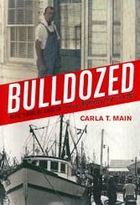
Bulldozed_homeIf you can fight blight, why not create beauty?  If not beauty, why not bounty?

With that phrase, author Carla T. Main, in Bulldozed: “Kelo,” Eminent Domain, and the American Lust for Land,accurately and succinctly sums up the devolution of the Supreme Court’sview of the role of judicial review in eminent domain from Berman, to Midkiff, to Kelo.

Bulldozed is accessible to both lawyers and non-lawyers, andis no dull scholarly summation of the current state of Public UseClause law.  Rather, it places the issues in an understandable contextby framing the legal details with the story of the Gore family ofFreeport, Texas, and their straight-out-of-Forrest Gump shrimpprocessing business.  The taking of the Gore’s property and businessfor Freeport’s “economic development” resulted in the case Western Seafood Co. v. United States, No. 04-41196 (5th Cir. Oct. 11, 2006) (a case I blogged about here).

Continue Reading Book Review: Bulldozed – “Kelo,” Eminent Domain, and the American Lust for Land

On the topic of the Willets Point case, inequitable precondemnation activities, and condemnation blight, thanks to Professor Gideon Kanner for reminding us of his seminal article on the subject, Condemnation Blight: Just How Just Is Just Compensation?, 48 Notre Dame Law Review 765 (1973) (the Notre Dame Law Review was then called the Notre Dame Lawyer).

I read it a while ago, but it’s worth revisiting.  It received the Shattuck Prize from the American Institute of Real Estate Appraisers (now the Appraisal Institute) and it was the sole authority relied on by the Oregon Supreme Court in rejecting the New York Clement rule.  More about the subject here (Professor Kanner’s Gideon Trumpet blog).  Check it out.Continue Reading Condemnation Blight and Clouding Use

Today, we filed the Opening Brief in County of Hawaii v. Richards, No. 28882, the consolidated appeal from two eminent domain lawsuits filed by the County in 2000 and 2005.  I won’t go into detail about the case and will let the brief speak for itself since I am part of the legal team representing the appellant/property owner. 

The issues in the case include:

  • application of Haw. Rev. Stat. § 101-27 (1993), the statute that provides that the government must make a property owner whole and pay damages when an attempt to take property by eminent domain is discontinued or dismissed
  • whether the government may concurrently prosecute more than one condemnation lawsuit at the same time
  • the standards for demonstrating that the government’s claim of public use is pretext to hide private benefit

The brief, minus Appendices, is posted here (1.8mb pdf)

A link to the trial court’s findings

Continue Reading Opening Brief in Kona Eminent Domain Appeals: Damages for Failed Condemnations, Abatement, and Pretext

To all those who attended today’s seminar, thank you.  Here are the links to the cases I mentioned.  From the morning session on Case Law Update:

  • Franco – District of Columbia Court of Appeals – allegations of pretext cannot be summarily dismissed
  • Goldstein v. Pataki – Second Circuit – government’s claim of public use trump claims of pretext – cert. petition filed March 31, 2008
  • Brescia – shoreline setback and equitable estoppel – HAWSCT holds you gotta get your “official assurances” from the right party
  • Private agreements and public process – development and settlement agreements not a substitute for zoning process

From the afternoon session

Continue Reading Cases and Links From Today’s Seminar