20151205_145903

Earlier today, we asked the Federal Circuit for its permission to file this amici brief urging the court to rehear its recent panel decision in Romanoff Equities, Inc. v. United States, No. 15-5034 (Fed. Cir. Mar. 10, 2016).

This is a rails-to-trails takings case in which the panel concluded that the words in the original easement grant “for railroad purposes and for such other purposes as the Railroad Company … may … desire to make” mean that the easement was a “general” easement which allowed the grantee to not only make railroad use of the easement, but literally any use it desired. Thus, when the railroad abandoned the line and the City of New York turned it into the Highline public park, the reversionary property owners were not entitled to compensation.    

Our brief argues that there’s no such animal as a “general” easement that allows the
Continue Reading Amicus Brief: NYC’s Highline Park Is A Taking: A “General” Easement Allowing All Uses Isn’t Really An Easement At All

20160128_091958

20160128_092004

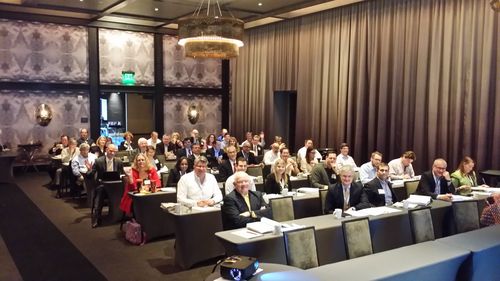
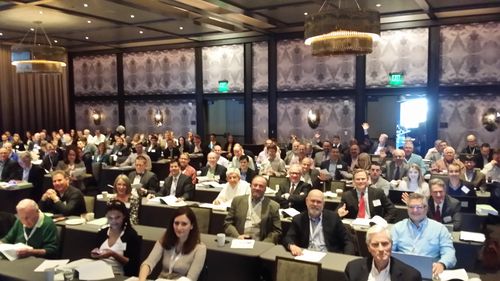
Here’s what’s going on today, the first day of the 33d annual ALI-CLE Eminent Domain and Land Valuation conference in Austin, Texas. We’re at standing room only, with a record number of attendees and our usual nationally renown faculty.

We started off the day with our usual “Eminent Domain Update” session with Amy Brigham Boulris, and as mentioned, the links to the opinions which we discussed are going to be posted in a separate post today. 

We are being followed by a panel on pipeline takings, one of the hot issues nationwide, with Joe Waldo, Matthew Ray, MAI, Thomas Peebles, and Dave Domina.

That session was followed by Professor Ilya Somin, talking about his book, “The Grasping Hand: Kelo v. City of New London and the Limits of Eminent Domain.”  

Above are our annual “proof of life” photos taken from the lectern, to show

Continue Reading ALI-CLE 2016 Eminent Domain Conference, First Day: Standing Room Only, National Expertise

20160126_164326

Austin, Texas, is where we’re at for the next few days, for the 2016 edition of the American Law Institute-CLE Eminent Domain and Land Valuation conference, now in its 33d year. First time we’re in Austin, however, and our registration numbers are looking very good, and we haven’t had this big a turnout in years.

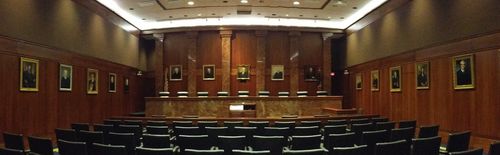
We haven’t been back to Austin in a few years ourselves, so we did what law nerds sometimes do when we go to new towns: visit the local courtroom to check out the scene. So we dropped by the Supreme Court of Texas to take a look. Turns out it was an off-day for the court and it was not in session and the courtroom was locked. But Security suggested that if we asked the Clerk nicely, she might retrieve the key and let us take a look around. And you know what? She did.

Continue Reading ALI-CLE 2016 Eminent Domain Conference: Austin Scouting Report

Here’s the amicus brief we filed today in support of the Petitioner/property owner in Resource Investments, Inc. v. United States, No. 16-802. That’s the case in which the property owner is claiming that the delay in issuing Clean Water Act permits was so extraordinary, it was a temporary taking. Ultimately, the Federal Circuit upheld the dismissal of a takings claim by the Court of Federal Claims for lack of jurisdiction under of 28 U.S.C. § 1500.  

That statute, as federal takings mavens know (and as the Supreme Court recently held in United States v. Tohono O’odham Nation, 131 S. Ct. 1723 (2011)), deprives the CFC of subject matter jurisdiction if there’s a claim based on the same operative facts “pending in any other court any suit or process.” In this takings case, the property owner filed its CFC complaint — which alleged that the


Continue Reading Amicus Brief: Applying Civil War-Era Statute To Toss Federal CFC Takings Claims “Gives Credence To The Belief That ‘The Law Is An Ass.’”

After the usual preliminaries — certification of a 253-member class, subclass certifications, discovery, and motions and cross-motions for summary judgment — the parties in a rails-to-trails takings case in the Court of Federal Claims mediated the dispute and ended up agreeing to $110 million plus interest as just comp for the property taken, and slightly more than $2 million in statutory attorney fees and costs under the Uniform Relocation Act. Many of the class consented to this deal.

Class counsel and the government filed a joint motion for court approval, but a day later, class counsel sought additional fees under the “common-fund” doctrine in the neighborhood of $35 million, based on its contingency fee agreement with some members of the class which entitled them to a percentage of the total award. The CFC did some calculating:

As to whether class counsel’s request for thirty percent of the common fund was

Continue Reading Fed Circuit On Rails-To-Trails Class Action Attorneys Fees, The Uniform Relocation Act, And A Possible Circuit Split

One more in our year-end opinion rush, a short one from the U.S. Court of Appeals of the Eighth Circuit. Here’s what you need to know about Tubbs v. Surface Trans. Bd., No. 14-3898 (8th Cir. Dec. 28, 2015):

Finally, the Tubbses argue that the Board has prevented them from bringing a claim for just compensation under the Fifth and Fourteenth Amendments. In short, the Tubbses claim that the Board has foreclosed their ability to bring a claim based on the Takings Clause of the Constitution and thus affected a taking. We are not persuaded. The loss of a cause of action, which is not a vested interest until it is reduced to a final judgment, is too speculative to constitute a taking. See Jones Truck Lines, Inc. v. Whittier Wood Products Co. (In re Jones Truck Lines, Inc.), 57 F.3d 642, 651 (8th

Continue Reading Eighth Circuit: Wiping Out Unrealized Rails-to-Trails Takings Claim Is Not A Taking

ALI-CLE-2016-masthead

Here’s our second day of highlights from the upcoming American Law Institute-CLE Eminent Domain and Land Valuation Litigation / Condemnation 101 Conference, which will be held in Austin, Texas, from January 28-30, 2016.  

This is the first time the conference has been to Austin, and we’re hoping for a good turnout. Here’s the full agenda for the program. 

  • We especially focused on the ethics component this year, and are looking forward to the session on “Ethics: Tips and Traps for the Eminent Domain Practitioner” at the first plenary session on the second day, taught by Jamila A. Johnson (Schwabe, Williamson & Wyatt, Seattle), Robert B. Neblett, (Jackson Walker L.L.P., Austin). and Joseph V. Sherman (Waldo & Lyle, P.C., Norfolk, Virginia). 
  • Pipeline takings are a huge issue, and we’ve got the lawyers on the very tip of the spear on these cases. “Pipelines and Energy


Continue Reading More On The Upcoming ALI-CLE Eminent Domain Conference (Austin, Jan 28-30, 2016)

Here’s one from the Federal Circuit that doesn’t break new ground, but is founded on an arcane point of Florida law. 

Rogers v. United States, No. 13-5098 (Dec. 28, 2015) is a rails-to-trails case, so the background is pretty standard: old railroad right-of-way, abandoned, followed by a NITU (Notice of Interim Trail Use), which ripened takings claims for the reversionary interest. Followed by standard government tactic: avoid the takings by showing that the reversionary interest isn’t property.

And that’s where Florida law comes in, the question being whether the deeds which originally conveyed the land to the railroads conveyed a fee simple interest or something like an easement. The Court of Federal Claims concluded the deeds conveyed a fee simple interest (the deeds used the words “fee simple,” after all), but on appeal, the Federal Circuit was not as sure because there was no “controlling” state law authority. So

Continue Reading Fed Cir: No Property, No Taking

ALI-CLE-2016-masthead

Here’s the full agenda for the 2016 Eminent Domain and Land Valuation Litigation / Condemnation 101 Conference, January 28-30, 2016, in Austin, Texas. 

Together with our friend and colleague Joe Waldo, we think we’re put together a pretty good program that covers a lot of ground. This is the first time the conference has been to Austin, and we’re starting off with a talk by Austin Mayor Steve Adler, who in his former life was an eminent domain lawyer. Other highlights:

  • Professor Ilya Somin will speak about his recently-published book in a segment entitled “The Impact of Kelo and the Limits of Eminent Domain.”
  • Pipelines and Energy Corridors: Valuation Perspectives of Condemnors and Condemnees” with the lawyers on the front lines of one of the hottest topics in eminent domain law nationwide.
  • Retired Minnesota Supreme Court Justice Paul H. Anderson will give us his tips


Continue Reading It’s Here – 2016 ALI-CLE Eminent Domain Conference: Complete Agenda, Faculty, Registration Information

A short one from the Federal Circuit, Rasmuson v. United States, No. 14-5089 (Oct. 5, 2015), that comes out of a rails-to-trails case, but has wider applicability. 

The case involved the usual: plaintiffs owned lands over which the railroad had rights of way, and when the railroad ceased operating and the Surface Transportation Board issued a Notice of Interim Trail Use, the owners’ takings claim ripened because but for the issuance of the NITU, under Iowa law the land otherwise would have reverted back to the owners. So far, so good. 

In the valuation trial, the Court of Federal Claims applied the “before and after” method, and concluded that the “before” condition of the land was as it existed before the trails easements, but that the appraisers should “ignore any physical remnants of the railway’s use, which would have remained if the railway easement had been permitted to lapse.

Continue Reading Federal Circuit: “Before” Condition Must Account For Railroad Junk That Would Have Been Left Behind