20160603_075340

As we head into the weekend, one more reminder about two worthwhile eventss being staged next week: 

  • Monday, June 6, 2016:Airbnb & Zoning: A Planner & Lawyer’s Guide to Short-Term Rentals,” with our ABA and Owners’ Counsel colleague Dwight Merriam, FAICP. From the Planning and Law Division of the American Planning Association. Details here. If issues about the “sharing economy” like AirBnB, Uber, Lyft, and similar operations, and how they work in the regulatory environment are of interest, you might want to consider joining us at the ABA: we’ve just formally launched a new group within the Section of State and Local Government Law dedicated to these pressing legal questions. Stay tuned here for a separate post on how to join us.  
  • Thursday & Friday, June 9-10, 2016: Oregon Eminent Domain Conference, Portland. We’ll be speaking at that one. The focus is on Oregon


Continue Reading Seminar Reminder: Oregon Eminent Domain; Sharing Economy Issues
Frisco

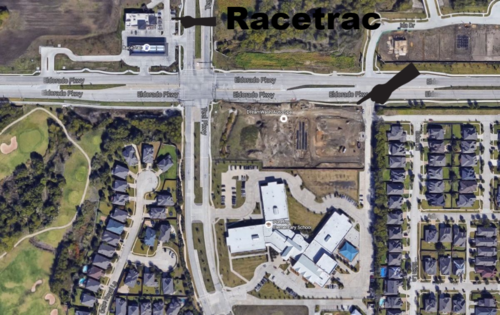
The plaintiffs in FLCT, Ltd. v. City of Frisco, No. 02-14-00335-CV (May 26, 2016), owned two adjoining parcels in the Dallas-Ft Worth area at the southeast corner what could be a very busy (and therefore profitable) intersection of two parkways. After checking with the city that the restriction in the Commercial zoning which prohibited the sale of beer and wine within 300 feet of a school wasn’t going to prohibit such sales if they sold the southern portion of the parcels for a school, the owners did so. The owners and their new southern neighbor the school district executed a development agreement that acknowledged that the sale of alcohol on the remaining parcels was okay. Building permit issued. 

A Racetrac gas/convenience store was what they had in mind. But the City amended the zoning code. And that was enough, apparently, to make the planning department change its mind about

Continue Reading Tex App: How To State A Penn Central Regulatory Takings Claim

Programming note: On the day we remember our nation’s war dead, we thought we’d repost this one, about how Arlington National Cemetery came to be, and how yes, there’s a takings story there.

———————————————————

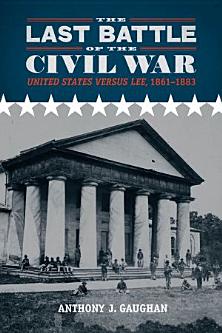
LastbattlebookYou know how we’re always saying that the provisions in the Takings Clause are “self-executing,” that even in the absence of a waiver of sovereign immunity, the Tucker Act, and section 1983, property owners would still be able to maintain a claim for compensation? Well here’s an article that explains that how that rule was first articulated, and not in a dry academic way, but with a fascinating historical story.

It’s the tale of United States v. Lee, 106 U.S. 196 (1882). We knew the land that is now Arlington National Cemetery was once owned by Robert E. Lee, but we can’t say that we gave much thought to how it became public property. We

Continue Reading Memorial Day, Arlington National Cemetery, And Takings

Tomorrow morning, Thursday, May 26, 2016, starting at 9:00 a.m., the California Supreme Court will be hearing oral arguments in an eminent domain case that sits at the intersection of jury determinations of just compensation, and the Nollan/Dolan unconstitutional conditions issue. 

Here is the link to the argument live stream

The court is now live-streaming video of oral arguments, so you can follow along in real time. We’ll post the link when it goes live at the court’s web site.

Programming note: the argument is second on the 9:00 calendar, which means that the case will most likely be called some time after 10:00 a.m., after the first case is done. 

In City of Perris v. Stamper, No. E054495 (Cal. App. Aug. 9, 2013), the Court of Appeal held that in a condemnation action, “issues surrounding the dedication requirement are essential to the determination of ‘just

Continue Reading Cal Supreme Court Oral Argument Preview: In Just Comp Trial, Does Jury Determine Reasonable Probability Of Exaction?

Here’s the amicus brief we filed yesterday on behalf of lawprof David Callies and our colleagues at Owners’ Counsel of America in an important case involving ownership and use of the “dry sand” beach, now pending in the North Carolina Supreme Court.  

In Nies v. Town of Emerald Isle, No. COA15-169 (N.C. App. Nov. 17, 2015), the court of appeals held that the dry sand portion of the beach — the part between the mean high water mark and the dune or vegetation line — is subject to the public trust. Consequently, the Town was not liable for a regulatory taking when it allowed the public, for a fee, to drive on the beach. The Nies family, which thought it owned the property inland of the MHWM under long-standing North Carolina law, and that the public trust only applied to property seaward of the MHWM, sought compensation.  The North Carolina

Continue Reading Amici Brief: If A Legislature Or Court Moves The Public Trust Shoreline Inland, It’s A Taking

Someone up in Asheville must’ve really ticked off someone else down at the North Carolina legislature. Because for some reason, the state adopted a statute which, just like that, transferred the city-owned water system to a newly-created county sewer and water district. The statute didn’t change the water system’s operation — and this was key in the resultant lawsuit in which the city sued the state — only the ownership.

The law on its face is one of general application, and doesn’t name Asheville’s system specifically. But the statute covered only systems that met certain standards (population, for example), and which were located in a county that already has a public sewer system. And guess which was the only city in all of North Carolina which qualified? You guessed it, Asheville.  

The city wasn’t too happy about that and called bunk (perhaps appropriate, given that the new entity to which

Continue Reading NC Supreme Court Arguments: Can A State Take A City’s Water System?

We thought there was a chance in a case out of San Jose, California, that the U.S. Supreme Court might take up the long-standing issue of whether legislatively-imposed exactions meet the nexus and proportionality unconstitutional conditions tests from Nollan, Dolan, and Koontz. Do those tests require an individualized determination, or is it enough that the conditions are imposed on everyone? 

But the Court declined to review that case. There was a question in whether San Jose’s affordable housing requirements were “exactions,” because the California Supreme Court disposed of the case by concluding that the regulations were mere run-of-the-mill zoning ordinances, and thus not subject at all to N-D-K. Thus, the heightened scrutiny required by N-D-K didn’t apply.  

This cert petition, recently filed, however, presents the legislatively-imposed question very clearly. In Common Sense Alliance v. Growth Management Hearings Bd., No. 72235-2-1 (Wash.

Continue Reading New Cert Petition: Are Legislative Exactions Immune From Nexus And Proportionality Requirements?


Owlshead

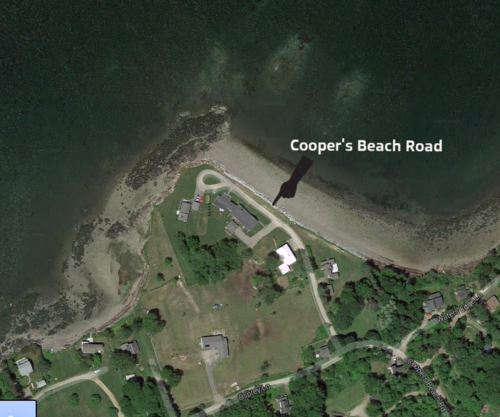
Here’s a cert petition recently filed, which asks the U.S. Supreme Court to review the opinion of the Maine Supreme Judicial Court under a judicial takings theory.

The petitioners argue that the Maine court took their private property when it departed from its prior decisions and a statute and concluded that a road to their home was a public beach access road, and not their private driveway. 

Here are the Questions Presented:

1. Did the Maine Supreme Judicial Court effect a “judicial taking” in violation of the Fifth and Fourteenth Amendments to the United States Constitution when it upheld the Superior Court’s reliance upon extrinsic evidence of the intent of petitioner’s deceased predecessor in title, John McLoon, to determine that the dedication and acceptance of “Coopers Beach Road” as a public way included the Petitioner’s driveway despite the fact that the dedication petition itself failed to specifically describe the

Continue Reading New Cert Petition: By Upholding Public Beach Road Access, Maine Supreme Court Judicially Took Our Driveway

20151205_150101

A noteworthy opinion from the Court of Federal Claims in Petro-Hunt LLC v. United States, No. 00-512L (Apr. 26, 2016), dismissing a claim for a judicial taking for lack of subject matter jurisdiction because the claim would require the CFC, an article I court, to review the actions of the Fifth Circuit, an article III court. The CFC concluded that in this situation, the Federal Circuit holds there’s no jurisdiction.   

The takings case came about after the Fifth Circuit held that the plaintiff did not own mineral leases in Louisiana because under federal common law, it did not acquire any rights by prescription. The plaintiff asserts in the CFC that this is a taking because the Fifth Circuit’s ruling altered its previously-established rights by changing the law. The court accepted that fact as true, but concluded that the CFC has no jurisdiction to tell the Fifth Circuit it

Continue Reading CFC Tackles Judicial Takings: SCOTUS “Cracked Door Ajar,” But Federal Circuit Mostly Says No Jurisdiction

20151205_145903

Earlier today, we asked the Federal Circuit for its permission to file this amici brief urging the court to rehear its recent panel decision in Romanoff Equities, Inc. v. United States, No. 15-5034 (Fed. Cir. Mar. 10, 2016).

This is a rails-to-trails takings case in which the panel concluded that the words in the original easement grant “for railroad purposes and for such other purposes as the Railroad Company … may … desire to make” mean that the easement was a “general” easement which allowed the grantee to not only make railroad use of the easement, but literally any use it desired. Thus, when the railroad abandoned the line and the City of New York turned it into the Highline public park, the reversionary property owners were not entitled to compensation.    

Our brief argues that there’s no such animal as a “general” easement that allows the

Continue Reading Amicus Brief: NYC’s Highline Park Is A Taking: A “General” Easement Allowing All Uses Isn’t Really An Easement At All