Here’s an article for your Monday reading, Bethany R. Berger, Property and the Right to Enter, 80 Wash. & Lee L. Rev. 71 (2023).

Here’s the abstract:

On June 23, 2021, the Supreme Court decided Cedar Point Nursery v. Hassid, holding that laws that authorize entry to land are takings without regard to duration, impact, or the public interest. The decision runs roughshod over precedent, but it does something more. It undermines the important place of rights to enter in preserving the virtues of property itself. This Article examines rights to enter as a matter of theory, tradition, and constitutional law, arguing that the law has always recognized their essential role. Throughout history, moreover, expansions of legal exclusion have often reflected unjust domination antithetical to property norms. The legal advocacy that led to Cedar Point continues this trend, both undermining protections for vulnerable immigrant workers in this case

Continue Reading New L Rev Article: “Property and the Right to Enter” (Bethany Berger)

1992 Aerial Photo Island2
Shands Key, with the City of Marathon in the background

This just in: in Shands v. City of Marathon, No. 3D21-1987 (May 3, 2023), Florida’s Third District Court of Appeals held that the city’s downzoning the property (Shands Key, shown above in an exhibit from the Key West trial we participated in in June 2021) from General Use (density: one home per acre) to Conservation Offshore Island (one home per 10 acres; Shands Key is just under 8 acres) effected a Lucas taking.

We’re not going to go into too much detail, because this case is one of ours. Our Pacific Legal Foundation colleague Jeremy Talcott was the lead trial and appellate counsel, backed by Kady Valois.

Shandstrialteam_after
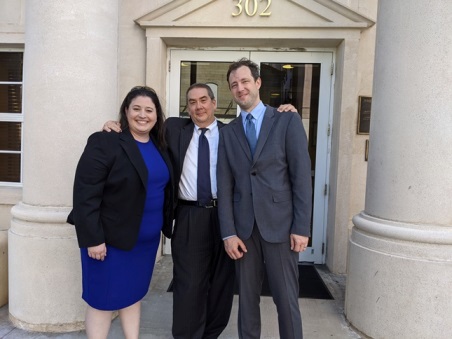
Trial (and appeal) team after closing arguments in Key West:
Valois, inversecondemnation.com, Talcott

But we’re not going to let you go without noting a few highlights from the Court of

Continue Reading This Just In – Florida Appeals Court: TDRs, Beekeeping, And Camping Are Not Economically-Beneficial Uses, So Downzoning Is A Lucas Taking

Check this out, a recently-published article in the Virginia Law Review, Aziz Z. Huq, “Property against Legality: Takings after Cedar Point,” 109 Va. L. Rev. 233 (Apr. 10, 2023).

Here’s the abstract:

In the American constitutional tradition, a zealous judicial defense of property is closely aligned with the idea of “the rule of law.” Conventional wisdom holds that the Takings Clause of the Fifth Amendment vindicates both property rights and the rule of law by foreclosing arbitrary, lawless state action. But the standard story linking property rights, legality, and a constraint on arbitrary governance is more commonly stipulated than analyzed. This Article uses an apparent sharp break in takings jurisprudence, the United States Supreme Court’s June 2021 decision in Cedar Point Nursery v. Hassid, to closely scrutinize the relationship between legality and property rights. To that end, it offers first a careful analysis of the sharp rupture

Continue Reading New L Rev Article: “Property against Legality: Takings after Cedar Point (Huq)

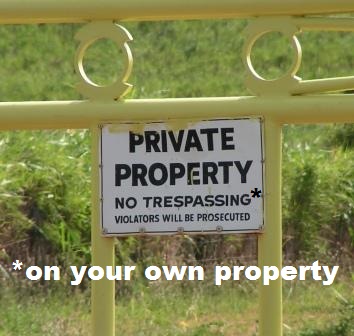
Keepoutyourownproperty

Here’s the cert petition in a case we’ve been following

This is the one where a North Carolina county went bonkers in the early days of Co-19, and truly “locked down” by banning nonresident property owners from entering the county. This wasn’t done all at once, but in phases, with nonresident property owners being informed that if they didn’t get to their Dare County homes by March 20, they were going to be prohibited from even entering the county. As the Fourth Circuit put it, “In effect, Dare County told non-resident property owners:’“If you want to quarantine at your beach house, get there by March 20.’ This gave non-resident property owners four days to travel to the county.”

Blackburn was stopped from accessing his property for 45 days.

The Fourth Circuit upheld the district court’s rejection of his takings claim, concluding that this was not a physical invasion

Continue Reading New Cert Petition: Is Barring You From Accessing Your Own Property A Categorical Taking?

We’re not going to dwell too much on the U.S. Court of Appeals’ opinion in Fox v. Saginaw County, No. 22-1265 (Apr. 28, 2023), because even though it is a case involving the “home equity theft” takings issue argued at the Supreme Court last week, this one tells us more about civil procedure than takings. 

The Fox case is a class action, and several of the defendant counties may engage in the practice of seizing property and liquidating it to satisfy a tax debt (and then keep any excess), but they didn’t do it to the lead plaintiff Mr. Fox.

The district court held that the class action could proceed, but the Sixth Circuit said no: Fox may have standing to assert the one county that kept his equity has taken his property, but has no standing to assert claims against the other governmental defendants because those defendants

Continue Reading No Class: CA6 Rejects Class Certification For Home Equity Theft Takings Case

52851572390_8ab246acf3_o
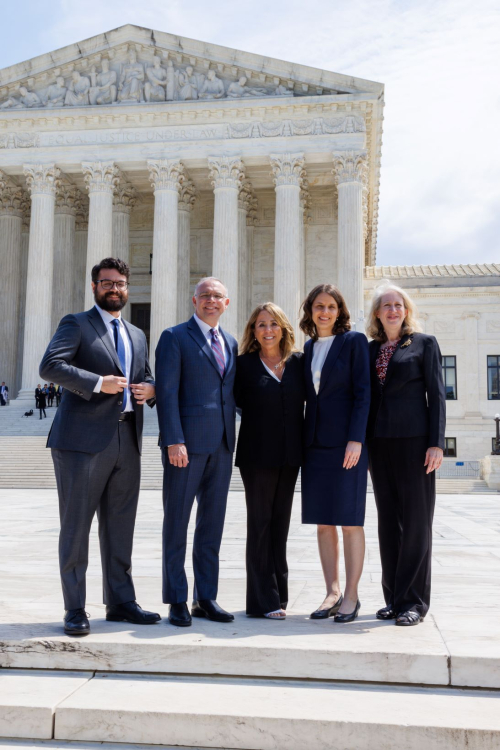
Our Pacific Legal Foundation Property Rights Litigation Tyler team,
and Counsel of Record Christina Martin (second from right)

Here are your links to the buzz about Tyler v. Hennepin County, No. 22-166, our law firm’s case which argues that Hennepin County’s seizure of Ms. Tyler’s condo and then keeping the excess equity over what she owed in property taxes and fees, is an uncompensated taking of private property, and also violates the Excessive Fines Clause.


Continue Reading Tyler SCOTUS Takings Argument Round-Up

Coffee
Coffee is for closers.
(Yes, we were up and at the desk at 4 a.m. local time

to listen live. We just needed a direct injection of coffee.)

Here is the transcript, and the audio recording of today’s U.S. Supreme Court arguments in Tyler v. Hennepin County, No. 22-166, our law firm’s case which argues that Hennepin County’s keeping the excess equity in Ms. Tyler’s home over what she owed in property taxes and fees, is an uncompensated taking of private property, and also violates the Excessive Fines Clause.

We will bring you the analysis of the arguments and the pundits’ predictions in a subsequent posts. But for the time being here these are in case you missed out listening live. Stay tuned.

Transcript, Tyler v. Hennepin County, No. 22-166 (U.S. Apr. 26, 2023)

Continue Reading Today’s Takings SCOTUS Oral Argument Transcript And Recording: Tyler v. Hennepin County

SCOTUS

Tomorrow, Wednesday, April 26, 2023, at 10:00 a.m. Eastern Time, the U.S. Supreme Court will be hearing oral arguments in Tyler v. Hennepin County, No. 22-166, our law firm’s case which argues that Hennepin County’s keeping the excess equity in Ms. Tyler’s home over what she owed in property taxes and fees, is an uncompensated taking of private property, and also violates the Excessive Fines Clause.

Listen to the arguments live, here.

We posted some preview links earlier this week here. But wait, there’s more!


Continue Reading More SCOTUS Takings Previews (Argument Tomorrow, 10am ET)

If everything the Ninth Circuit says in its unpublished memorandum opinion in Craneveyor Corp. v. City of Rancho Cucamonga, No. 22-55435 (Apr. 20, 2023) is accurate, there’s no way to ever draft a complaint alleging a facial Penn Central regulatory taking that will survive a 12(b)(6) motion to dismiss for failure to state a claim.

From what we can gather (this is an unpublished memorandum opinion, after all), the property owner asserted a facial takings challenge to some sort of zoning regulations that restrict its use of two parcels it owns. We’re not sure what restrictions. See slip op. at 2 (“The complaint asserts a facial takings challenge under 42 U.S.C. § 1983 to a city zoning plan that allegedly restricts development on two parcels of land owned by CraneVeyor.”).

Two theories: Lucas and Penn Central.

The court made short work on the facial Lucas claim, concluding that

Continue Reading CA9 (unpub.): You Can Never Adequately Plead A Facial Penn Central Taking For City Zoning Restrictions

Take a deep dive into the arguments and amicus briefs

This Wednesday, April 26, 2023, the U.S. Supreme Court will hear oral arguments in Tyler v. Hennepin County, No. 22-166, our law firm’s case which argues that Hennepin County’s keeping the excess value in Ms. Tyler’s home over what she owed in property taxes and fees, is an uncompensated taking of private property, and also violates the Excessive Fines Clause.

Here are links to programs, summaries, and events to help you understand the arguments and issues, as well as registration for post-argument analysis:


Continue Reading Get Ready For SCOTUS Takings Arguments (Wednesday, April 26, 2023)