


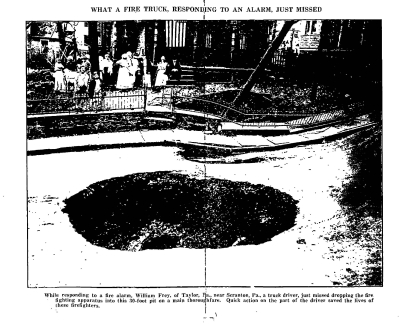
Just missed

Yes, the granddaddy of all SCOTUS regulatory takings cases, from which we got such phrases as these was argued 100 years ago this day.

  • The general rule, at least, is that, while property may be regulated to a certain extent, if regulation goes too far, it will be recognized as a taking.”
  • Government hardly could go on if, to some extent, values incident to property could not be diminished without paying for every such change in the general law.
  • “We are in danger of forgetting that a strong public desire to improve the public condition is not enough to warrant achieving the desire by a shorter cut than the constitutional way of paying for the change.”
  • “As long recognized, some values are enjoyed under an implied limitation, and must yield to the police power. But obviously the implied limitation must have its limits, or the contract and
Continue Reading It Was A Hundred Years Ago Today … Happy Argument Birthday, Pennsylvania Coal v. Mahon

To “slow the spread” in the early days of the Co-19 thing, the City ordered businesses to shut down. But not Wal-Mart, liquor stores, or churches. Golden Glow, a tanning salon objected, and told anyone who would listen that it could operate without person-to-person contact. Sorry, no exceptions.

Federal lawsuit followed, alleging the claims you might expect: equal protection and takings claims. Predictably, the district court granted summary judgment to the City.

And just as predictably, in Golden Glow Tanning Salon, Inc. v. City of Columbus, No. 21-60898 (Nov. 8, 2022), the U.S. Court of Appeals for the Fifth Circuit affirmed. The opinion, as you might expect is short.

Was Golden Glow treated differently from other businesses similarly situated without a rational reason? No. First, Golden Glow is similar to other shut down businesses: “[e]ach class of shut-down business provides recreational, social, or, as some would say, ‘nonessential’ services

Continue Reading Tanning Beds v. Liquor Stores – No Equal Protection, No Physical Take, No Lucas Take For Co-19 Biz Shutdown Order

Ideker Farms, Inc. v. United States, No. 21-1849

As written up in the FedCircuitBlog (a must-follow for all you federal takings mavens):

It concerns the federal government’s liability for taking private property. Specifically, in this case, the Federal Circuit will review the conclusion of the Court of Federal Claims that the government’s action was the cause-in-fact of flooding damage and that, as a result, a taking-by-flooding occurred. The government appeals the CFC’s judgment, while Ideker Farms cross-appeals.

Behrens v. United States, No. 22-1277

Also from the FedCircuitBlog:

Behrens v. United States, which concerns a claim the federal government was liable for taking land for public use through the National Trails System Act. Specifically, in this case, the Federal Circuit will review the determination by the Court of Federal Claims that the plaintiffs were not entitled to compensation because the scope of the easement in question was broad

Continue Reading CAFED Hears Arguments In Two Takings Cases

Takingspanel

For the last week, the blog has been a bit idle. That hasn’t been because we’re slowing down, but was mostly the result of our blog platform being worked on behind-the-scenes, which knocked a lot of the hosted blogs offline, this one included. But things look good now, so here we are.

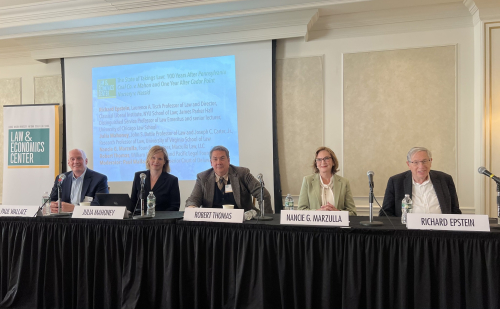
We were also on the road, traveling to New York for the Seventeenth Meeting of the American College of Business Court Judges, where we were able to join an august panel of takings mavens (pictured above, L-to-R: Judge Paul Wallace, Professor Julia Mahoney, some guy, Nancie Marzulla, and Professor Richard Epstein) to talk about the state of takings law.

The title of our program was “The State of Takings Law: 100 Years After Pennsylvania Coal Co. v. Mahon and One Year After Cedar Point Nursery v. Hassid,” and we spent our time discussing and debating

Continue Reading What’s “The State of Takings Law: 100 Years After Pennsylvania Coal Co. v. Mahon and One Year After Cedar Point Nursery v. Hassid”? Incoherent (But Getting Better)

Earlier this month, the U.S. District Court invalidated Honolulu’s stretching of the minimum term for a residential rental from 30 days to three months, concluding that the ordinance likely violates the state Zoning Enabling Act, and also would be a taking if implemented. The court issued a preliminary injunction.

The lawyers repping the plaintiffs in that case — our former law partner Greg Kugle — appeared on Kelii Akina’s Hawaii Together (Think Tech) program to talk about it more. Check it out.Continue Reading More On Federal Court Invalidating Honolulu’s 3-Month Minimum Rental Term

October 20, 2022 was what one advocate noted was “land use day at the Ninth Circuit,” because three out of the four cases being argued in Courtroom 3 of the San Francisco courthouse were indeed land use — or perhaps more accurately, regulatory takings — cases.

Ours was one of those cases, Ralston v. San Mateo County.

Without going into too much detail, this is an appeal from the district court’s 12(b)(6) dismissal of our regulatory takings complaint. The crux of the claim is that Ralston’s R-1 zoned property is subject to an “overlay” district called the Montecito Riparian Corridor, a highly-restricted zone that allows only 5 environmental uses of land within the zone (none of which are consistent with the R-1 zoning). (Ralston’s property is labeled “076-19” on the County’s MRC map.)

Montecito Riparian Corridor

Absent some kind of special dispensation — what the County calls an “override” —

Continue Reading CA9 Takings Ripeness Oral Arguments: Must Property Owners Secure Govt’s Agreement That Property Is Subject To Challenged Regulations Before A Court Can Review?

IMG_20170323_142842

Here’s one we’ve been waiting to drop, in a case we’ve been following.

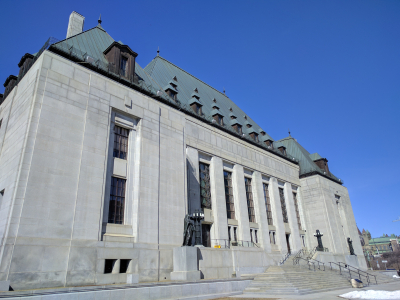
Today, in Annapolis Group Inc. v. Halifax Regional Municipality, No. 39594 (Oct. 21, 2022), the Supreme Court of Canada held (and we’re translating into United States here), that to state a claim for a regulatory taking based on the government’s refusal to approve a development application consistent with the residential zoning, requires only that the plaintiff allege a taking of a beneficial interest, and does not require that the government have seized land.

Our northern friends do not label this claim a “taking” or “regulatory taking,” but use different terms: de facto expropriation or constructive appropriation, or constructive taking, or even “disguised expropriation.” You get the drift. (For the record, we really like “disguised expropriation.”)

One major difference between Canadian takings law and the U.S. approach is that Canada does not consider property rights to

Continue Reading Oh, Canada! SCOCAN: Constructive Appropriation (Regulatory Takings) Claim Need Not Be Based On Land Acquisition; Taking Of Beneficial Interest Suffices

Been meaning to post this one for a while.

The plaintiff in Northwest Landowners Ass’n v. North Dakota, No. 20210148 (Aug. 4, 2022), challenged North Dakota’s adoption of a statute about “pore space,” which is “a cavity or void, whether natural or artificially created, in a subsurface sedimentary stratum.” Whoa.

The problematic part of the statute “allows an oil and gas operator to use subsurface port space and denies the surface owner the right to exclude others or to demand compensation for this subsurface use.” Slip op. at 2. The statute also amended the definition of “land” to exclude pore space, and barred tort claims for injection or migration of substances into pore space. Frack!

The Association sued, asserting that the statute effected a facial taking because “it strips landowner of their right to possess and use the pore space within their lands and allows the State

Continue Reading Shades Of Mahon From North Dakota: Fracking Statute “constitutes a per se taking”

We won’t be providing our detailed thoughts on last week’s U.S. Court of Appeals for the Sixth Circuit’s opinion in Hall v. Meisner, No. 21-1700 (Oct. 13, 2022), because we’re obviously biased: our law firm colleagues Christina Martin and Kady Valois represent the prevailing property owners, so we naturally agree with the court. Thus, you should really read the opinion in its entirety yourself. But we shall offer some commentary:

  • This is another one of those “home equity theft” cases where, after foreclosing property in order to satisfy a tax or other debt, the government doesn’t remit the excess equity to the property owner, but keeps it or allows a private third-party to do so.
  • This case is a takings challenge to a Michigan county doing just that under the authority of state law. Hall owed a tax debt of $22k, and her home was worth close to $300k.


Continue Reading CA6: Home Equity Is Property Even If State Law Says Otherwise: Govt Can’t Foreclose To Satisfy A Tax Debt, Then Keep The Change

Many Honolulu residents don’t like short-term (less than 30 day) rentals. Whether fueled by NIMBY-ism, a genuine belief that tourists should stay out of residents’ neighborhoods and be limited to accommodations built for transients, or the belief that long-term rentals to locals somehow promote more affordable housing, the anti-transient renter vibe is most definitely there.

The no-less-than-thirty-days restriction wasn’t enough, however, and recently the City and County of Honolulu made it illegal to rent for less than three months (90 days). The ordinance stated the reasons:

Short-term rentals are disruptive to the character and fabric of our residential neighborhoods; they are inconsistent with the land uses that are intended for our residential zoned areas and increase the price of housing for O‘ahu’s resident population by removing housing stock from the for-sale and long-term rental markets. The City Council finds that any economic benefits of opening up our residential areas

Continue Reading Federal Court: Honolulu’s 3-Month Minimum Rental Term Preempted By State Law (And Would Be A Taking Of Vested Rights)