In Hawaii we employ a phrase, “how can?” as a shorthand response when you’re wondering how something can be. It’s easy, short, and more efficient than saying “I’m sorry, I don’t understand how you think you can accomplish this.”

Thus, “how can?” was our first response when the U.S. Department of Health and Human Services’ recently-released agency order establishing a covid response nationwide residential eviction moratorium crossed our desk yesterday. By what authority does the federal government purport to dictate (yes, we’re going to use that word) whether state and local governments (and state courts) allow evictions for not paying rent? We thought that property law was one of those local things?

Just as we were about to dive in, our friend and colleague Tony Della Pelle produced an analysis more cogent than “how can?” In “COVID Eviction Freezes – Who Is Supposed To Pay?,” Tony asks, “Did
Continue Reading How Can? U.S. DHS: National Eviction Moratorium (Roscoe Filburn Could Not Be Reached For Comment)

Here, the ruling of the Massachusetts Superior Court (Suffolk County) in Matorin v. Commonwealth of Massachusetts, No. 2084CV01334 (Aug. 26, 2020).

The short story is that the court denied the plaintiffs’ motion for a preliminary injunction on the grounds that they were not likely to succeed on the merits of their as-applied regulatory takings challenge to the Commonwealth’s series of moratoria on residential evictions. The moratoria allow the property owners to recover possession after expiration, and the tenants are not freed from the eventual obligation to pay rent.

Skip forward to page 17 for the court’s takings analysis (although it would be a shame to not read the intervening pages, because the opinion also deals with the related separation of powers and access-to-the-courts questions). The court first rejected the argument that the moratoria allowed physical occupations (based on Yee), because it isn’t “permanent,” merely temporary. And (also based

Continue Reading Mass Super: State’s Temporary Eviction Moratorium Is Not Likely A Taking

News just in: we’ve just received confirmation that the Conference will not be in-person in Scottsdale in January 2021, and we’re going online.

Not a big surprise, but still a bit disappointing, and it’s a shame that the circumstances won’t allow us to meet in-person to talk shop and to renew our friendships like we do every year. 

But rest assured we’re making lemonade out of these lemons, and we’d appreciate everyone holding the dates on your calendars to join your colleagues from across the nation for the online Conference. And no, we’re not going to do two-and-a-half-days remotely, we’re paring down the agenda and will be focusing on hot topics, and great presenters. The remote format has some advantages, and we’re taking advantage of the circumstances to plan a conference more interactive and a bit different than usual.

This will also be a great program for first-time Conference participants.

Continue Reading Breaking: News About The 2021 ALI-CLE Eminent Domain & Land Valuation Litigation Conference (Jan. 28-29, 2021)

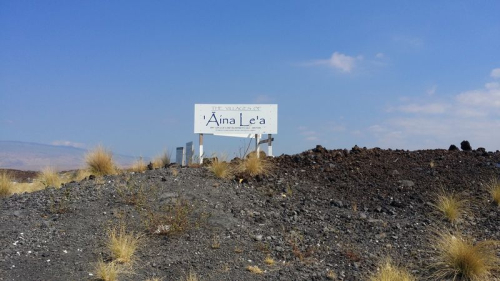
Ainalea

A short while ago, we featured the cert petition in a case from the Big Island that we’ve been following as various pieces of it went up and down through both the state and federal court systems. See “New (Mike Berger) Cert Petition: ‘This case is the proverbial ‘Exhibit A’ of much that is wrong [with takings law].

Now, after the State of Hawaii waived its right to file a BIO, five briefs of amici curiae (including one in which we played a small part) have been filed in support of the petition, urging the Court to review the Ninth Circuit’s opinion. We wrote about the case in a recent issue of the American Planning Association’s magazine. The short story is that a federal jury concluded that the State of Hawaii Land Use Commission took the owner’s property under both a Lucas and a

Continue Reading No Shortage Of Amicus Support For Takings Cert Petition (Lucas and Penn Central!)

Property owners sued the State of Ohio Department of Transportation’s Director (in his official capacity) in federal court after ODOT’s highway project resulted in flooding of their land. They raised two claims: the first, a taking under the Fifth (and Fourteenth) Amendments, and the second a claim under 42 U.S.C. § 1983. The relief sought: a declaration that this is a taking along with just compensation, and damages for the section 1983 violation.

If you are thinking “what about the Eleventh Amendment?,” you would be thinking like the U.S. Court of Appeals for the Sixth Circuit. In Ladd v. Marchbanks, No. 19-4136 (Aug. 20, 2020), the appeals court affirmed the district court’s dismissal of the complaint. No federal court lawsuits against a state is the general rule. There are exceptions, of course, most notably when Congress abrogates the states’ immunity, but the Supreme Court has held that section 1983

Continue Reading Sixth Circuit: You Still Can’t Sue States In Federal Court For Takings, Even After Knick

Although the U.S. Court of Appeals for the Sixth Circuit declined to publish its opinion in Ostipow v. Federspiel, No. 18-2448 (Aug. 18, 2020), we wish it had for a couple of reasons.

First, the name: it just rolls off the tongue, melodiously. “Ostipow versus Federspiel.” We just like how that sounds. Second, the facts: the Ostipows’ son set up a weed growing operation in his mom and dad’s farmhouse, unknown to them (bad son!). the local county Five-O seized the farmhouse and other Ostipow property by civil asset forfeiture (including a 1965 Chevy Nova, the philistines!), and after eight years in state court, in 2016, they finally won a judgment as innocent owners.

Not content with waiting for enforcement of the judgment, “[t]he next day [after the court entered the judgment against the county sheriff], the Ostipows made a written demand to Saginaw County Sheriff William Federspied

Continue Reading CA6: A Wrongful Civil Asset Forfeiture Is Not A Taking

IMG_20200817_104808

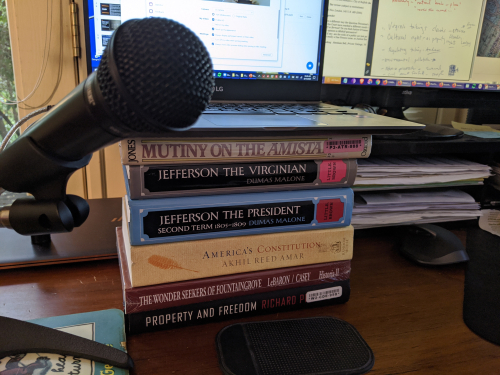
We’re done with our first day of class for the upper-level students at William and Mary. We’re teaching two courses this semester, the usual Eminent Domain and Property Rights, but also Land Use Law. We were set to begin a semester of “hybrid” instruction (some students in the classroom, with distancing in place, while others attend remotely). But late last week, due to some administrative difficulties unrelated to the law school, we had to postpone the in-person part until next week.

So we did our first two classes today via Zoom. It went as well as you might expect. We’ve had to make some adjustments to the usual law classroom, but so far, everyone is taking it in stride and adapting well. We expect to do the same and adjust and readjust as the semester progresses.

What you’re looking at above is our set-up, a remote “podium” on which we

Continue Reading What Books Do You Use For Your Remote Podium?

Title

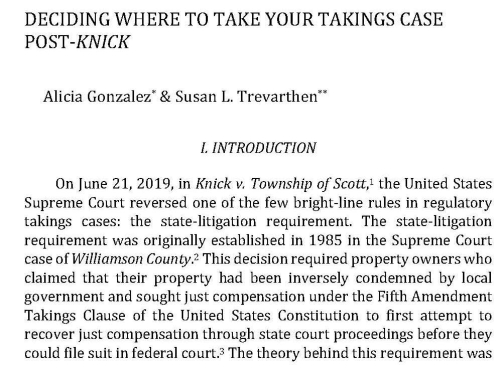
Check this out, a newly-published article on takings by two eminent Florida takings practitioners, Alicia Gonzalez & Susan L. Trevarthen, Deciding Where to Take Your Takings Case Post-Knick, 49 Stetson L. Rev. 539 (2020).

If the title isn’t enough to grab your interest, here’s the description in the Introduction,

Post-Knick,both plaintiffs and defendants have an option available to them that was previously unavailable. This Article will discuss the options that litigants on either side now have in federal takings cases and evaluate which options are desirable depending on the objectives of a particular litigant. Part II will discuss the history of the state-litigation requirement and the theoretical underpinnings of the Williamson County decision in which the state-litigation requirement was imposed. Part III will discuss Knick and the Supreme Court’s reasoning for reversing its own precedent in Williamson County. Part IV will discuss the new options

Continue Reading New Law Review Article: “Deciding Where to Take Your Takings Case Post-Knick

20181003_180531_HDR

Registration is up and online. Join us (online) for the 2020 Brigham-Kanner Property Rights Conference. Tuition: free, unless you want CLE credit (in which case it is a very modest $100). Because this conference has gone virtual, the usual Wren Building awards banquet to honor this year’s B-K Prize winner, lawprof Henry Smith, obviously won’t happen, but the speaking panels are a “go.” 

Sign up now and hold the date on your calendar. This is, in our opinion, the best one-day Academy-Bar-Bench conference about property rights that there is. And at such a great deal this year makes this one a “can’t miss.”

Here are the panel topics:

  • Where Theory Meets Practice: A Tribute to Professor Henry E. Smith Recipient, 2020 Brigham-Kanner Property Rights Prize
  • The Housing Crisis
  • Roundtable: Emerging Issues in Takings and Eminent Domain Law
  • The Reach of Government’s Confiscatory Powers Over Exigencies and Emergencies
  • The


Continue Reading Register Now: William and Mary Law’s Brigham-Kanner Property Rights Conference – Oct 1, 2020 (Virtual)

Here’s the cert petition that we’ve been waiting to drop in a case we’ve been following. Last we checked in, the Ninth Circuit (with concurral) had denied en banc review, over a dissental.

In Cedar Point Nursery v. Shiroma, 923 F.3d 524 (May 8, 2019), a 2-1 panel of the Ninth Circuit affirmed the dismissal of a complaint for failure to plausibly state a takings claim under Twombly/Iqbal.  At issue was a regulation adopted by California’s Agricultural Labor Relations Board which requires agricultural employees to open their land to labor union organizers. The regulation is framed as protecting the rights of ag employees to “access by union organizers to the premises of an agricultural employer for the purpose of meeting and talking with employees and soliciting their support.”

The panel majority viewed the complaint as alleging a Loretto physical invasion taking, and held the

Continue Reading New Cert Petition: Does A Physical Invasion Taking Require 24/7 Occupation?