


One more to add to your reading queue. The latest complaint alleges, among other claims, that the Illinois governor’s coronavirus shut down orders for businesses deemed “non-essential” result in takings. 

The list of similar challenges keeps growing. See here, here, here, here, here, here, here, here, here, here, here, here and here, for example. The longer this thing goes on, the more like this we’re going to see.

join us later today, Wednesday, June 16, 2020 at 5:30pm Hawaii Time, when we’ll be speaking about this question in a program for the King Kamehameha V Judiciary History Center (open to the public, more details here). Our thoughts on the takings aspects of the shutdowns orders: Evaluating Emergency Takings: Flattening The Economic Curve.

Complaint at Law, Nowlin v. Pritzker, No. 1:20-cv-01229-MMM-JEH (C.D. Continue Reading The Hits Keep Coming: New Complaint Alleges Illinois’ Lockdown Order Is A Taking
MVIMG_20191108_125325

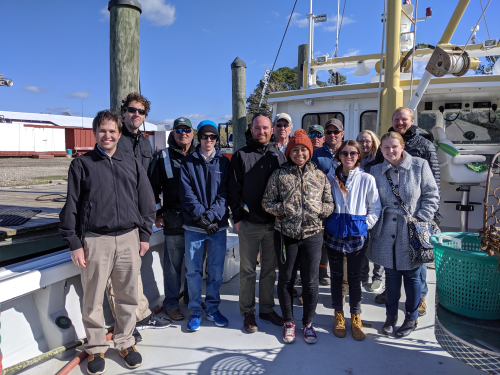
Here’s the latest in a case we’ve been following (we visited the site last November with our William and Mary class), the property owners’ Opening Brief in  a case being considered by the Virginia Supreme Court.

This is a case at the intersection of property and takings law, and environmental protection. Several Nansemond River oystermen own a lease from the state for the riverbed, which among other things, allows them to harvest some of the oysters that Virginia is so well known for. But they were forced to bring an inverse condemnation claim in state court, asserting that the City’s dumping of wastewater in the river — and prohibiting the harvesting of oysters during those times — was a taking under the Virginia Constitution’s taking or damaging clause (article I, § 11).

The trial court sustained the City’s demurrer, accepting the City’s argument that it has the right to

Continue Reading Property Owners’ Brief In Virginia Supreme Court “Oyster Takings” Case

Here’s the latest complaint challenging coronavirus-related orders (in this case, the City of Los Angeles’ rent payment and eviction moratoria) as a taking.

More here from the LA Times: “Landlord group sues city of L.A. over coronavirus anti-eviction protections.”

You should probably read the entire document, as it is drafted well. But it is long (48 pages – it even has a Table of Contents and a Table of Authorities), so here are the key parts of the Introduction in case you don’t have time to digest the whole complaint:

1. In the wake of the novel coronavirus, Defendants City of Los Angeles, City Council of the City of Los Angeles, and Mayor Eric Garcetti (collectively “City” or “Defendants”) hastily instituted a series of ordinances which prohibit lessors and landlords, such as Plaintiff’s members, from exercising their contractual remedies where tenants refuse to pay rent on the

Continue Reading New Fed Ct Complaint: Coronavirus Rent Freeze And Eviction Moratorium Is A Taking

Way back when (you know, less than 2 months ago, a lifetime in coronavirus time) when the plaintiffs filed the complaint, we noted that, win or lose, it laid out the takings argument in a comprehensive and understandable way.

It still may be that the arguments are worthwhile pursuing. Our more comprehensive thoughts on that subject here (“Evaluating Emergency Takings: Flattening The Economic Curve“). We don’t know yet, because the district court dismissed the suit because the defendants (Michigan’s governor) enjoys 11th Amendment immunity. Yes, even against claims for just compensation. Opinion and Order Granting Defendant’s Motion to Dismiss, Martinko v. Whitmer, No. 2:20-cv-10931 (E.D. Mich. June 5, 2020).

A suit against the Governor in her official capacity is a suit against the State, and there’s no takings exception to 11th Amendment immunity (according to the court). As is often the case, the harder stuff is

Continue Reading Federal Court: Not Going To Deal With Takings Argument Because 11th Amendment

EX A

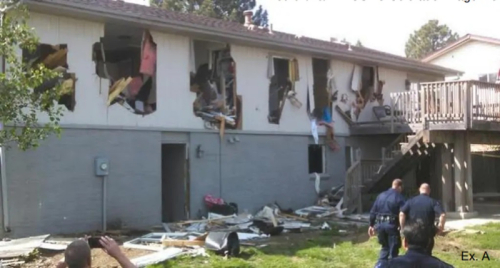
Here’s the city’s Brief in Opposition in a case we’ve been following (so closely, in fact, that we filed an amicus brief in support of the property owner – see “Amicus Brief: Invocation Of “Police Power” Is Not Dispositive In Takings“). A case in which the issues have taken on new and heightened importance.

This is the case where the municipal police pretty much destroyed a family home in the course of their efforts to dislodge a shoplifter who had taken refuge there while fleeing. The homeowner sought compensation for a taking. The Tenth Circuit, however, concluded “no taking” because the police were exercising the police power. And you can’t have a taking where the government is exercising the police power, right?

The homeowner filed a cert petition, arguing that “[t]he question presented is whether there is a categorical exception to the Just Compensation Clause when the

Continue Reading BIO In “Police Power” Takings Case: Can A Municipality Be Liable For A Taking If The Police Destroy Private Property In The Course Of Apprehending A Suspect?


Here’s the recording of the Federalist Society’s Environmental Law & Property Rights Practice Group teleforum we did a couple of weeks ago, “COVID-19 & Property Rights: Do Government Actions in Response to the Coronavirus Pandemic Create Compensable Takings?” Stream above, or download it here.

The issue: how should courts evaluate the claims for compensation arising out of emergency measures? This question is on the front burner at the moment (and will continue to be because the courts will likely be confronted from these type of claims as the fallout continues). For example, here are some of the complaints that have been filed in courts around the nation: see here, here, here, here and here.  

The two featured speakers (Professor Ilya Somin and Professor F.E. Guerra-Pujol), not only debated and answered questions for an hour

Continue Reading Podcast: COVID-19 & Property Rights: Do Government Actions in Response to the Coronavirus Pandemic Create Compensable Takings?”

There’s a lot of opinion in the U.S. Court’s of Appeals’ opinion in Stratta v. Roe, No. 18-50994 (May 29, 2020). Yes, the court reversed the district court’s dismissal of a takings claim. But most of the opinion is devoted to the question of whether a Texas water conservation board — an agency whose mission is to regulate surface water uses — may take advantage of the State of Texas’s 11th Amendment immunity (no, held the court). We recommend that part of the opinion to you, federal courts junkies.

But there’s a couple of takings gems in there also. The case involved a challenge by a property owner who was (allegedly) treated by the water conservation board less generously than an (allegedly) similarly-situated municipality, resulting in the owner’s inability to make use of its groundwater rights. (In short, a Pennsylvania Coal claim, where instead of coal being required to

Continue Reading Fifth Circuit: Texas Groundwater Rights Are Takings Clause “Property”

Did you know that the North Carolina Constitution does not formally contain a “takings” or “just compensation” clause? Instead of an outright prohibition on uncompensated takings for public use, the N.C. Constitution has a “law of the land” clause:

Sec. 19.  Law of the land; equal protection of the laws.

No person shall be taken, imprisoned, or disseized of his freehold, liberties, or privileges, or outlawed, or exiled, or in any manner deprived of his life, liberty, or property, but by the law of the land.  No person shall be denied the equal protection of the laws; nor shall any person be subjected to discrimination by the State because of race, color, religion, or national origin.

N.C. Const. art. I § 19.

The lack of an express takings clause, of course doesn’t t mean that the government can just take property and has no obligation to provide compensation.

Continue Reading NC Considering Constitutional Amendment: Compensation For Emergency Shut-Downs

Congratulations – if you understood this post’s headline, you are officially a rails-to-trails nerd. A super-nerd.

But even if not, you shouldn’t need a rails-to-trails nerd’s level of knowledge to understand and appreciate the Federal Circuit’s ruling in Caquelin v. United States, No. 19-1385 (May 29, 2020). It’s a case worth reading for all of us — nonnerds included — because it nicely gets into the weeds of takings doctrine. 

One observation before we begin. There are takings of a fee simple interest. Takings of less-than-a-fee interest, such as the taking of an easement. Partial takings where less than all of the owner’s property is taken, and there’s a remainder property. Temporal takings where the seizure is not forever (temporary takings vs permanent takings). Regulatory takings, inverse condemnations, per se (categorical) takings, physical takings and ad hoc (Penn Central) takings. And myriad combinations fo the

Continue Reading Federal Circuit: Arkansas Game Did Not Overrule Ladd (NITUs Are Categorical Takings)

Here’s the latest complaint that alleges a taking arising out of the coronavirus situation. It joins a long list of similar lawsuits (See here, here, here, here, here, here, here, here, here, here and here, for example.

This one challenges the State of New York’s executive order that bars property owners from pursuing residential evictions for nonpayment of rent and requires the owners to apply security deposits towards rent.

Some interesting elements in the case:

  • The complaint was filed in federal court against the Governor.
  • It avoids the Eleventh Amendment issue by not seeking compensation, only declaratory and injunctive relief.
  • Does that raise the issue of whether such relief is available for a taking?

Stay tuned, this isn’t going to be the last of these things. We wrote up how we think these type of claims should be handled

Continue Reading Latest Coronavirus Complaint: NY State’s Order Suspending Evictions Is A Taking