


One word is conspicuously absent from the Federal Circuit’s opinion in Alpine PCS, Inc. v. United States, No. 17-1029 (Jan. 2, 2017): “exhaustion.”

We all know that exhaustion of administrative remedies isn’t usually required before bringing a constitutional takings claim, but make no mistake — despite the absence of the word in the opinion, the rationale of the court was that the property owner could not bring a takings claim under the Tucker Act in the Court of Federal Claims because it had not exhausted its administrative remedies. 

The property owner asserted that telecommunications licenses it possessed had been taken, and the federal government breached a contract, when the licenses were cancelled after it didn’t make required payments. The CFC dismissed the action for lack of jurisdiction, concluding the federal Communications Act provided a comprehensive statutory scheme under which Alpine could have raised its contract claim, thus depriving the
Continue Reading Williamson County, Federalized: No CFC Tucker Act Jurisdiction Because Owner Didn’t Exhaust Agency Procedures

20170814_152652_Richtone(HDR)

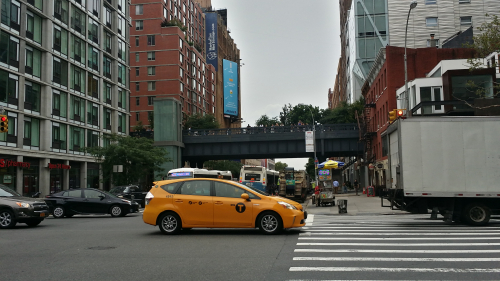
At first, you might not pay much attention to it. After all, it doesn’t really stick out — elevated rail lines aren’t that unusual in a big city. Street-level trains and pedestrians don’t mix well, and in the early 20th Century, New York State adopted a law which moved some of the lines above the street. Indeed, some portions of New York’s subway are still above grade, especially once you are out in the boroughs.

These elevated routes, like many rail lines, were not constructed on land the railroad owned in fee. Instead, the owners of the land granted an easement to the rail lines to use the land “for railroad purposes.” Which meant that the grant of easement remained only as long as the easement holder used the land for a railroad or related purposes. Again, nothing out of the ordinary there.

But then you remember that Manhattan’s

Continue Reading New York City Uncompensated Takings Pilgrimage, High Line Edition

Back in October, the William and Mary Law School awarded U. Hawaii lawprof David Callies the Brigham-Kanner Prize at a two-day conference in Williamsburg. Our summary of the conference is posted here.

We spoke at the conference, at the first panel entitled “The Future of Land Regulation and a Tribute to David Callies,” along with Professors Shelly Saxer and Jim Ely, and past B-K Prize winner Michael Berger. Of course, Professor Callies also delivered his opening remarks.

The law school has posted the audio from that session, which you can listen to here, or stream it above (via Soundcloud). 

We’re in the process of transforming our remarks into a short essay, to be submitted to the Brigham-Kanner Property Conference Journal if you want to wait for the expanded version. (Feb. 13, 2018 update: here’s the draft article.)Continue Reading Brigham-Kanner Podcast: “The Future Of Land Regulations And A Tribute To David Callies”

In Cappel v. Nebraska Dep’t of Natural Resources, No. S-16-1037 (Dec. 22, 2017), the Nebraska Supreme Court concluded the Department’s notices to Cappel pursuant to an interstate water compact which closed off his land’s ability to draw surface water from the Republican River for irrigating his crops was neither a physical nor regulatory taking. 

As you might expect, the central takings question which the court addressed was whether Cappel’s water allocations were “property.” The court held that because the closing notice was made pursuant to the Department’s obligations under the compact, “the water rights at issue were not a compensable property interest and the Cappels’ physical taking argument must fail.” Slip op. at 454. The court also dispensed with the regulatory takings claim by applying the Penn Central test. And you know what that means. 

Here’s the money quote, which reveals the court’s essential problem with the takings claims:

Continue Reading Nebraska: No “Property” In Water Rights Subject To Interstate Compact

Here’s the amici brief we filed earlier today in a case we’ve been following closely since its inception (and in which we filed an amicus brief when it was in the Sixth Circuit).

This is Brott v. United States, No. 17-712 (cert. petition filed Nov. 6, 2017), the case which asks whether Congress can require property owners asserting inverse condemnation or regulatory takings cases seeking just compensation against the federal government to sue in the Article I Court of Federal Claims. The Question Presented which the petition presents is straightforward:

Can the federal government take private property and deny the owner the ability to vindicate his constitutional right to be justly compensated in an Article III Court with trial by jury?

Rather than go into detail about our brief’s argument, we’ll just post the Summary of Argument:

The government does not enjoy its usual sovereign immunity when it takes property, either affirmatively or inversely, and this Court has repeatedly confirmed that the Just Compensation Clause is “self-executing.” First English Evangelical Lutheran Church of Glendale v. County of Los Angeles, 482 U.S. 304, 315 (1987) (“We have recognized that a landowner is entitled to bring an action in inverse condemnation as a result of ‘the self-executing character of the constitutional provision with respect to compensation.”).

But what does this mean, exactly? Even as the Sixth Circuit recognized that property owners have a right to compensation that springs from the Constitution itself and the right to sue does not depend upon a waiver of sovereign immunity, it held that Congress is not compelled to provide an Article III forum to vindicate that right. Or indeed, any forum at all. Thus, even if the forum Congress created―the Article I non-jury Court of Federal Claims (CFC)―is not constitutionally adequate, well, that’s good enough. In the words of the Sixth Circuit, “[t]he Fifth Amendment details a broad right to compensation, but does not provide a means to enforce that right. Courts must look to other sources (such as the Tucker Act and the Little Tucker Act) to determine how the right to compensation is to be enforced.” Brott v. United States, 858 F.3d 425, 432-33 (6th Cir. 2017). That is sovereign immunity by another name.

However, we think this Court said it best in United States v. Lee, 106 U.S. 196 (1882), the takings lawsuit over what today is Arlington National Cemetery, when it held that courts (referring to Article III courts, and not what is, in essence, a Congressional forum), must be available for those whose property has been taken:

The [government’s argument it cannot be sued] is also inconsistent with the principle involved in the last two clauses of article 5 of the amendments to the constitution of the United States, whose language is: ‘That no person * * * shall be deprived of life, liberty, or property without due process of law, nor shall private property be taken for public use without just compensation.’ . . . Undoubtedly those provisions of the constitution are of that character which it is intended the courts shall enforce, when cases involving their operation and effect are brought before them.

Id. at 218-19.

The story of how the private estate of General Robert E. Lee’s family became Arlington National Cemetery is at the center of this case: the Court held that Lee’s heir was entitled—after a jury trial in an Article III court—to ownership of the property. The Court affirmed that in our system, unlike those in which monarchs rule over their subjects, the federal government could be sued in its own courts, and that the government had violated Lee’s due process rights and had taken Arlington without compensation. Lee may have been rendered 135 years ago, but the principles which the Court enunciated on sovereign immunity, the independent federal judiciary, and the Fifth Amendment, are still highly relevant today.

Others have filed amicus briefs in support, and we’ll post those shortly. Or, you can now go to the Court’s docket entry for the case and download them directly yourself.

Stay tuned, as always.

Brief of Amici Curiae National Association of Reversionary Property Owners, Owner’s Counsel of America, The… 

Continue Reading New Amici Brief: In Our System, Unlike Those In Which Monarchs Rule Over Their Subjects, The Federal Government Can Be Sued In Its Own Courts

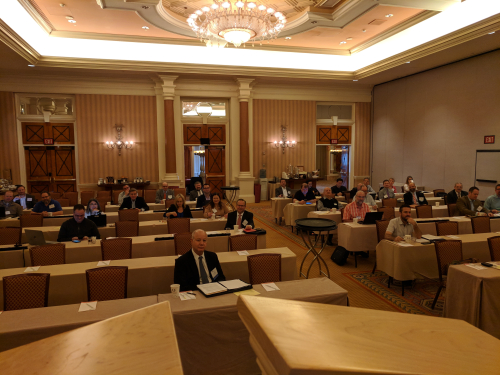
IMG_20171211_090714This photo of the view from the lectern at the start of the day
proves we really
were in the room and not distracted by all the distractions
possible in Las Vegas

Here are the materials and cases which I spoke about earlier today at the CLE International Eminent Domain Conference in Las Vegas. I had the lead off session on updates, and my talk focused on cases that I didn’t cover in the written materials:


Continue Reading Links And Materials From Today’s Las Vegas Eminent Domain Conference

 A short one, an unpublished and unsigned opinion from the U.S. Court of Appeals for the Eleventh Circuit, Warner v. City of Marathon, No. 16-10086 (Dec. 8, 2017).

As the title of this post indicates, the claims made by the plaintiff included a regulatory takings claim. The facts and details of their claims are in the opinion if you want to read them, but for our purposes today, they aren’t really important. It’s enough to note that the plaintiffs brought their takings claim in Florida state court. A prudent move, given Williamson County requires a property owner to first seek and be denied compensation through available state court procedures before the federal takings claim becomes ripe. 

The City of Marathon removed the case to federal court, as it can do under City of Chicago v. International College of Surgeons, 522 U.S. 156 (1997). That case gives the governmental

Continue Reading Williamson County Farce: 11th Circuit Bounces Case Removed From State Court, Because Plaintiff Didn’t Seek Compensation In State Court

Remember Brott v. United States, the case we last posted about here (“New Cert Petition: Property Owners Entitled To Jury & Article III Judge In Federal Inverse Cases“)? The Question Presented in that case is whether “the federal government take private property and deny the owner the ability to vindicate his constitutional right to be justly compensated in an Article III Court with trial by jury?” 

Well, here’s another, recently-filed cert petition which asks at least one of the same questions: 

1. Whether the Takings Clause of the Fifth Amendment is a self-executing waiver of sovereign immunity, therefore vesting review of federal takings suits in Article III courts.

2. Whether Congress violates Article III of the Constitution to the extent Congress forces plaintiffs with federal takings suits over $10,000 to litigate these suits before the Article I judges of the United States Court of Federal Claims.

Sammons

Continue Reading (Another) Cert Petition: Property Owners Entitled To Article III Court In Federal Inverse Cases

Here’s a case about the denominator in a regulatory takings case from July 2017, just after the U.S. Supreme Court issued its opinion in Murr v. Wisconsin. We somehow missed the opinion when it was issued, but since we think it must be the first case which attempted to apply the Murr majority’s multi-factor test, figured we better post it.

In Quinn v. Board of County Commissioners, Queen Anne’s County, No. 16-1890 (July 7, 2017), a panel of the U.S. Court of Appeals for the Fourth Circuit upheld the district court’s dismissal of a regulatory takings claim that the County’s regulations, “designed to limit overdevelopment of the area” on South Kent Island. Slip op. at 3. But not as you might expect (on Williamson County ripeness grounds), but on the merits.

Practice note: when you are the property owner’s lawyer and an opinion starts by characterizing your

Continue Reading The First Post-Murr Case? Fourth Circuit: No Taking Because Anti-Development Merger Regulations Actually Make Property Developable

According to this story (“Scott Walker signs bill inspired by western Wisconsin cabin-owners’ court fight“), Wisconsin’s governor has signed into law a new bill which remedies the problem the Murr family faced after the U.S. Supreme Court ruling in Murr v. Wisconsin, 137 S. Ct. 1933 (2017).

In that case, as you recall, the Court’s majority concluded that the Murrs’ two adjacent parcels had — for the purposes of evaluating their regulatory takings claim — been effectively merged into a single parcel. Thus, both parcels together were the “denominator” against which the regulation’s economic impact was measured. The parcels were not actually or formally merged, and the Court’s ruling only meant that Wisconsin’s regulations which prohibited the Murrs from separately developing their second lot, or selling it to an unrelated party, was not a taking.

The new law would allow the Murrs to sell their undeveloped, “substandard”

Continue Reading Murrs Offered Succor; Owners In Other 49 States … Not So Much