


Norfolk_sign

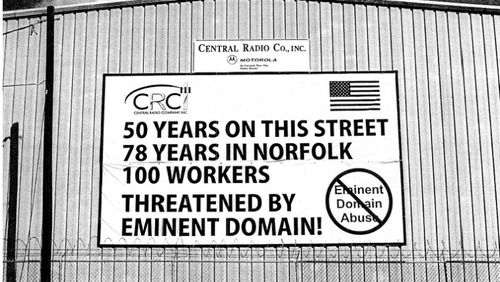
Talk about timing: Dana Berliner, Andy Gowder, and I were talking about the Central Radio case during a session on free speech and other First Amendment issues at the recent ALI-CLE Eminent Domain Conference, when we learned that at the same time we were speaking about the case, the U.S. Court of Appeals for the Fourth Circuit was issuing its opinion on remand from the Supreme Court. 

Bottom line: Norfolk, Virginia’s sign ordinance is an unconstitutional restriction on free speech. See slip op. at 1 (“Applying the principles of content neutrality articulated in Reed, we hold that the sign ordinance challenged in the plaintiffs’ complaint is a content-based regulation that does not survive strict scrutiny. Accordingly, we reverse the district court’s judgment with respect to the plaintiffs’ First Amendment challenge and remand that claim to the district court to award nominal damages to the plaintiffs and for consideration of other

Continue Reading Fourth Circuit: City Violated First Amendment By Banning Anti-Eminent Domain Sign
We know inverse condemnation liability can be triggered by intentional government action. But what about when government doesn’t act?

That was the issue before the Court of Appeals of Maryland in Litz v. Maryland Dep’t of the Environment, No. 23 (Jan. 22, 2016). And when the opinion starts this way, you just know where this is going to end up:

“The nine most terrifying words in the English language are, ‘I’m from the government and I’m here to help.’”

-Ronald Reagan, 40th President of the United States, News Conference (12 August 1986).

Petitioner, Gail B. Litz, might have welcomed hearing those nine words spoken to her, but, according to her Third Amended Complaint, they were not forthcoming.

Slip op. at 1.

The case involved “human sewage” flooding onto Ms. Litz’s once-popular campground from nearby septic fields, which, quite naturally resulted in a dearth of people who wanted to camp

Continue Reading “We’re Here From The Government, And We’re Here To … Do Nothing” – Gov’t Inaction Gives Rise To Inverse Condemnation

We don’t often post trial court decisions, but this recent ruling from an Idaho trial court awarding a property owner approximately $400,000 in fees and costs was a good read, and we’d like to share it with you all.

This is a ruling issued after a trial to determine just compensation for the partial taking of property for road improvements. The jury awarded approximately $146,000 to the property owner. There’s a lot of detail in the order, and we suggest you read the entire thing. But what grabbed us was the way the judge treated property rights, starting on page 11 of the order. 

Noting that “the Court’s analysis is rooted in the Constitution and this country’s long history of jealously protecting individual property rights,” (now there’s something you don’t hear from courts, much less trial courts, these days), the order concluded that the property owner was the “prevailing party,”

Continue Reading A Trial Judge Who “Gets” Eminent Domain

Donald Trump is garnering a lot of press these days for things not related to eminent domain. And there’s a lot of awareness of the high-profile eminent domain battle in New Jersey, in which he was the “B” in an attempted “A to B” taking. But not everyone is as aware of a later, similar controversy. 

So we dusted off our review of the 2011 documentary You’ve Been Trumped, and post it below. The film focuses on the property owners whose land is in the shadow of Trump’s golf course and luxury residential project in Aberdeenshire, on the west coast of Scotland. Compulsory Purchase Orders were threatened (but ultimately not issued), but the scenario presented the film will be familiar to anyone who follows eminent domain and property rights issues.

The film is available on DVD and streaming from a variety of sources. Definitely worth your time. Especially if

Continue Reading If You Are Even Thinking About Voting For Trump …

An interesting decision with an international flavor from the Court of Appeals for the D.C. Circuit, Helmerich & Payne Int. Drilling Co. v. Bolivarian Republic of Venezuela, No. 13-7169 (May 1, 2015).

We suppose that if you are a U.S. oil exploration company operating in Hugo Chavez’ Venezuela, you get used to entertaining a certain amount of risk. But for more than 50 years prior, Helmerich “successfully operated an oil-drilling business in Venezuela through a series of subsidiaries.” Slip op. at 3. But in 2008, after PDVSA, the state-owned oil corporation fell behind in its rig lease payments to Helmerich’s subsidiary and the subsidiary “disassembled its drilling rigs and stacked the equipment in its yards,” the Venezuelan government decided to do something about it:

[O]n June 12, 2010, PDVSA employees, assisted by armed soldiers of the Venezuelan National Guard, blockaded H&P-V’s premises in western Venezuela, and then did the

Continue Reading Public Use, Venezuelan Style: Nationalization Of Oil Rigs Could Be A “Discriminatory Taking”

Wright_home_place

In Town of Matthews v. Wright, No. COA14-943 (Apr. 21, 2015), the North Carolina Court of Appeals invalidated a taking, the stated purpose of which was to make a portion of a private road into a public street. 

A taking to open a private road to the public? That sure does sound like a public use or purpose, no? And had the court of appeals stopped there and not delved deeper, and had the case not had the history which it did, the result might have been different. 

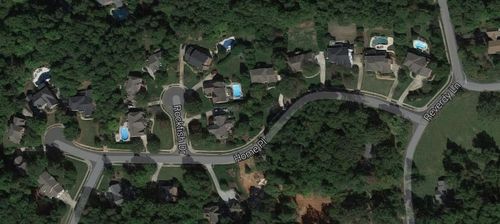
The facts which led the court to that conclusion are worth reading for yourself, but here’s the summary: the homes of the Wrights and five neighbors are located on a dead-end street, Home Place, which connects to the public street system at Revedery Lane. Home Place was originally a private street, but the Town believed there was an implied dedication, and treated

Continue Reading NC App: No Public Use Or Benefit When Town, Fueled By Improper Motive, Condemned Private Street To Make It Public

Williamson County gives everyone grief, and if you needed any more proof, here it is.  

In A Forever Recovery, Inc. v. Township of Pennfield, No. 13-2657 (Apr. 2, 2015), an unpublished opinion from the Sixth Circuit, the court upheld the district court’s award of attorneys’ fees and costs to a property owner who brought a takings claim in Michigan state court, only to see the defendant, the Township of Pennfield, remove the case to federal court and then move to dismiss the claim six days later, asserting it was not ripe under Williamson County

The district court rightly remanded the case back to state court, and held the Township liable for fees and costs under the removal statute which shifts fees in cases where the defendant doesn’t have an “objectively reasonable basis for seeking removal.” The court held that the Township removed only to delay the case

Continue Reading 6th Cir Schadenfreude Alert: Municipality Liable For Fees And Costs For Removing Takings Claim From State Court

The Wisconsin Court of Appeals’ decision in Somers USA, LLC v. Wisconsin Dep’t of Transportation, No. 2014AP1092 (Mar. 25, 2015), is the second case we’re posting today that has us asking — just what was the government thinking?

This kerfuffle resulted from the DOT trying to take advantage of Somers’ scrivener’s error, made when Somers recorded a map (known as a “CSM”) that stated it was “dedicating” some of its property for a future state highway, rather than merely “reserving” it for highway use. No one disputed that this was an error, and no one doubted that Somers had not intended to donate its property for the highway. 

But the DOT said “thank you very much,” and it went ahead and built its highway without condemning the land or paying compensation.

Somers’ inverse condemnation claim followed, as you might expect. The DOT conceded that the “dedication” language was “no doubt

Continue Reading What Were They Thinking, Part II: DOT Can’t Take Advantage Of “Scrivener’s Error” To Avoid Eminent Domain

Here’s one with a somewhat unusual twist: the condemnee objecting to the taking by a public utility district was the state.

In Public Utility Dist. No. 1 of Okanogan Cnty. v. State of Washington, No. 88949-0 (Jan. 29, 2015), the Washington Supreme Court affirmed the power of the county utility district to take an easement over “school trust lands” for the construction of an high-voltage, high-capacity transmission line and corridor. The land was owned by the public and held in trust for schools, was “a portion of the largest publicly owned tract of shrub-steppe habitat in the Methow Valley,” and was being used for cattle grazing. The grazing leases generated $3,000 per year for the state’s public schools, and also acknowledged that the land may be subject to easements and condemnation. 

The court first concluded that an environmental organization could intervene to address the power of the utility district to take

Continue Reading Washington: State Trust Land Can Be Condemned By County Utility

Check this out: Vermont lawprof John Echeverria has launched a blog about “Takings Litigation.” Which, given the predilections of the author (organizer of the anti-takings conference, and recently presented with the Koontz Catatonia Award), probably should be called “Takings Defense” or the “No Takings Blog,” but who are we to say? 

Samples of recent posts:

  • “Just when you thought the Koontz litigation couldn’t get any worse (see my article, Koontz: the Very Worst Takings Decision Ever?), the Florida Court of Appeals has issued a decision in the Koontz case on remand.”
  • “Importantly, the decision [Sherman v. Town of Chester] does not cast doubt on the general rule that when a litigant initially files a takings claim in federal court, the government defendant can raise Williamson County and insist that the takings claim be litigated in state court.”
  • “One thing seems clear about this case [


Continue Reading New Takings Blog – “Takings Litigation”