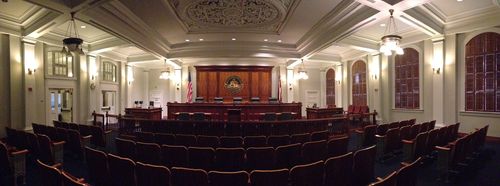
A good story for your weekend reading from the Los Angeles Times, “U2’s The Edge and his decade-long fight to build on a pristine Malibu hillside,” about the rock guitarist’s decade-long effort to build his dream home compound in the exclusive coastal town. Running smack dab in to the California Coastal Commission, this was a clash between a guy who is touted as being “an activist, an artist, that made his money from spreading peace and love in the world,” and people whom you might expect would support a guy like The Edge. 

Yeah, but it’s still filthy lucre, and even Mr. Edge’s donation of a public-access hiking easement and $1 million to maintain it were not enough. 8-4, project denied. 

Not until the Coastal Commission’s Director-For-Life died, and The Edge replaced his project manager with “an artist and sometime model, who had interrupted his architecture career
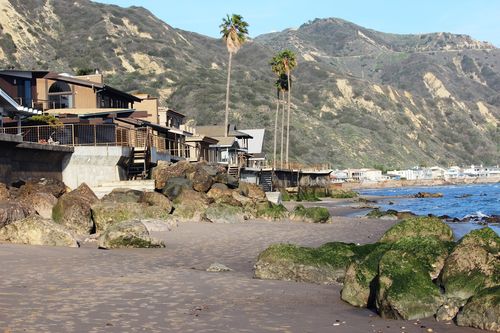
Continue Reading California Coastal Development In A Nutshell: Hire Jesus – Moses, Actually – To Sell Your Luxe Home Plans, And Become One With The Mountain.


Owlshead

Here’s a cert petition recently filed, which asks the U.S. Supreme Court to review the opinion of the Maine Supreme Judicial Court under a judicial takings theory.

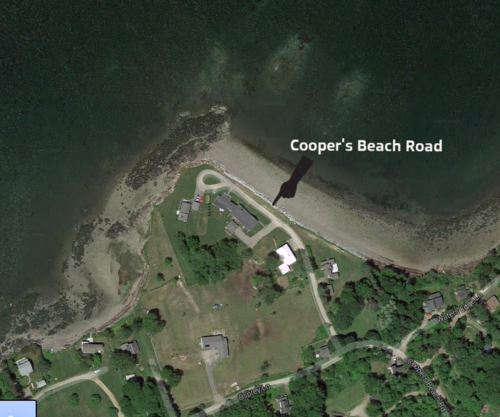
The petitioners argue that the Maine court took their private property when it departed from its prior decisions and a statute and concluded that a road to their home was a public beach access road, and not their private driveway. 

Here are the Questions Presented:

1. Did the Maine Supreme Judicial Court effect a “judicial taking” in violation of the Fifth and Fourteenth Amendments to the United States Constitution when it upheld the Superior Court’s reliance upon extrinsic evidence of the intent of petitioner’s deceased predecessor in title, John McLoon, to determine that the dedication and acceptance of “Coopers Beach Road” as a public way included the Petitioner’s driveway despite the fact that the dedication petition itself failed to specifically describe the

Continue Reading New Cert Petition: By Upholding Public Beach Road Access, Maine Supreme Court Judicially Took Our Driveway

Another day that we’re tied up, so there won’t be too much analysis. But we wanted to post this fascinating case out of the California Court of Appeal, Friends of Martin Beach v. Martin Beach 1 LLC, No. A142035 (Apr. 27, 2016).

As the caption of the case indicates, it involves beach access. Specifically, access to a Northern California beach that, despite some junky Yelp reviews, is apparently popular enough to spawn a “friends of” activist defense group. The Friends want access across private property owned by a really rich Silicon Valley guy. Before he owned it, they alleged, the owners let the public cross to get to the beach. The Silicon Valley guy, however, didn’t continue that practice, and the lawsuit followed.

The owner claimed he had exceptionally good title, because the land, like much land in California, could trace title back to a Spanish or Mexican

Continue Reading Cal App On Tidelands And Mexican Title: Owner Has Title In Land Used For Beach Access, But May Have Lost It By Dedication

IMG_0459

The Nollans own a beachfront lot in Ventura County, California. A quarter-mile north of their property is Faria County Park, an oceanside public park with a public beach and recreation area. Another public beach area, known locally as “the Cove,” lies 1,800 feet south of their lot. A concrete seawall approximately eight feet high separates the beach portion of the Nollans’ property from the rest of the lot. The historic mean high tide line determines the lot’s oceanside boundary.

Nollan v. California Coastal Comm’n, 483 U.S. 825 (1987)

From time-to-time, and when we’re in the neighborhood, we like to drop by the sites of familiar (and famous) takings and land use cases. Like Kaiser Aetna (in our own backyard), Dolan, and PruneYard. We’ve been there, done that. 

So there we were in Central California (Ventura County to be exact), and we’re driving up the coastal highway when

Continue Reading Another Takings Pilgrimage (Unconstitutional Conditions Technically, But Close Enough)

A longer one from the California Court of Appeal, but unfortunately, we don’t have the time to digest it in detail. But you really should read Pacific Shores Property Onwers Ass’n v. Dep’t of Fish and Wildlife, No. C070301 (Jan. 20, 2016), in which the court upheld a ruling that the Department of Fish and Wildlife inversely condemned the plaintiffs’ property by a physical taking, when it allowed their land to be flooded.

The interesting part of this decision is the Department’s purpose in allowing the flooding, environmental protection. Local government had historically provided some flood protection to these properties by “breaching” a sandbar when the water reached a certain level. When the Department took over that function, it decreased the level of protection, and although it required the water to reach a higher level before breaching, it didn’t eliminate it completely. The Department argued that it could not

Continue Reading Cal App: Intentionally Flooding Land To Protect The Environment Is A Physical Taking

A case that we’ve been following with some mild amusement has reached the Hawaii Supreme Court, where it was argued last week.

Our amusement stems from the fact that shoreline and beachfront property in Hawaii — especially when that property is in the fabled “Gold Coast” of Waikiki at the foot of Diamond Head — is usually fought over by those wanting to own it. But this one is different, because in this case, everybody wants the other guy to own it, because it involves a seawall that needs upkeep. And seawall upkeep don’t come cheap.

We posted the trial court’s decision concluding that the State of Hawaii owns it, here. The Intermediate Court of Appeals affirmed, and the State sought, and the Supreme Court granted, certiorari.

You can listen to the oral arguments — the issues are the language of a statute, prescriptive easements, and implied dedication —

Continue Reading HAWSCT Oral Arguments In Seawall Hot Potato Case

“Waikiki” means a lot of things to a lot of people. With its wall-to-wall high rises, it could be Las Vegas-by-the-Sea. Or the site of the most famous beach in Hawaii, if not the world. A place where impossibly tony shops and kitsch exist side-by-side. Where the “Hawaiian” bric-a-brac is imported from the Phillipines and China, and the beach sand is reputed to be Australian. A place to go, and a place to escape from

But whatever Waikiki might be, one thing is certain: it no longer has just two hotels as it once did, nor is it a sleepy agricultural backwater. It is the economic engine that drives Hawaii’s tourist economy, and the visitor destination, where one-third of our tourists end up. Even with these contradictions — or perhaps because of them — the ordinance which controls development within the Waikiki Special District requires consideration

Continue Reading What Does “Waikiki” Mean? – Variances, Safety Valves, And A “Hawaiian Sense Of Place”

Here are some upcoming events in which you may be interested, in chronological order:


Continue Reading Upcoming Events And CLE’s – Appellate, RLUIPA, Sharing Economy, And More

Photo

Enviro Wars Episode IV: A New Court

You may have heard that the Hawaii Legislature, after an intensive years-long effort by environmental groups, recently created a new court with specialized jurisdiction that could have a big impact on how property and business owners are treated by Hawaii’s courts. 

Known as the “Environmental Court,” this new court has been given the exclusive jurisdiction to hear most civil and criminal cases affecting the environment. Because Hawaii’s court is only just getting off the ground and is in uncharted territory (only one other state—Vermont—has a court with a similar statewide mandate), those who stand to lose the most in this new court—property and business owners—have many unanswered questions.

Here’s what you need to know.

Why A New Court?

According to its proponents, the new Environmental Court is not expressly intended to change outcomes in environmental cases, and is merely designed

Continue Reading What You Need To Know About Hawaii’s New Environmental Court

The headline of this post shouldn’t be that surprising, especially when the the property owner purchased the land already subject to a floodplain designation, and those regulations effectively prohibited development.

But the two twists in the South Carolina Supreme Court’s opinion in Columbia Venture, LLC v. Richland County, No. 27563 (Aug. 12, 2015), were (1) when Columbia Venture purchased the land, the floodplain designation didn’t encompass as much of the land as it eventually did, and the larger area was only preliminarily designated, and (2) various county agencies had informed Columbia that there was a chance it might get permission to build even if the regulations were eventually adopted.   

Those twists, however, were not enough to save Columbia’s takings claim, and the court rejected both its categorical and Penn Central arguments.  

The facts of the case are somewhat dense, but here’s what you need to know. Columbia

Continue Reading No Taking When Owner Prohibited From Developing In Floodplain