We don’t usually post trial court decisions. They are, obviously, subject to change by an appellate court, and because many are interlocutory, alteration by the rendering court iself.

But for this order from the U.S. District Court for the Northern District of Florida, we’ll make an exception. It’s a land use case (it’s right there in the first sentence, “This is a land use case.”), in which the plaintiffs are challenging two ordinances adopted by the County. The first prohibited obstruction of the beach with ropes, chains, signs, or fences. The second prohibited anyone from interfering with public use of dry sand beach areas. Under Florida law, the dry sand portion of the beach is privately owned. 

As you might expect, because the effect of the ordinance was to invite the public to use private property (as Laurence Tribe wrote in his treatise on Constitutional Law when discussing Kaiser Aetna

Continue Reading Federal Court: Williamson County Ripeness Not Required In Facial Takings Claims
Here’s the cert petition, recently filed, which asks the U.S. Supreme Court to review a decision of the North Carolina appellate courts. We say “appellate courts,” because the decision being reviewed is one from the N.C. Court of Appeals, because the N.C. Supreme Court, after granting discretionary review, punted and dismissed the appeal after it was fully briefed and teed up for oral arguments.

What happened that cause the court to dismiss? Who really knows the internals, but the one thing we do know is that some members of the court changed due to a judicial election. We know the above because we were watching the case closely; we filed an amicus brief in support of the property owner in the N.C. Supreme Court, a brief that apparently didn’t get read (not that amicus briefs get read all that frequently anyway, but you get our drift).

The case is

Continue Reading New Regulatory Takings Cert Petition: Legislature Can’t Simply Declare Private Property To Be Public

HSBA 2017 Land Use Conference

To supplement your written materials for the 2017 Hawaii Land Use Conference, here are the decisions and other materials which we spoke about this morning at the 2017 Hawaii Land Use Conference:  


Continue Reading Notes And Links From Today’s Hawaii Land Use Conference Session On Reg Takings

Photo

After the Hawaii Supreme Court decided GATRI v. Blane, 962 P.2d 367 (Haw. 1998) one big question remained.

In GATRI, the court held that in the coastal zone, a county Community Plan (also known as a “General Plan” in some counties) is a binding land use regulation, and thus has the force and effect of law. (Outside the coastal zone, the CP/GP’s don’t actually control any land uses, and are general statements of long-term planning goals. The zoning, and the zoning alone, regulates the uses of land.)

But the state legislature in the Coastal Zone Management Act mandated a different result in the coastal zone and there, the planning also controls land use, as the court held in GATRI. Thus, in order to develop property in the coastal zone in accordance with the applicable zoning, the applicable CP/GP must also permit the use. This is know as “plan-zone consistency,” and

Continue Reading Hawaii Supreme Court Oral Arguments In Lucas “Economically Beneficial Use” Taking Case

Here’s what we’re reading today:


Continue Reading Monday Reading: Raisin Redux, Beach Appeal Dismissal, Zoning, And More

HSBA 2017 Land Use Conference

Registration is now open for the 2017 Hawaii Land Use Conference, presented by the Hawaii State Bar Association and the University of Hawaii Law School, at the downtown Honolulu YWCA’s Fuller Hall on January 19-20, 2017. “This 2 day conference is a must attend for any attorney or professional whose practice involves land use and development,” as the registration web site says (we agree).  

Topics include the latest in Transit-Oriented Development, the Thirty Meter Telescope, GMO (including the recent rulings from the Ninth Circuit), and the topic we’ll be presenting, “Takings: Regulatory and Physical.”

The final agenda has not yet been released, but if experience is any guide, Planning Chair Professor David Callies will put together two days of timely topics, presented by distinguished faculty. 

And the cost can’t be beat: $200 for members of the Real Property and Financial Services Section and government lawyers, $300

Continue Reading 2017 Hawaii Land Use Law Conference, January 19-20, 2017

20160722_141908

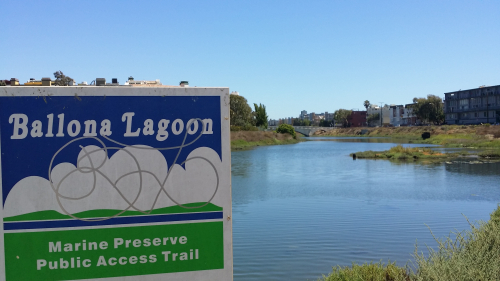
Petitioner owns the fee title to property known as the Ballona Lagoon, a narrow body of water connected to Marina del Rey, a manmade harbor located in a part of the city of Los Angeles called Venice. Venice is located on the Pacific Ocean between the Los Angeles International Airport and the city of Santa Monica.”

Summa Corp. v. Cal. State Lands Comm’n, 466 U.S. 198, 199-200 (1984). 

As you know, when we’re in the neighborhood, we like to visit the sites of famous cases. In the past, we’ve stopped by the sites of the Hadacheck, Kaiser Aetna, Nollan, Dolan, and PruneYard cases.

Here’s the latest, the location of a somewhat obscure case (if any Supreme Court case can be called “obscure”), smack dab in the middle of urban Los Angeles. As the above quote from the case notes, Ballona Lagoon lies

Continue Reading Public Trust, Tidelands, And Land Titles: A Short Visit

Kauaipark

Here’s the latest in that case we told you about a couple of months ago, a published ruling in an eminent domain case from the Hawaii Intermediate Court of Appeals. We wrote that in our view, the court got it really wrong on one of the three issues in the case, whether two parcels which the condemnee alleged he used together could be considered the “larger tract” for purposes of severance damages.

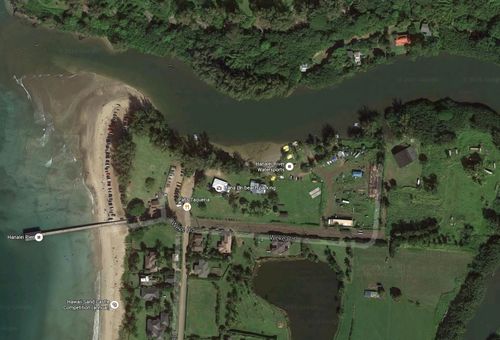
The case involves three parcels on Kauai — one of which is owned by a fellow who has been a thorn in the County’s side — which were condemned by the County for the expansion of a public beach park. The County was taking Parcels 49, 33, and 34. Sheehan owned 49, and HRH, a corporation, owned 33 and 34. Sheehan asserted his use of Parcel 49 stretched across 33, 34, and Area 51 — a portion of

Continue Reading Hawaii Supreme Court Amicus Brief: In Eminent Domain, Parcels Need Not Abut In Order To Be Considered Part Of A Larger Tract

Apparently (if the level of media coverage is any measure), the question of public access to beaches is a big thing in Maine:

This question has also already resulted in a couple of decisions which we’ve covered:

And here’s the latest, an opinion from the Maine Supreme Judicial Court, Cedar Beach/Cedar Island Supporters, Inc. v. Gables Real Estate LLC, No.

Continue Reading Maine Supreme Court Considers Public Prescriptive Easements For Beach Access

Here’s the amicus brief we filed yesterday on behalf of lawprof David Callies and our colleagues at Owners’ Counsel of America in an important case involving ownership and use of the “dry sand” beach, now pending in the North Carolina Supreme Court.  

In Nies v. Town of Emerald Isle, No. COA15-169 (N.C. App. Nov. 17, 2015), the court of appeals held that the dry sand portion of the beach — the part between the mean high water mark and the dune or vegetation line — is subject to the public trust. Consequently, the Town was not liable for a regulatory taking when it allowed the public, for a fee, to drive on the beach. The Nies family, which thought it owned the property inland of the MHWM under long-standing North Carolina law, and that the public trust only applied to property seaward of the MHWM, sought compensation.  The North Carolina

Continue Reading Amici Brief: If A Legislature Or Court Moves The Public Trust Shoreline Inland, It’s A Taking