


Picture 011

You probably already knew this, but in case not. As of tomorrow, Wednesday, July 1, 2015, you no longer will be able to get the old-style plastic bags at checkout at most grocery stores on Oahu.

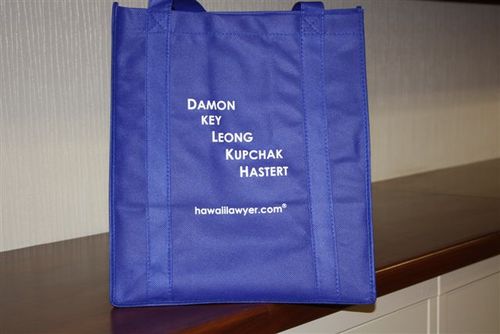
If you don’t already have your own bags to bring with you (so you can avoid paying the $.10 for the paper bag which the stores will provide), we are here to help you out. You can save yourself the embarrassment of carrying out all your stuff in your arms or in an old box like when you go to Costco, by obtaining one of our firm’s reusable eco-friendly bags.

The photos above and below show you what they look like.

These are not your typical cheapo reusable bags, but are heavy duty, cloth-like bags that in our experience can hold up to two paper bags’ worth of groceries. Really fine. We even use
Continue Reading Prepared For Honolulu’s Plastic Bag Ban? Get Your Damon Key Eco-Friendly Bag Here, Free

Any time the Supreme Court rules for a property owner in a takings case, you’ve got reason to celebrate. 

They didn’t pay the fine, g8vt didn’t take grab their raisins. Case over
So whats next? Does the dept have to write a check to the Hornes for $xxxx? Well, no, they csnt get that relief in usdc.
Breyer didnt apply the free rider argument to the taking part, but to the just comp part.
Do i want to live in a country without a raisin makrketing board?
1. Title page …. syllabus … who cares….

2. More syllabus ….

3. More syllabus …

4. OK, here we go. “PHYSICALLY SET ASIDE” OK, game over, Hornes win. This is going to be another one of those cases in which we cite for the Court’s physical occupation fetish – you know, Kaiser Aetna, Loretto … and now Horne.
“The question is whether

Continue Reading Easy Cases Made Hard: Horne v. USDA And California Raisins (And Affordable Housing)

A few years back, we posted the Wisconsin Supreme Court decision holding that airspace is property under Wisconsin law, Brenner v. New Richmond Regional Airport Comm’n, 816 N.W.2d 291 (Wis. 2012). The property owners argued that a runway extension project — which condemned a portion of their property which was zoned commercial-industrial, but used for agricultural purposes — did not take into account 

The Supreme Court remanded the case for trial.

That didn’t go so well for the property owners when the trial court dismissed their inverse condemnation case because the overflights from the runway were not of sufficient frequency or duration to become a taking.

In this short per curiam opinion, the court of appeals affirmed. 

Brenner v. City of New Richmond, No. 2014AP799 (Wis. App. May 27, 2015)

Continue Reading Wisconsin App: Any Loss Of Value Was Because Of Proximity To Airport, Not Overflights

For those of you who might ever have contemplated pulling up stakes and relocating your law practice to the last major inhabited time zone on Planet Earth, check out “A Tale of Two Cities: Honolulu and San Francisco,” by Nick Kacprowski, a lawyer at a “large” Honolulu law firm who recently transplanted from San Francisco BigLaw, and wrote about his perception of the differences for the ABA Section of Litigation. 

Although he’s newer to the Hawaii scene and therefore hasn’t had the time to appreciate some of the layers and contexts of practicing in our smaller jurisdiction, there is much truth in what he writes. A sample:

One difference that immediately struck me was the level of experience and age of my colleagues at the top firms in Hawaii. I graduated law school in 2004, and when I left Kirkland I considered myself one of the more

Continue Reading Big Law vs. Honolulu’s Not-So-Big Law

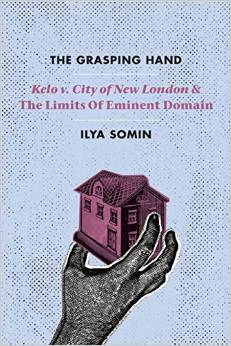
Grasping_hand After Berman v. Parker and Hawaii Housing Authority v. Midkiff, observers of the law could not be faulted for opining that “the public use limitation is a dead letter.” See Thomas W. Merrill, The Economics of Public Use, 72 Cornell L. Rev. 61 (1986). Those two decisions, after all, seemed to leave nothing

TEXT

TEXT

NEXT

NEXT

NEXT

NEXT

NEXT 

NEXT

Continue Reading Book Review: “The Grasping Hand: Kelo v. City of New London & The Limits Of Eminent Domain” by Ilya Somin

In Gallenthin [Realty Development, Inc. v. Borough of Paulsboro, 191 N.J. 344 (2007)] requires, namely a degree of ‘deterioration or stagnation that negatively affects surrounding areas’ by promoting conditions that can develop into blight. 

nn Download A19136264MainStreetvHackensack, No.

62-64 Main Street, LLC v. Mayor and City of Hackensack, No. 072699 (N.J. Marc. 23, 2015)

Continue Reading NJ Retreats From Curtailed “Blight” Takings Standard

On Thursday, March 5, 2015, we held a community forum on the Honolulu rail project, with an overview of the acquisition, eminent domain, and relocation process. For those who were not able to join us, we recorded the sessions, and post them below.

For HART’s video flyover simulation of the entire Phase 1 system, go here.

Introduction: An Overview of the Honolulu Rail Project:

The Numbers: How Much Land, How Much Money, How Much Time?

Key Terms in Eminent Domain Law:

The Acquisition Process: Negotiation and the “Dear Owner” Letter:

Appraisals From the Eminent Domain Perspective:

Frequently Asked Questions

Can I stop the Honolulu Rail Project?

Can I force HART to move the alignment of the guideway?

Do I have claims for noise, dust, and vibrations from the project construction and operation?

Business losses, business interruption, and lost profits

Property Taxes in Eminent Domain

Mortgages and Eminent Domain

Continue Reading The Honolulu Rail – An Overview Of Property Rights Issues & Answers To Frequently Asked Questions

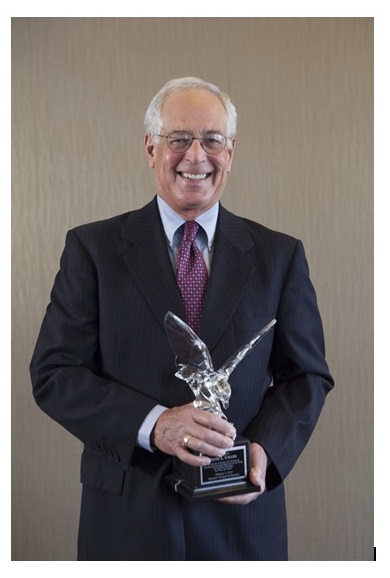
CalliescrystaleagleA reminder to please RSVP (see below) for this Thursday’s event honoring University of Hawaii Law Professor David L. Callies.

On March 12, 2015, 5:30 – 6:30 p.m., we’ll be awarding Professor Callies the Owners’ Counsel of America‘s Crystal Eagle. Joining us will be his current and former students (of whom there are many), his faculty colleagues, the Hawaii property bar, and friends. The Crystal Eagle recognizes Professor Callies’ decades of property rights scholarship, his advocacy, and his international expertise in property law. 

Supreme Court of Hawaii Associate Justice Sabrina McKenna (a former student of Professor Callies) will give an introduction.

Professor Callies joins a list of past recipients which includes scholars (Professors James Ely amd Gideon Kanner), Supreme Court advocates (Michael Berger), public interest lawyers (James Burling of Pacific Legal Foundation and Dana Berliner of the Institute for Justice), journalists (Alan Colmes and Sean Hannity), nationally-renown eminent

Continue Reading A Reminder: RSVP For This Thursday’s Reception Honoring U. Hawaii Lawprof David Callies