As you can tell from the date of the opinion, we’ve been meaning to post the South Carolina Supreme Court’s ruling in Braden’s Folly, LLC v. City of Folly Beach, No. 2022-000020 (Apr. 5, 2023) for a while. Something else always intervened, but it remains a decision worth reviewing.

The city adopted an ordinance that erased lot lines for certain contiguous properties under common ownership, merging two distinct parcels into one and prohibiting their separate sale. The ordinance recognized nonconforming uses. Braden’s properties are covered by the ordinance.

When Braden’s Folly acquired the Lots in 1999, there was a small house on Lot A, and Lot B was undeveloped because it was either underwater or part of the active beach. Following a beach renourishment in 2005, Lot B became developable because it had been transformed into mostly sandy beach. Therefore, between 2006 and 2007, Braden’s Folly received building permits
Continue Reading SC: No Penn Central Taking For City Ordinance Merging Contiguous-But-Separate Parcels

We’re not going to dwell all that much on the California Court of Appeal’s recent opinion in Discovery Builders, Inc. v. City of Oakland, No. A164315 (June 22, 2023), mostly because it seems entirely predictable.

The developer thought it had an agreement with the city to pay certain fees (dare we say “exactions”) the city required in order to approve and provide what the court calls “project oversight.” The contract “provided that the fees set forth in the agreement satisfied ‘all of the Developer’s obligations for fees due to the City for the Project.'” Slip op. at 1. You know where this is headed, don’t you?

That’s right, eleven years later while the project was still underway, the city adopted new ordinances imposing new impact fees. When the developer sought additional building permits … no permit without paying the additional exactions. The trial court thought the contract took care

Continue Reading Chump Alert! Developer’s Claim That City Can Be Held To Its Contract Limiting Exactions Goes About As Well As You’d Expect

One from the Louisiana Court of Appeal, 3000-3022 St. Claude Avenue, LLC v. City of New Orleans, No. 2022-CA-0813 (June 22, 2023) demonstrating that the standard of judicial review for zoning matters (rational basis) is pretty powerful.

The owner wanted to develop its New Orleans property, but first needed a zoning amendment from residential to commercial, followed by a conditional use permit for its proposed use. The city denied the request. After much procedural back-and-forth, including a trip to the court of appeal to resolve, the case was sent back to the city council to state the basis for the denial. The council held a public meeting at which it denied the rezoning, and declined to state more, including the reasons why.

So back to court the owner went. The trial court thought it had been clear enough: you were supposed to say why you denied the rezoning. Hearing

Continue Reading Nectow Is Meaningless Because It “relies on pre-Lochner administrative review jurisprudence”

In this very short (but apparently published) opinion, the U.S. Court of Appeals held that it was not right to dismiss a claim on the pleadings and that factual development is warranted, even where the complaint alleges that a municipal land use ordinance is arbitrary and capricious, and the city claims it has a rational basis for the ordinance.

And when we say “short,” we mean it. Here’s the entirety of the opinion:

Plaintiffs here appeal the Rule 12(b)(6) dismissal of their complaint alleging that the City of New Braunfels’s zoning regulation banning short-term rentals of residential properties in certain areas of the city is unconstitutional. The district court ordered dismissal by approving a few conclusory paragraphs in the magistrate judge’s recommendation. This court’s relevant case law, however, indicates that some factual development may often occur in these cases, and that summary judgment may often follow. See, e.g

Continue Reading CA5 Makes Short Work Argument That Asserting A Rational Basis For A Short-Term Rental Ban Is Enough To Secure Pleadings Dismissal Of Arbitrary And Capricious Challenge

Screenshot 2023-06-16 at 17-28-39 TJB SC Orders & Opinions 2023 June June 16 2023

In this order, the Texas Supreme Court declined to review a case we’ve been following, in which the court of appeals held that Grapevine’s total ban on short-term renting of property — banning even owners who had been doing so for a while — might be a taking. The court held that even though the owners did not possess a classic vested right to continue using their properties to rent on a short-term basis, they owned their properties and that was enough. Property ownership comes with the “fundamental” right to rent it out and there’s no need to show more, such as a vested right under state law. More details on the city’s ban and the court’s reasoning here.

The city sought discretionary review and somewhat unusually, the property owners agreed that this is an important issue worthy of the Supreme Court’s review.

But even with everyone

Continue Reading Texas Supreme Court: We Want To Resolve Whether Short-Term Renting Property A Natural Right, Just Not In This Case

Here’s the cert petition, filed last week, in a case we’ve posted about. See here (Ninth Circuit arguments) and here (en banc petition).

The Ninth Circuit affirmed dismissal of a takings claim because (it held) the claim isn’t ripe. The government hasn’t made up its mind, and just might allow the owners to make some use of their residentially-zoned land (even though the property is also subject to an overlay zone that expressly prohibits residential development). More background here

This is one of ours, so we’re not going to be saying too much more about it. The petition also lays out the situation.

Here are the Questions Presented:

Randy Ralston and Linda Mendiola (Ralstons) wish to build a retirement home on their residentially-zoned land in San Mateo County, California. However, their property sits entirely within an overlay zone, the Montecito Riparian Corridor (Corridor), which categorically bans residential

Continue Reading New Takings Ripeness Cert Petition (Ours): Knowing The Permissible Uses “to a reasonable degree of certainty” Is All You Need For A Claim To Be Ripe

Here’s what we’re reading this Tuesday:

Worth checking Continue Reading Tuesday Round-Up: Sackett, Tyler, Defending Zoning, Canada Property Rights … And More

Screenshot 2023-06-07 at 07-14-12 Google Maps

Here’s the latest from the U.S. Court of Appeals for the First Circuit on takings ripeness, Haney v. Town of Mashpee, No. 22-1446 (June 6, 2023). 

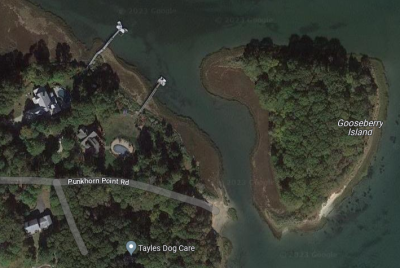
The case centers on Gooseberry Island, Massachusetts, which is zoned by the Town of Mashpee as R-3. But under the Town’s zoning code, any residence must have at least 150 feet of frontage and a paved access roadway within 150 feet.

Which is problematic because Gooseberry Island is, well, an island — separated from the mainland by a 40 to 80 foot channel depending on the tides. There’s no bridge, although you can wade across the channel at low tide. No bridge means no roads, and no roads means no residential development.

So the owner sought variances from the frontage and roadway requirements in 2013. Denied. The road and frontage requirements are about emergency access. Next, the owner sought approvals to build a

Continue Reading CA1: Despite Two Variance Denials, Takings Case Not Ripe Because It Isn’t Futile To Try Again

Here’s the latest in a case we’ve been following, one of the multiple challenges to New York’s latest ratcheting up of rent control.

We think the Questions Presented spell out the issues pretty well:

New York has implemented the most sweeping and onerous rent control provisions the United States has ever seen in its Rent Stabilization Laws and accompanying regulations (“the RSL”). As recently amended, the RSL makes New York’s once “temporary” rent stabilization regime permanent for over one million apartments. Petitioners are owners of apartment buildings regulated by the RSL. The RSL expropriates a definitional feature of Petitioners’ real property—the right to exclude—by granting their tenants a perpetual right to renew their leases. The RSL closes off all viable exit options for Petitioners to change the use of their property and thus avoid RSL regulation. These provisions, when combined with the RSL’s ceiling on the rents that landlords

Continue Reading Another Cert Petition Challenging NY’s Draconian Rent Control As A Taking

History of ED Event

Mark your calendars to join us on Wednesday, June 7, 2023 at 5pm Eastern Time, as the Eminent & Right of Way Club welcomes Professor Greg Jackson, host of the History That Doesn’t Suck Podcast.

We’re going to have a discussion about the history of eminent domain, what zoning looked like in the 19th Century, and if the Founders planned for the infrastructure we have today.

RSVP for this Lounge Event on the App (register for the (free) Clubhouse App here).

What’s this “Clubhouse” thing, you ask? More here on that. Come, join us!Continue Reading Upcoming Event: “The History [That Doesn’t Suck] of Eminent Domain” (Wed, June 7, 5pm ET – Free!)