


Don’t Miss Out: Join The “Big Guns” And Secure Your Space At ALI-CLE’s Upcoming Eminent Domain & Land Valuation Litigation Conference (Jan 23-25, 2020, Nashville)
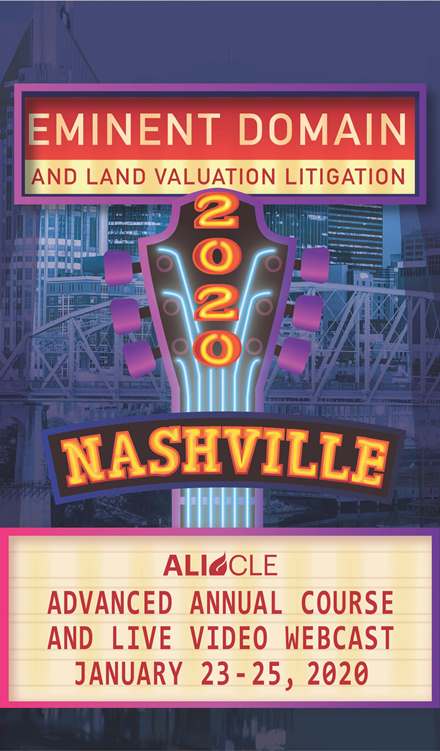
We were not as creative as our colleague Paul Henry (see below), but our Planning Co-Chair Joe Waldo and I wanted to personally invite you to join the “big guns” in our area of law at the 37th Annual ALI-CLE Eminent Domain and Land Valuation Litigation Conference, January 23-25, 2020, in Nashville, Tennessee.
We’ve assembled an excellent faculty, and an agenda that covers the hot topics of the day. Go here to view the complete faculty list and agenda. Water rights, Knick, appraisal, ethics, civil rights, and a whole lot more in three days of the longest (and we think best) conference in our area of law. Also, for those new to the field, Andy Brigham and Jack Sperber are again leading their “Eminent Domain 101” program. A great way to learn the topic, or for experienced lawyers to get a quick refresher on the basics. Your registration
Latest In SCOTUS Penn Central Cert Petition
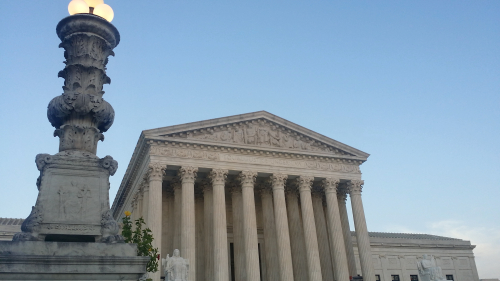
Here’s the latest in a case we’ve been following for a while, Smyth v. Conservation Comm’n of Falmouth, No. 19-223 (cert. petition filed Aug. 16, 2019).
The petition seeks review of a Massachusetts decision which held that a judge, not a jury, determines Penn Central takings questions, and also that the owner lost anyhow because, you know, Penn Central. The petition asks the Supreme Court to review these Questions Presented:
- Whether the loss of all developmental use of property and a 91.5% decline in its value is a sufficient “economic impact” to support a regulatory takings claim under Penn Central.
- Whether a person who acquires land in a developed area, prior to regulation, has a legitimate “expectation” of building and, if so, whether that interest can be defeated by a lack of investment in construction?
- Whether the Court should excise the “character” factor from Penn Central regulatory
Continue Reading Latest In SCOTUS Penn Central Cert Petition
Connecticut: “Hardship” For Variances Means Inverse Condemnation
We think the Connecticut Supreme Court’s opinion in Mayer-Whitman v. Zoning Board of Appeals, No. SC 19972 (Nov. 5, 2019) is worth a read, even if it does not break new ground, because it does a good job of explaining some basic principles.
Quick story: Breunich had a house. It didn’t conform to height, setback, and flood area requirements. That’s because it was build prior to the regulations were adopted. Dirt lawyers call this a “nonconforming use.” Civilians call it being “grandfathered.” Hurricane Sandy damaged the house, but the cost of repairs was more than 50% of the home’s value. And you know what that meant: Breunich could not rebuild without a variance.
He applied for a variance to rebuild the home in pretty much the same configuration it was before, asserting hardship because it would be impossible for the building to conform to both the height above-flood requirements
Continue Reading Connecticut: “Hardship” For Variances Means Inverse Condemnation
All Of Our Past California Wildfires And Inverse Condemnation Posts
With the ongoing wildfire dramas ongoing across California, several of you have asked us to collect the posts we have done about inverse condemnation liability in one place. So here you go:
- Lights Out In The Land Of No: The Practical Effects Of California’s Wildfire Inverse Condemnation Doctrine
- Cal Supreme Court: Stop Saying Inverse Condemnation Is “Strict Liability”
- California Fires And Inverse Condemnation: The “You Broke It, You Bought It” Theory
- New Cert Petition: Fifth Amendment Requires California To Spread The Cost Of Wildfire Inverse Condemnations To Ratepayers
- California Wildfires, Inverse Condemnation, And Climate Change
- Case To Watch: Utilities, Wildfires, And Inverse Condemnation
As you can see from the above video, this one isn’t over. Stay tuned.Continue Reading All Of Our Past California Wildfires And Inverse Condemnation Posts
ALI-CLE Eminent Domain & Land Valuation Litigation Conference – Jan 23-25, 2020, Nashville
2019 Brigham-Kanner Conference: The New New Property – Public Resources And Private Rights
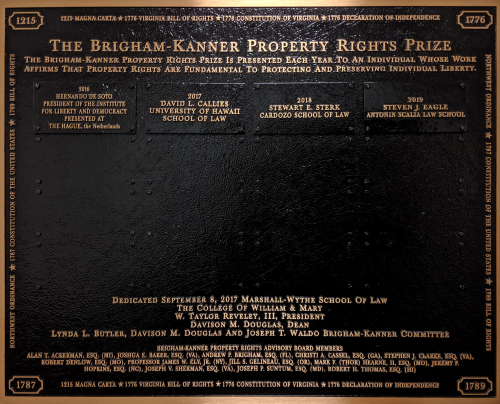
Here is a transcript of the remarks I delivered today at the 2019 Brigham-Kanner Property Rights Conference. I was honored to join lawprof Henry Smith and Florida Supreme Court Justice (ret.) Ken Bell (who authored the Florida court’s opinion in Stop the Beach Renourishment which was challenged in SCOTUS as a “judicial taking”) to speak about “Public Resources and Private Rights” (moderated by Professor Katherine Mims Crocker). After paying our respects to 2019 B-K Prize winner Professor Steven Eagle, we each addressed some part of the question.
—————————-
The New New Property
As always, I bring to you tidings of “aloha” from the state where the legislature thought it was a going to reduce the price of residential housing by taking fee simple interests from “A” and giving them to “B,” the leaseholders.
Where now, the median price for a single-family, two bedroom, one bath
2019 Brigham-Kanner Property Rights Conference Kickoff
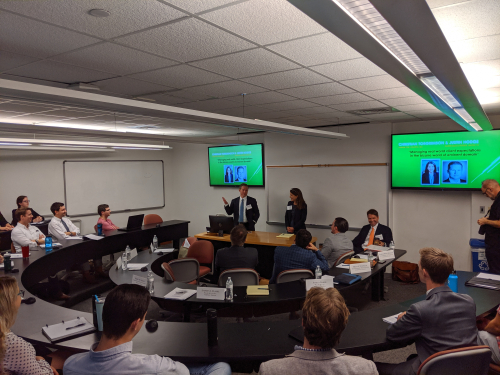
Today’s the kickoff events for William and Mary Law School’s Brigham-Kanner Property Rights Conference. We started the day with eminent domain and property law attorneys speaking about the practice of law (pictured above, Justin Hodge (TX) and Christian Torgrimson (GA)).
Toronto’s Shane Rayman and I spoke about international and comparative property and eminent domain (expropriation) and how even though our way of approaching cases may be different, the goals are the same: justice and fair treatment for our clients. And what we can learn about our own cases by looking at how other jurisdictions do it.
In that vein, here are the links to the cases we (and others) mentioned:
- Antrim Truck Centre v. Her Majesty (Canada) (business losses due to highway realignment)
- City of Manila v. Roces Prieto (Philippines) (public use in eminent domain)
- Houston flooding cases (USA)
- Hemlick Family Farms v. Virginia Comm’r of Highways (Virginia SCT)
Continue Reading 2019 Brigham-Kanner Property Rights Conference Kickoff
A Different Form Of “Public Use” – City Land Subject To Adverse Possession Claim
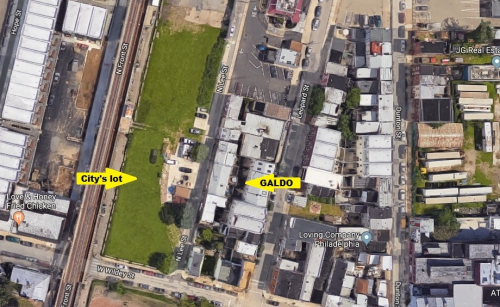
You recall the property law trope that publicly-owned land isn’t generally subject to claims of adverse possession, at least when the government owns the land in its public capacity?
Well, like a lot of things, that rule isn’t ironclad. At least not in Pennsylvania, where the Commonwealth’s Supreme Court (Eastern District) just held, in City of Philadelphia v. Galdo, No. J-46-2019 (Sep. 26, 2019), that Philadelphia was “not immune from a claim of adverse possession” because “the property was not devoted to public use during the twenty-one year prescriptive period.” Slip op. at 1.
The city owns a vacant lot which it acquired decades ago by eminent domain for “transit purposes.” Galdo later purchased the house across the street. The city never developed the property and the transit line was rerouted. Over time the city viewed the lot as surplus property, and “has not performed any maintenance, grass butting, grading, or landscaping.” Slip op. at 3. Predictably, the parcel attracted the usual nuisances: “prostitutes” and “derelicts,” trash, weeds, and the line.
Galdo didn’t appreciate this, and over time he did things like clear the weeds, poured a concrete slab, parked vehicles, and built a fire pit and picnic area. But he didn’t pay taxes on the parcel, nor did he obtain permits for any of the work. Sounds a lot better than the blight of city ownership.
Eventually, the city wanted to sell the parcel. That fell through, but apparently the failed transaction brought Galdo’s improvements to the city’s attention, and after Galdo refused to comply with the city’s notices to remove the improvements, the city sued to eject him from the land. Galdo asserted in a counterclaim that title should be quieted in him, because he had adversely possessed the property for more than the 21 years which the Pennsylvania statute requires. “Galdo contended that he had been in continuous and exclusive possession of the Parcel without the City’s consent or authorization since September of 1989. He further asserted that the Parcel had not constituted a public use since 1976.” Slip op. at 5.
The court tried the case, and ruled against Galdo. The court accepted the city’s claim that it was immune from adverse possession claims (meaning the evidence about Galdo’s uses was irrelevant) on two grounds, both tied to the exercise of eminent domain by which it had acquired the land. First, because the city had acquired the land as an agent of the Commonwealth, for its construction of a highway, it was not subject to adverse possession. Second, the fact the property was acquired for public use by eminent domain meant that it was devoted to public use and therefore also not subject to adverse possession (under Pennsylvania law, property devoted to public use cannot be adversely possessed). Slip op. at 6.
The appeals court disagreed, and concluded that municipalities do not enjoy “total immunity” from adverse possession claims. The court held that although the property may have been originally acquired for public use, that was a different question of whether it had used the property for the public during the prescriptive period. That, predictably, was not the end of it.
The Pennsylvania Supreme Court affirmed, concluding that the city was not immune from Galdo’s claim for adverse possession. The point of adverse possession is to see that land doesn’t lie fallow, and to incentivize owners to make use of it, or risk losing it to those who do. As Howard Mansfield notes, “the quiet citizen must keep out of the way of the exuberantly active one.” And Mr. Galdo, it appears, has been exuberantly active and the city has not. Also known in Playground Law as “you snooze, you lose.” As for the idea that a subject cannot run out the clock against the sovereign king, the court held that Philadelphia is a municipality, and only the Commonwealth is a sovereign.
The exception to the rule that municipalities can have their property adversely possessed is if they are devoting the property to public use. The court agreed with the appeals court which concluded that although the parcel was undoubtedly acquired for public use initially, that public use appears to have “lapsed” when the transit line was rerouted. Slip op. at 17-18. The fact that the city viewed the parcel as surplus meant it was not using it. And, importantly, the city conceded that a public use can lapse or be abandoned. Citing the eminent domain code, the court held that in some circumstances, a condemnor may abandon the public use for which property is taken.
The case turned on the city’s assertion that as long as it continued to hold the property for possible resale, it was using it for the public. Thus, it argued, everything else was not relevant:
On a more global scale, it is the City’s view that once it acquires property fora public use, it can retain that property in perpetuity without being subject to adverse possession claims so long as it does so for the putative purpose of resale, without any obligation to maintain such property and regardless of whether the land continues to function in its dedicated capacity.
Slip op. at 18. The court rejected the argument. The policy of active use of land trumps that, and there’s no authority for the idea that holding property for resale is a public use. Slip op. at 19 (“The reason necessitating the sale of the property is because the public use no longer exists. Absent the public use, a municipality’s holding of abandoned property, here for decades, offers no benefit to the public.”).
If remedying blight can be a public use (see, for example, Berman), then holding property that is or about to become blighted isn’t a public use:
Absent the public use, a municipality’s holding of abandoned property, here for decades, offers no benefit to the public. Under such circumstances, the public is not occupying the property in any way, no tax dollars are being received from the property, and the neighborhoods in which the dormant properties are located risk the threat of becoming blighted. This scenario constitutes the opposite of devoting property to a public use as the indefinite holding of abandoned municipal property is detrimental to those tax payers who own property nearby and to the community at large.
Slip op. at 19.
The court acknowledged that Galdo has a high factual burden (the city doesn’t need to have done all that much in the 21 years to preserve its ownership), but held that if he can meet the burden, the property is his. The court remanded for a trial.
A final thought: might this case be one of be careful what you wish for? If he is successful as acquiring the title to the property from the city, one can see how the city might not just let this go, and that Galdo may have to do something about those unpermitted structures on the land, and start paying property taxes. You know, the usual things that owners of property are subject to. Code compliance can be a very burdensome thing, and the city can exact a lot of retribution for getting burned in this case and on the larger issue.
City of Philadelphia v. Galdo, No. J-46-2019 (Pa. Sep. 26, 2019)
Continue Reading A Different Form Of “Public Use” – City Land Subject To Adverse Possession ClaimLatest Ep, Eminent Domain Podcast: Short-Term Rentals, Tiki Island, The Castle, Penn Central
Last week, along with Bob Grace, I (Robert (don’t-call-me-Bob) Thomas), was a guest on Clint Schumacher’s Eminent Domain Podcast. Stream it above, or download it here.
Clint and I had a wide-ranging discussion that centered on the recent trend of limiting short-term rentals, the legal pushback, and (of course) takings. We discussed the memorably-captioned Tiki Island case from Clint’s home state of Texas. Penn Central, naturally. Vested rights. Mrs. Murphy exceptions (although those deal with discrimination in rental housing). First Amendment stuff. The upcoming ALI-CLE Eminent Domain and Land Valuation Litigation Conference in Nashville (Jan 23-25, 2020), at which both Clint and Bob are speaking. And The Castle (which might not only be our favorite eminent domain movie, but our favorite movie period).
Check it out.
Not only is Clint presenting at our Ethics program in Nashville in January, he will — as he did