6a00d83451707369e20223c85004e4200c-800wi

I’m not going to do an in-depth preview of tomorrow’s Supreme Court oral arguments in Knick v. Township of Scott, No. 17-647 for several reasons.

First, a lot of others have summarized the issues already, far better than I can. See the list below.

Second, I filed an amicus brief in the case in support of Ms. Knick, and that brief pretty much sums up my thinking about the case. Williamson County ripeness is something I’ve railed on for a while, and there’s no need for me to say it once again.

Finally, I’m attending the arguments tomorrow with my William and Mary Law class, (they get to see the sausage being made!) and am keeping my powder dry for a post-argument report from the scene. 

First, the previews, followed by some brief thoughts:

  • Read the merits and amici briefs (all 21 of them!) here 

Continue Reading Knick Preview: Reevaluating Williamson County Ripeness With An Eight-Justice Court – Just How Badly Can SCOTUS Screw Up Takings Law?

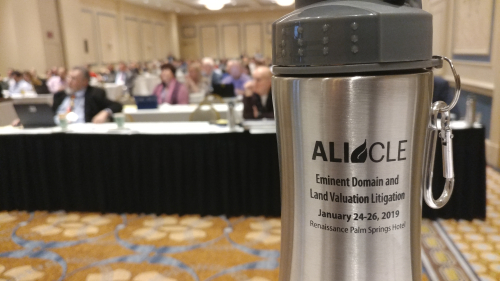
Our colleague and co-planning chair Joe Waldo was in town yesterday, so we walked through historic Williamsburg, Virginia (cradle of the Constitution and the Bill of Rights), to invite you to join us for the 36th Annual ALI-CLE Eminent Domain & Land Valuation Litigation Conference (January 24-26, 2019, in Palm Springs, California).

As we wrote in this post, the Conference will feature the nation’s best eminent domain faculty, presenting on the topics we love.

Register now here. Early registration and group discounts available. The 2018 Conference in Charleston sold out, so be sure to sign up now so you don’t miss out. Continue Reading Join Us For The 36th Annual ALI-CLE Eminent Domain & Land Valuation Litigation Conference In Palm Springs (Jan 24-26, 2019)

BK header

Come join us for one of the best conferences on property rights and property law at the 2018 Brigham-Kanner Property Rights Conference, October 4-5, 2018 at the William and Mary Law School in Williamsburg, Virginia.

Register here

We’ve attended and presented at the Conference in past years, including when it went international in Beijing and at the World Court in The Hague. This year it is back home, and will focus on the work of the 2018 B-K Prize winner, Professor Stewart Sterk of Cardozo Law School

The B-K Prize is awarded to a legal scholar, judge, or practicing lawyer who “has advanced the cause of property rights and has contributed to the overall awareness of the important role property rights occupy in the broader scheme of individual liberty.” The list of past prize winners is a pantheon of property law greats. 

We will be speaking

Continue Reading 2018 Brigham-Kanner Property Rights Conference: Williamsburg, Oct. 4-5, 2018

20180126_111558_HDR

You’ve known for a while that Palm Springs, California, specifically the Renaissance Palm Springs Hotel (a resort facility, but right in town, so you will have many options for “off campus” activities like art museums, the aerial tram, golf, and whatever suits your fancy, and close-in to the Palm Springs Airport), is the venue for our 2019 ALI-CLE Eminent Domain and Land Valuation Litigation, January 24 through 26, 2019.

Of course, you also knew that the programming would be the usual spread of topical and cutting-edge topics, presented by some of the nation’s experts. But we didn’t give you the details. So here are some of the programs we’re having: 

  • Keynote Address: “Property Rights: Foundation for a Free Society” – Taylor Revley, most recently the past President of the College of William and Mary, and also former law school Dean (as well as a


Continue Reading ALI-CLE 2019 Eminent Domain And Land Valuation Litigation Conference, Palm Springs Agenda – Register Now!

Challenging an ordinance that the court characterizes as an “even-handed” zoning regulation, even if it outlaws an existing conditional use, is going to be a tough one for a plaintiff. In theory, it need not be, given the right conditions. But any zoning lawyer will tell you that it is tough to overcome most courts’ presumption that these things are ok. That’s just the way it is. 

The Minnesota Court of Appeals’ opinion in Minnesota Sands, LLC v. County of Winona, No. A18-0090 (July 30, 3018), confirms that vibe. There, the county adopted an ordinance that banned all “industrial-mineral mining, including silica-sand mining.” Slip op. at 1. If that sounds oddly specific, the backstory is that this is the stuff used in fracking. 

Mr. Frick (and here you might think we’d try to work in both “Frick” and “frack” into this post’s title) owned leases to mine silica-sand on

Continue Reading Ordinance Banning Industrial Mineral Mining Not A Regulatory Taking – But What About Palazzolo?

20160114_125445

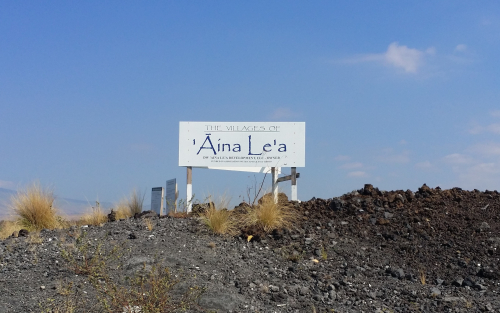
Here’s the latest in a case we’ve been following, a regulatory takings dispute from the Big Island of Hawaii. 

Last we reported, the jury (after deliberating for a grand total of 15 minutes) held the State of Hawaii Land Use Commission liable for a regulatory taking. But unbeknownst to the jurors, the court had already entered summary judgment for the State that the most the owner could recover as just compensation was nominal damages of $1.

The State then renewed its (denied) motion for summary judgment on liability, or alternatively sought a new trial. In this order, however, the District Court denied the motion, concluding that Aina Lea’s property right was not a “limited” right even though by the time of the case it had sold some of its rights to another entity:

Even taking the State’s characterizations of the record at face value, they support, at

Continue Reading No New Trial In Hawaii Regulatory Takings Case; Next Stop, Ninth Circuit

Here’s what we are reading (or listening to) this Tuesday:


Continue Reading Tuesday Reading List – Flood Takings, Cuba Property, Beach Access, And … Space Aliens

Clare Trapasso has a Realtor.com piece on what a Justice Kavanaugh could mean for real estate, property, and land use issues, “What Supreme Court Nominee Brett Kavanaugh Could Mean for Real Estate,” where she correctly notes that “while commentators have been scrutinizing Kavanaugh’s record on hot-button topics like abortion and immigration, there’s been little discussion of what a more conservative court could mean for home buyers, sellers, and owners.”

She asked us for input, and here’s what we said:

“The Supreme Court has done some very interesting things on land use law that affect homeowners,” says Robert Thomas, a real estate attorney specializing in land use and eminent domain at the Honolulu-based law firm of Damon Key Leong Kupchak Hastert.

Thomas expects more property-related cases will make their way to the Supreme Court, brought by people hoping that the new bench will increase their odds of a

Continue Reading What Might A Justice Kavanaugh Mean For Takings, Land Use, And Other Issues?

Here’s one that’s been a long time coming (or coming back, more accurately).

In this recently-filed cert petition, the issue is whether an “exaction” imposed by the legislature should be subject to the nexus and rough proportionality requirements of Nollan, Dolan, and Koontz, or is merely subject to rational basis review (i.e., no review at all). 

The last time this issue was presented to the U.S. Supreme Court after the California Supreme Court concluded that an exaction imposed by the City of San Jose wasn’t really and “Exaction,” and was only a land use regulation (as if the label matters), the U.S. Supreme Court declined to consider the issue. Now its back, by way of what looks like a very tight “vehicle” for the Court (the Maryland Court of Appeals decided the issue squarely under federal law). 

Here’s the single Question Presented by Dabbs v. Anne Arundel

Continue Reading New Cert Petition: Legislatively-Imposed Exactions Subject To Nollan-Dolan-Koontz?

Here’s a cert petition we’ve been waiting to drop, in a case we’ve been following out of Florida.

In Town of Ponce Inlet v. Pacetta, LLC, No. 5D14-4520 (Fla. Dist. Ct. App. June 16, 2017), the Florida District Court of Appeal reversed a Lucas takings verdict, concluding the case might not even be ripe under the “final decision” prong of Williamson County (the prong not being directly challenged in Knick), and that the owner needed to prove a Penn Central taking, because as a matter of law, the town had not appropriated all economically beneficial use of the land. The court sent the case back down for another view by the trial court about whether the case was ripe, and if it was, for another takings trial.  

The case presents quite a developmental horror story (we all have ’em, don’t we?). Read the petition for a flavor

Continue Reading New Cert Petition: The Other Williamson County Ripeness Test, Intentional Precondemnation Value Depression