


Worth reading: “Legislative Exactions after Koontz v. St. Johns River Management District,” an article by colleagues Luke Wake and Jarod Bona, recently posted to SSRN. Here’s the abstract:

Decided in June, 2013, Koontz v. St. Johns River Management District settled a long-running debate among scholars as to whether the nexus test — first pronounced in Nollan v. California Coastal Commission — applies in review of monetary exactions. In the preceding years, the lower courts had largely resolved this question in the government’s favor — limiting Nollan to its facts, and holding the nexus test inapplicable if a challenged permit requires the applicant to pay or expend money as a condition of permit approval. Further, the trend among the lower courts held the nexus test inapplicable in review of legislatively imposed exactions, regardless of whether the contested condition requires a dedication of real property or money.

Without question
Continue Reading New Article: “Legislative Exactions after Koontz v. St. Johns River Management District”

No, it’s not about the weird dude down at the Planning Department, but a new (draft) article by two familiar property lawprofs, Lee Fennell and Eduardo Penalver. Here’s the abstract:

How can the Constitution protect landowners from government exploitation without disabling the machinery that protects landowners from each other? The Supreme Court left this central question unanswered — and indeed unasked — in Koontz v St. Johns River Water Management District. The Court’s exactions jurisprudence, set forth in Nollan v. California Coastal Commission, Dolan v. City of Tigard, and now Koontz, requires the government to satisfy demanding criteria for certain bargains — or proposed bargains — implicating the use of land. Yet because virtually every restriction, fee, or tax associated with the ownership or use of land can be cast as a bargain, the Court must find some way to hive off the domain of exactions

Continue Reading New Article: “Exactions Creep”

Land users, please read the California Court of Appeal’s opinion in Woody’s Group, Inc. v. City of Newport Beach, No.G050155 (Jan. 29, 2015), which starts off with this straightforward summary:

The language of the law is replete with synonyms for fairness: due process, equal protection, good faith, harmless error are all ways of expressing our commitment to fairness. The City Council of Newport Beach violated at least two basic principles of fairness in overturning a permit application approved by the city’s planning commission. It should come as no surprise, then, that their action also violated California law.

First basic principle: You cannot be a judge in your own case. In this case Councilmember Mike Henn, having already voiced his “strong[]” opposition to Woody’s application, was allowed to appeal the approval of Woody’s application to the very body on which he sits, where he did his best to convince his

Continue Reading Cal App: Zoning Authorities Need To “Play Fair”

The Township of Ocean, New Jersey downzoned the plaintiffs’ residentially-and-commercially-zoned land to “Environmental Conservation.” The EC district allows “only very low density residential development or other low intensity uses,” with a minimum lot size of 20 acres. 

The plaintiffs, who own 34 acres subject the EC zoning, challenged the zoning ordinance, asserting it was “arbitrary, unreasonable, capricious and illegal,” and that it resulted in an inverse condemnation because it prohibited all uses.

In Griepenburg v. Township of Ocean, No. A-55-13 (Jan. 22, 2015), the New Jersey Supreme Court seemed to agree that there is little chance the property owners can make any use of their land: “[a]lthough plaintiffs’ single-family residence conforms to the ED district’s density requirement of one unit per twenty acres, no further development of their property within the EC district is permitted under the new zoning.” Slip op. at 13. 

The Supreme Court, however, held that the

Continue Reading NJ: Environmental Preservation Zoning Might Prohibit Development, But Owner Must First Try To Develop

Last we checked in with the Bridge Aina Lea case, the Ninth Circuit said it would hold off on a decision until the Hawaii Supreme Court ruled in the associated state court litigation (see 9th Cir Says “Let’s Wait” On Hawaii Supreme Court To Rule In Bridge Aina Lea).

This is the federal court side of a case in which a developer is suing the State Land Use Commission (and certain Commissioners in their individual capacities) after the LUC reclassified its land on the Big Island from urban to agricultural use. Aina Lea filed two actions in state court: an administrative appeal under the administrative procedures act, and an original jurisdiction civil rights complaint. The defendants removed the latter action to federal court. The District Court, however, abstained. After oral arguments in the Ninth Circuit, the panel withdrew the case from submission to allow the Hawaii Supreme Court

Continue Reading 9th Cir: No Need For Pullman Abstention In Aina Lea After Hawaii Supreme Court Ruling

Here’s the latest in a case we’ve been following, the property owner’s cert petition, filed last week, in which a U.S. District Court invalidated a Florida county’s “Right of Way Preservation Ordinance” which allows it to land bank for a future road corridors by means of an exaction. The court concluded the ordinance is “both coercive and confiscatory in nature and constitutionally offensive in both content and operation,” and struck it down under Nollan/Dolan

The transportation corridor protrudes into Hillcrest’s undeveloped commercially-zoned property. Hillcrest wanted to build a shopping center and it submitted a plan to the Review Committee, which rejected the application because it did not account for the corridor. Hillcrest submitted a second plan which was rejected, and a third plan which was eventually approved, which required Hillcrest to dedicate the right of way to the county. Hillcrest reserved its right to object

Continue Reading New Cert Petition: Must A Plaintiff Challenging An Ordinance For Facial Invalidity File Suit Before Her As-Applied Claim Has Ripened?

Here’s the final program and faculty list for the 2015 Hawaii Land Use Conference, coming up Thursday and Friday, January 15-16, 2015, in downtown Honolulu.

This is the bi-annual gathering of Hawaii’s land use mavens, and this year’s program has two very special presenters. Storied lawprof Richard Epstein (perhaps more than a “mere mortal”) will be presenting the keynote talk on “Stealth Takings: Exactions, Impact Fees and More,” and our ABA colleague Patty Salkin, Dean of the Touro Law School, will get us our Ethics CLE credits with her usual exciting program on ethics topics. (As someone who has attended more than few of her presentations, we can report that it is worth the price of admission alone, and even though “ethics CLE” and “exciting” are words we usually do not associate with each other, Dean Salkin’s presentation is the exception.)

Our panel on “

Continue Reading Still Time To Join Us For The 2015 Hawaii Land Use Conference (Jan. 15-16)

Here’s that last case in our 2014 opinion queue, from way back in July. It’s also coincidentially the 2,500th post on the blog.

In Sawn Beach  Corolla, LLC v,.County of Currituck, No. COA13-1272 (July 1, 2014), the North Carolina Court of Appeals considered vested rights and takings claims in a fact pattern than streched back decades. 

In 1966, the owners purchased 1400 acres for residential development. In 1969, the owners recorded a subdivision plat, to make both residential and commerical uses. The county had no zoning ordinance in place at that time. The owners spent $425,000 on preliminary work and infrastructure, such as surveying, engineering and grading. Big bucks in 1960’s dollars.

The county adopted a zoning ordinance in 1971, zoning the property for “RO2,” which prohibits most businesses, including those contemplated by the owners. “Nevertheless, plaintiffs continued to believe that they would be allowed to commerically develop their

Continue Reading Our Final 2014 Opinion Post: Vested Rights In North Carolina

There’s one citation notably missing from the opinion of the Texas Court of Appeals in Anderton v. City of Cedar Hill, No. 05-12-00969-CV (Aug. 22, 2014): Williamson County.  

This was case where in response to the city’s petition that the Anderdons’ use of their property was illegal, they counterclaimed that they had nonconforming use rights, that the city’s petition violated their vested rights, and resulted in a taking of their property. The trial court granted the city summary judgment on the counterclaim, holding that the owners did not present evidence of their nonconforming use status, and that their inverse condemnation claim was not ripe because they had not pursued available administrative remedies under the zoning code.

The court of appeals reversed. It concluded that the owners did submit enough evidence to get past a summary judgment motion that their use was nonconforming. Most interestingly for our purposes

Continue Reading Williamson County Wonderfully MIA In Texas Court’s Ripeness Analysis

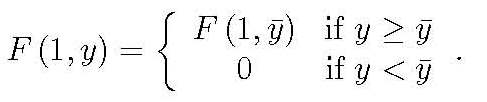
If you, like us, went to law school to avoid things like this:

Untitled Extract Pages

then perhaps this recently-published paper is not going to be your cup of tea.

But seriously, folks, this one might be worth your time, even if you are numbers-challenged, because it is a look at the “holdout” issue from the standpoint of economists.

In “Private Takings,” the authors “examine[] the implications associated with a recent Supreme Court ruling, Kelo v. City of New London.” From the Introduction:

This paper examines the implications associated with a recent Supreme Court ruling, Kelo v. City of New London. Kelo can be interpreted as supporting eminent domain as a means of transferring property rights from one set of private agents — landowners — to another private agent — a developer. Under voluntary exchange, where the developer sequentially acquires property rights from landowners via bargaining, a holdout problem arises.

Continue Reading New Article: “Private Takings” (via Fed Reserve Bank of Chicago)