



2015

CalliescrystaleagleA reminder to please RSVP (see below) for this Thursday’s event honoring University of Hawaii Law Professor David L. Callies.

On March 12, 2015, 5:30 – 6:30 p.m., we’ll be awarding Professor Callies the Owners’ Counsel of America‘s Crystal Eagle. Joining us will be his current and former students (of whom there are many), his faculty colleagues, the Hawaii property bar, and friends. The Crystal Eagle recognizes Professor Callies’ decades of property rights scholarship, his advocacy, and his international expertise in property law. 

Supreme Court of Hawaii Associate Justice Sabrina McKenna (a former student of Professor Callies) will give an introduction.

Professor Callies joins a list of past recipients which includes scholars (Professors James Ely amd Gideon Kanner), Supreme Court advocates (Michael Berger), public interest lawyers (James Burling of Pacific Legal Foundation and Dana Berliner of the Institute for Justice), journalists (Alan Colmes and Sean Hannity), nationally-renown eminent
Continue Reading A Reminder: RSVP For This Thursday’s Reception Honoring U. Hawaii Lawprof David Callies

A short one from the Florida District Court of Appeals, Florida Dep’t of Transportation v. Mallards Cove, LLP, No. 2D13-181 (Mar. 6, 2015), a regulatory takings case that followed on the heels of a straight condemnation.

The DOT condemned property belonging to Mallards Cove via Florida’s quick take procedure, by which certain agencies may obtain immediate possession and title, provided they deposit a good faith estimate of the land’s value with the clerk of the court. Under Florida law, the property owner’s right to just compensation is then vested, and two weeks later, the property owner withdrew the $2 million deposit. While the funds were on deposit, he clerk invested it, and under a Florida statute, 90% of the interest went to the DOT. The eminent domain case wrapped up, with the owner agreeing that the final judgment represented full compensation for the property taken.

But the owner wasn’t

Continue Reading Fla App: Quick Take Deposit Only Vests Owner’s Right To Compensation, Not To Specific Funds

Weird headline from KITV. No, owners whose property is taken for the rail aren’t “profiting” if they are able to get more for their land than what the condemning agency offered; “just compensation and damages” are required by the constitution, and if they are able to obtain more, in many cases that still leaves them undercompensated and simply means the condemnor’s offer was inadequate.

But besides the headline, KITV does a good report on last night’s community forum on property owners’ rights in eminent domain which we sponsored

Continue Reading Video: Report On Community Meeting On Property Rights And The Honolulu Rail

The Virginia Supreme Court recently heard oral arguments in Ramsey v. Commissioner of Highways, a case we’ve been following closely (and in which we filed an amicus brief in support of the property owners). 

This is the case about Virginia’s statutory requirements in eminent domain cases. As a prerequisite to a court exercising jurisdiction over a condemnation complaint, a state condemning agency must as an initial step present a statement of “the amount which [the condemnor] believes to be just compensation,” to the property owner, and must include an appraisal if an appraisal is required. 

The trial court viewed the required “statement” as a settlement offer, and prohibited the property owner from both telling the jury about the statement, and cross-examining the state’s appraiser about it. Even though the state’s initial statement of just compensation was $246,292, and later, its new appraiser at trial testified that just compensation

Continue Reading Virginia Supreme Court Oral Arguments: Does A Precondemnation Value Statement Come In?

As reported yesterday by Pacific Business News (“HART acquired 34 properties for $70M along Honolulu rail transit route, new report says“), “[t]he Honolulu Authority for Rapid Transportation has acquired 34 properties totaling about $70.2 million thus far along the 20-mile rail transit route, including the recent purchase of a former sports bar property near Ala Moana Center for about $1.35 million.” 

In other words, it’s begun. 

In response to the many questions we’ve received from property owners, businesses. and homeowners whose rights may be at stake in the rail takings, we’ve organized a public forum to provide information about the project, Hawaii’s eminent domain process, and  how to protect the rights of people whose property or businesses are subject to acquisition. 

Details:

More information here

Continue Reading Tommorrow’s Public Rail Project Forum: Eminent Domain, Just Compensation, And Protecting Property Rights

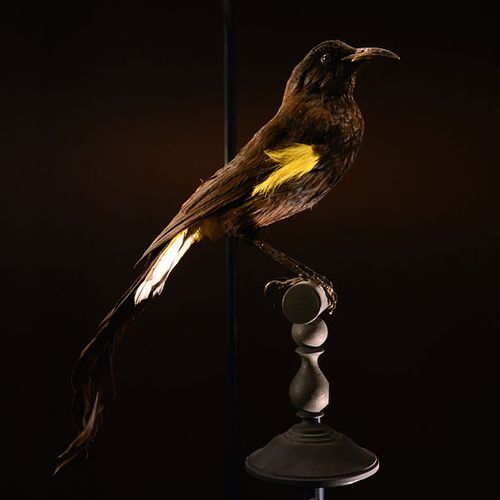
600px-Mus_Nat_Hist_Nat_25022013_Moho_nobilis

Spurred by yesterday’s battle-of-the-titans Supreme Court oral arguments (Clement vs. Waxman) in a case we’ve been following, we’re taking a short diversion from our usual fare of takings, eminent domain, and land use law today to cover another topic that long-time followers know is also within our area of practice: voting and election law.

The case is Arizona State Legislature v. Arizona Independent Redistricting Commission, No. 13-1314, an actual appeal to the Supreme Court from a three-judge district court, one of the few places left in the law where that can still happen. The Question Presented boils down to the meaning of “legislature” as used in the Elections Clause: does the requirement that “the Legislature” determine the time, place, and manner of congressional elections mean that those states which redistrict and reapportion by way of Commission or other non-legislative means are using an unconstitutional processes? 

In a provision added

Continue Reading Is The Hawaii Reapportionment Commission About To Go The Way Of The ‘O’o Bird?

This one from the Federal Circuit is a must read, particularly for those interested in takings claims where the federal government is involved. But even if that doesn’t describe you, we think you should review Ministero Roca Solida v. United States, No. 14-5058 (Feb. 26, 2015), because the issues raised — especially in Judge Taranto’s concurring opinion — could have impact far beyond the narrow confines of the case.

The core issue is one we’ve dealt with extensively before, and which the Supreme Court addressed in United States v. Tohono O’odham Nation, 131 S. Ct. 1723 (2011), the effect of 28 U.S.C. § 1500 when the federal government is sued both in the Court of Federal Claims and in a District Court. That statute deprives the CFC of subject matter jurisdiction when there is a case pending in “any other court” against the United States which involves “any claim for or

Continue Reading Tohono’s “Jurisdictional Ambush” And The Tucker Act Shuffle In The Federal Circuit

CalliescrystaleaglePlease join us on Thursday, March 12, 2015, 5:30 – 6:30 p.m. for the awarding of the Owners’ Counsel Crystal Eagle to University of Hawaii Law Professor David L. Callies

We’re inviting his current and former students (of whom there are many), his faculty colleagues, the Hawaii property bar, and friends, for the presentation of the award by which Owners’ Counsel recognizes his decades of property rights scholarship, his advocacy, and his international expertise in property law. 

With remarks by The Honorable Sabrina S. McKenna, Associate Justice, Supreme Court of Hawaii.

Professor Callies joins a list of past recipients which includes scholars (Professors James Ely amd Gideon Kanner), Supreme Court advocates (Michael Berger), public interest lawyers (James Burling of Pacific Legal Foundation and Dana Berliner of the Institute for Justice), journalists (Alan Colmes and Sean Hannity), nationally-renown eminent domain lawyers (Toby Brigham), and property owners (Coy Koontz, Jr.). 

Light

Continue Reading March 12, 2015, Honolulu: Awarding Professor David Callies The Crystal Eagle

Metropolitan St. Louis Sewer District v. City of Bellefontaine, No. ED101713 (Feb. 24, 2015), is another one of those cases where construction by a city resulted in damage to property. The water district sued for inverse condemnation, among other things. Only twist here was that it wasn’t exactly “private” property, but property owned by another municipality, a water district. The City responded by arguing that hey man, the water district’s property is already devoted to public use, and the prohibition against takings only applies to private property, so no standing. 

Short story: the Missouri Court of Appeals punted the case up “because of the importance of this question, we transfer to the Missouri Supreme Court.” Slip op. at 7. The interesting thing, especially for those of us who also practice in jurisdictions where a case before an intermediate appeals court can be moved up to the supreme court by transfer, is

Continue Reading Missouri App: Can One Municipality Take Another’s Property? We Don’t Think So, But We’re Not Certain