2020

They’re coming so fast, we can hardly keep up.

Today, in Castillo v. United States, No. 19-1158 (Feb. 20, 2020), the U.S. Court of Appeals for the Federal Circuit resolved a common issue in rails-to-trails takings cases: when a property owner holds title and her deed describes the land as bordering on a railroad line or other easement (or the property is described as a lot in a plat that shows the lot’s “property line” as adjoining a road or railroad easement), does the owner of the adjoining fee estate own the fee interest up to the “centerline” of the right of way?

Applying Florida property law, the court held yes, there is a presumption that the owner’s title goes up to the “centerline.” The court reversed the Court of Federal Claims’s conclusion that the presumption did not apply, and that deeds describing the property as a “less
Continue Reading Federal Circuit: When Road Is The Property Boundary, Owner’s Fee Goes Up To The “Centerline”

Check out the latest (and final) episode of the Institute for Justice’s “Bound by Oath” podcast. IJ’s John K. Ross was kind enough to ask us to be a guest on the show titled “Excessive Fines,” and our friend and colleague Bob McNamara and I sat down in Nashville to record our sound bytes. 

The series (not simply a podcast, but more like an audio documentary) is about the Fourteenth Amendment, and covers (inter alia) how and why the rights in the Bill of Rights have, over time, been applied by the Supreme Court to state and local governments under the Due Process “selective incorporation” doctrine.

So why was a takings guy a guest on a show about the Excessive Fines Clause of the Eighth Amendment?  Because last year in Timbs v. Indiana, the Supreme Court held, in a civil forfeiture case, that the Excessive

Continue Reading IJ’s “Bound by Oath” Podcast, Ep. 9: Excessive Fines, 14th Amendment Incorporation (And The Just Compensation Clause)

Here’s the latest in a long-running, multi-forum takings case about the development of affordable housing on the Big Island of Hawaii. 

Last we saw, the District Court awarded nominal compensation ($1), after the jury concluded that the State of Hawaii took Aina Lea’s property. The parties cross-appealed: the State argues the district court should have granted the State’s JMOL on liability, while the property owner appealed the $1 judgment. 

Today, the Ninth Circuit reversed the District Court’s ‘s opinion, holding that the district court should have ruled in the State’s favor on liability. The court remanded the case for entry of judgment in the State’s favor (meaning even the $1 just compensation judgment is gone). Bridge Aina Lea, LLC v. State of Hawaii Land Use Comm’n, No. 18-15738 (Feb. 19, 2020).

We’re tied up doing lawyer stuff today, so can’t read or analyze the decision in detail. But once

Continue Reading CA9: Remember That $1 The Court Awarded You For The Jury’s Finding Of A Regulatory Taking? We’re Taking That Away, Too

Openthefloodgates

We’re doing lawyer things this week, so can’t do much blogging, so we’re going to just leave this here, the Court of Federal Claims’s Opinion and Order in the case seeking compensation for a taking by the “downstream” owners whose lands were flooded by the U.S. Army Corps of Engineers in the aftermath of Hurricane Harvey. 

Short story: no property, no taking. 

How does the following square with the same court’s (but a different judge’s) ruling about the “upstream” owners?

Two questions must be asked. First, what property did the government take? Second, how did the government take that property? The answers to these questions go to the heart of the Constitution’s taking clause. The waters that actually caused the invasion came from the unprecedented floodwaters from Hurricane Harvey when it stalled over Houston for four days, dumping approximately thirty-five inches of water on Harris County. See Plaintiffs’ Appendix (hereinafter

Continue Reading CFC: God Forced Corps Of Engineers To Open Floodgates

It’s Friday (and Valentine’s Day), so we’ll make this quick, even thought this is one of those cases with a fact pattern that you just can’t digest quickly: In Day v. Idaho DOT, No. 45552 (Feb. 14, 2020), the Supreme Court of Idaho held that only the property owners at the time of the taking may assert an inverse condemnation claim. That, standing alone (pun intended), is not surprising.

But skip forward to page 7 of the slip opinion where the court determined when the taking occurred (at the time the government action alleged to be a taking — here, an interchange — was “substantially completed,” not on the date the infrastructure project was actually completed):

This begs the following question: When did the taking in this case occur? The district court’s opinion states that “the parties stipulated that the taking occurred on December 5, 1997, when the Isaacs Canyon

Continue Reading Idaho: Only The Owners At The Time Of The Taking Have Standing To Pursue Inverse Claim (Because It Is A “Personal Claim” & Doesn’t Run With The Land)

NashvilleALICLEposter

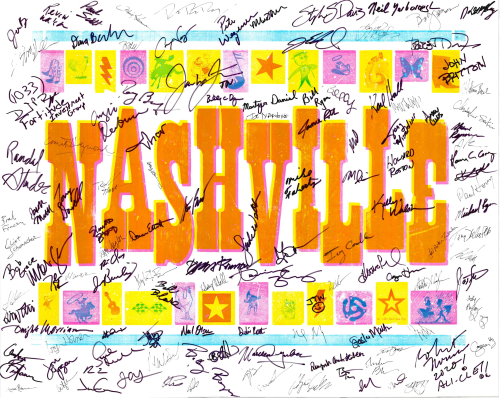
Each of the three big presentation rooms was full at our recent ALI-CLE Eminent Domain & Land Valuation Litigation Conference in Nashville. Nearly 300 lawyers, judges, appraisers, professors, students, relocation experts, and others eminent domain professionals coming together for 3 days of programming and fellowship. I have uploaded all of the photos that I took during the conference here

To celebrate another successful and enjoyable conference, we also signed the above commemorative poster from the famous Hatch Show Print shop which was just down the street.  

Can you locate your signature? (high-res pdf here) If you missed out, you’ll have a chance to join us in January 2021 in Scottsdale

Nashville 2020 ALI-CLE Commemorative Poster (signed) 

Continue Reading Thank You To All Who Joined Us In Nashville For The 37th Annual ALI-CLE Eminent Domain Conference!

A group of property owners acquired several parcels in the Windsor, Ontario (Canada) area over the years, “with the aim of developing the lots for residential purposes.”

The city had other ideas: it wanted the area for a “natural heritage area known as the Spring Garden Complex.” The property owners believed they were entitled to more for the parcels than the city offered, so the city instituted expropriation actions. After some up-and-down in the appeal chain, 

applying the concept which we further south call the “project rule,” the Appeal Tribunal concluded that its task was to determine the value of the expropriated property in the absence of the expropriation. See slip op. at 5 (“The Tribunals’ responsiblity in this case is to assess what impact, if any, the requirements of the PPS would have on the market value of Claimants’ lands if the impacts of the scheme are screened

Continue Reading Highest And Best Use And The Project Rule, Canadian Style

6a00d83451707369e20240a4699139200c-800wi

Check out these two amici briefs, just filed in a case we’ve been following, about what a property owner who is awarded just compensation in a state court eminent domain lawsuit is supposed to do if the local government that is ordered to pay the just compensation judgment … doesn’t. 

The property owner sued the local government — a Louisiana Port District — in U.S. District Court, alleging a violation of 42 U.S.C. § 1983. That court dismissed for failure to state a claim. The property owner appealed to the Fifth Circuit. 

Several amici have joined together to file two briefs in support of the property owner: 

The IJ brief focuses on the long-standing requirement that just

Continue Reading Amici Briefs: What Do You Do With A Recalcitrant Condemnor Who Won’t Pay The Judgment? Magna Carta ‘Em!

W Su cover page

Be sure to download and read this article, recently published in the Virginia Law Review by legal scholar Wanling Su with the deceptively simple title, “What is Just Compensation?

The article delves into the history of ad quod damnum and concludes that “just” compensation means a jury must determine compensation. That’s an issue that we’ve addressed here before, but the Supreme Court has declined to decide

Here’s the abstract:

The Supreme Court has held that “[t]he word ‘just’ in [‘just compensation’] . . . evokes ideas of ‘fairness.’” But the Court has not been able to discern how it ensures fairness. Scholars have responded with a number of novel policy proposals designed to assess a fairer compensation in takings.

This Article approaches the ambiguity as a problem of history. It traces the history of the “just compensation” clause to the English writ of ad quod

Continue Reading New Must-Read Article: “What is Just Compensation?” (Wanling Su, Virginia L. Rev.)

You all know the movie trope of the good guy setting off an explosion and then coolly turning and (in slow-motion) walking away framed by the blast (so cleverly parodied above)? Well, here’s the judicial equivalent.

In UGI Sunbury LLC v. 1.75 Acres, No. 18-3126 (Feb. 11, 2020), the U.S. Court of Appeals concluded that in a bench trial to determine valuation for the taking of property for a pipeline easement under the Natural Gas Act, an expert who opined on behalf of the property owner that the proximity of a pipeline to the remainder property resulted in “stigma damages,” should not have been allowed to testify about this “damaged goods” theory. The district court abused its “wide discretion” under Federal Rules of Evidence 702 and Daubert by allowing the testimony. 

Rather than paraphrase the Third Circuit’s reasons for reaching this conclusion that the expert’s testimony was “speculative and subjective,”

Continue Reading Cool Courts Don’t Look At Explosions: Third Circuit Rejects Stigma Damage Theory For Adjacent Gas Pipelines