2020

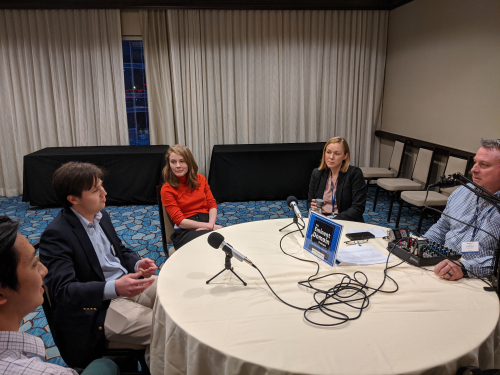
IMG_20200123_170539

L to R: Benming Zhang, Andrew Parslow, Kelsey Abell,
Kacie Couch, Clint Schumacher

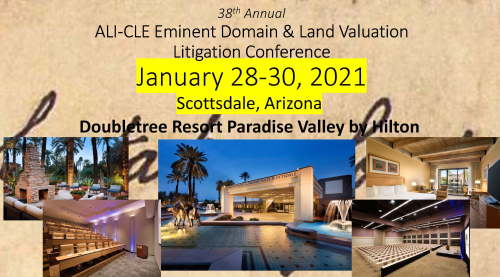
At the recent ALI-CLE Eminent Domain and Land Valuation Litigation Conference in Nashville, our colleague Clint Schumacher set up his portable studio and recorded future episodes of his Eminent Domain Podcast. (Barista’s note: Clint was also one of the three featured presenters for Friday’s Ethics panel, and the feedback we’ve been receiving on that program is uniformly excellent.)

Eight of my William and Mary Law School students took several days out of their busy Spring semester schedule to travel to Nashville and participate in-person in the Conference, applying the theories and concepts we learned in the fall semester’s class (Eminent Domain and Property Rights) to the real world of lawyering. (More on their Conference participation in a future post.)

Between sessions, they had a chance to sit down individually and in groups

Continue Reading Eminent Domain Podcast Interviews William & Mary Law Students
Recall that recent Third Circuit decision which held that a private condemnor exercising federal eminent domain authority pursuant to the Natural Gas Act could not sue the State of New Jersey in federal court to take the state’s property for a pipeline? The court based its conclusion on the Eleventh Amendment immunity states enjoy. 

That ruling, however, was no impediment to this recent Order by FERC (Federal Energy Regulatory Commission) which — at least on its face — seems to address the very same question. In the Order, a 2-1 FERC majority concluded that the NGA permits a private condemnor to sue a state in federal court to take its property. For more details on the FERC Order, see “Divided FERC Finds Pipeline Companies Can Seize State-Owned Interests,” by Addisah Sherwood

And what about the earlier ruling by the Third Circuit? Not a problem, according to a majority

Continue Reading Less Meaningful Than The Iowa Caucuses: FERC Invokes Chevron Deference, Rules That Under NGA, Private Condemnors May Take State-Owned Land

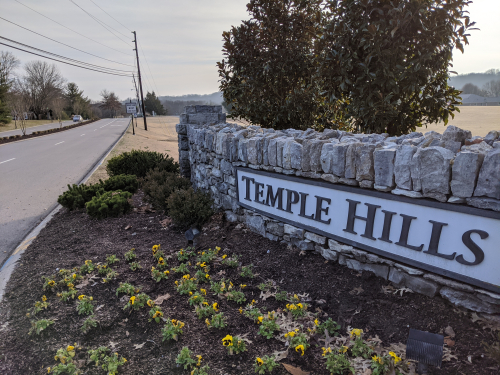
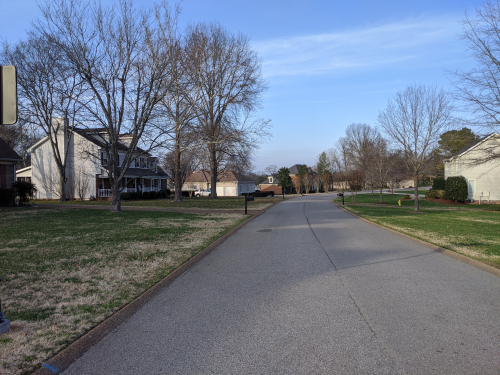
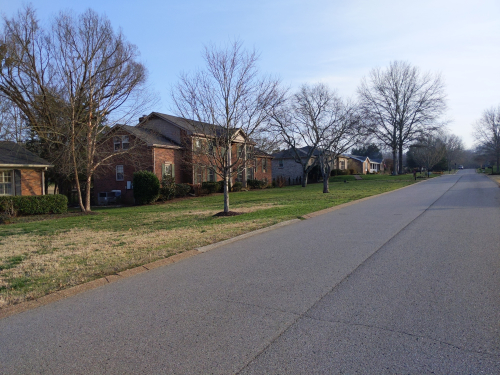
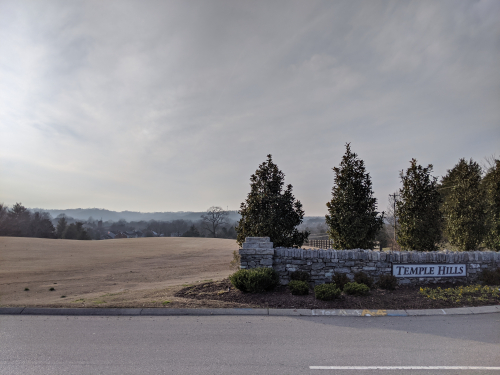
As we briefly noted in this post, before we departed the ALI-CLE Eminent Domain and Land Valuation Litigation Conference in Nashville, we just had to stop by the subdivision that was at issue in the Williamson County litigation. 

Frankly, there’s nothing especially special or noteworthy about this place, and only takings nerds will truly appreciate these pics. But given our propensity to make “takings pilgrimages” to the sites of famous property cases (see here (Claude Monet), here (Loretto), here (Chicago, B & Q RR), here (Dolan), here (Seneca Village), here (High Line), here (Hadacheck), and here (Nollan), for example), we just could not resist. 

So dig it, takings mavens. 

IMG_20200128_155300

There’s a golf course, of course. (There’s always a golf course.)

IMG_20200128_155147_1

“Temple Hills” beats “Glengarry Glen Ross”

PANO_20200128_154217.vr

A panorama of the main drag

IMG_20200128_154406

Up the street 

IMG_20200128_154302

Down the Continue Reading Williamson County, In Pictures

You know how the process is supposed to work. A condemnor exercises its eminent domain power and files a lawsuit to take property for public use. If the owner believes the condemnor’s price is too low, the court adjudicates the just compensation that must be paid. As we know, the point of that lawsuit is to establish the price. If the price eventually adjudicated is too dear (from the condemnor’s perspective), it isn’t required to acquire the property (unless, in some jurisdictions, it has taken advantage of the quick-take or immediate possession process). But if the condemnor wants the property, it must pay the adjudicated compensation. So far, so good.   

But what about those cases where the court adjudicates the price the condemnor must pay to acquire the property, and the condemnor actually takes the property — but the condemnor does not actually pay the compensation adjudicated by the

Continue Reading Does A Property Owner Have A § 1983 Claim If A Condemnor Doesn’t Pay A Just Comp Judgment In A Reasonable Time?

Profcorner.jpf

Please mark your calendars and join us next Tuesday, February 11, 2020 at 12:30pm ET for the free (for members of the ABA’s Real Property, Trust and Estate Section) webinar, the monthly “Professors’ Corner.”

This one will be on the aftermath of Knick v. Township of Scott, 139 S. Ct. 2162 (2019), in which the Supreme Court formally overruled the “state procedures” ripeness requirement in federal regulatory takings cases. 

We shall be speaking about the case and what’s next along with Professors Stewart Sterk and Michael Pollack (moderated by Professor Shelby D. Green). Here’s the summary of the webinar from the ABA website:

Last term, in Knick v. Township of Scott, the Supreme Court overruled the long-standing requirement that state takings claims first be litigated in state courts. The Court held that a property owner has an actionable takings claim when the government takes property without paying for

Continue Reading Tuesday Feb 11, 2020: Professors’ Corner – The Supreme Shift in Takings Litigation – Knick v. Township of Scott

As we briefly mentioned in the “National Eminent Domain Update” at the recent ALI-CLE Eminent Domain and Land Valuation Litigation Conference in Nashville, the U.S. Court of Appeals for the Eleventh Circuit in Sabal Trail Transmission, LLC v. 3.921 Acres, No.18-11836 (Jan. 22, 2020), recently held that it isn’t an abuse of discretion for a trial court to allow a property owner to testify about value if she meets the standards in Federal Rule of Evidence 701.

Two interesting aspects to this case:

1.    The owner’s opinion of value was higher than the owner’s appraiser’s opinion of value. 

2. The owner testified about severance damages. 

The district court allowed the testimony because the property owner had direct experience with the property and sales of other parcels the company owned, even though she lacked experience with the particular use for which this parcel was taken (a

Continue Reading CA11: Owner May Provide Opinion Of Value, Including Severance Damages

In case you were not able to attend the recent program sponsored by Howard University Law School about the “heirs property” issue (Jan. 29, 2020), they recorded it and have now posted it on YouTube

Here’s a description of the program:

Experts say that real estate is the steadiest and safest way to build wealth in America. And yet, African Americans continue to be displaced from their homes and land. For example, the last century has seen a precipitous decline in the amount of black-owned agricultural land, partly as a result of the heirs property land ownership system, which has been exploited to force partition sales and remove black families from their property. And heirs property is hardly the only example of the pernicious impacts of property rights insecurity. Here in the District, gentrification is displacing African American residents at some of the highest rates in the country. Nationally

Continue Reading Video: The Biggest Problem You’ve Never Heard Of (“Heirs Property And Black Property Loss”)

Netflix just released the first season (or should we say “series” since this is a UK-based production?) of “The Stranger,” a thriller based on Harlan Coben’s novel, about “the lives of suburban families whose secrets and lies are made public by the appearance of a stranger.”

Why we’re posting notice here that you should watch it is because the main character is Adam Price, and the backdrop to the thriller is that he’s a lawyer who is fighting expropriation (what we Yanks call “takings”), and is knee-deep in a case involving the threatened taking of a retired police officer’s supposedly blighted home for the local council’s redevelopment project. We just started watching. 

What makes this story line especially compelling is that the legal aspects of the story are based on a real case in which our New Jersey colleague Tony Della Pelle represented the property owner. In that

Continue Reading Netflix And Take: Expropriation And Redevelopment UK Style In “The Stranger”

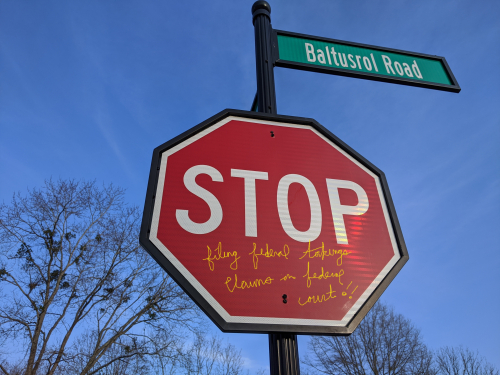
IMG_20200128_154634_1 STOP

Having just wrapped the 2020 ALI-CLE Eminent Domain and Land Valuation Litigation Conference in Nashville (very successfully, but more on that later), we could not depart the area without paying a visit to the site of the late-and-not-so-great Williamson County case, in a nearby suburb (we’ll also have more on that later, once we’re back in the office). 

Driving into the infamous — at least in takings circles — Temple Hills subdivision, we came across this STOP sign at a key intersection, with some curious graffiti. Continue Reading Saw This Sign In Williamson County, Tennessee