You know how we’re always saying that certain parties have an enviable record of success in the Hawaii Supreme Court? Well, now the statistics are official.

The latest edition of the University of Hawaii Law Review published an article by lawprof David Callies summarzing the decisions of the court during the tenure of now-retired Chief Justice Ronald Moon. The article sets forth the stark numbers (83% win rate, 65% reversal of the intermediate appellate court), and contains a sharp comment about the often-lengthy nature of the court’s opinions:

Second, the Moon Court decided some of thestate’s most important property and related environmental and Native Hawaiianrights cases in favor of the various non-governmental organizations bringingthem (Sierra Club, Earthjustice, Hawaii’s Thousand Friends, and the NativeHawaiian Legal Corporation) approximately eighty-two percent of the time,sixty-five percent of which reversed the Intermediate Court of Appeals (ICA).Third, the court increasingly rendered lengthy opinions, many triple the

Continue Reading U.H. Lawprof: HAWSCT’s 1993-2010 Record On Private Property Rights “Appalling”
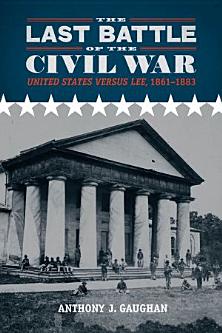
LastbattlebookYou know how we’re always saying that the provisions in the Takings Clause are “self-executing,” that even in the absence of a waiver of sovereign immunity, the Tucker Act, and section 1983, property owners would still be able to maintain a claim for compensation? Well here’s an article that explains that how that rule was first articulated, and not in a dry academic way, but with a fascinating historical story.

It’s the tale of United States v. Lee, 106 U.S. 196 (1882). We knew the land that is now Arlington National Cemetery was once owned by Robert E. Lee, but we can’t say that we gave much thought to how it became public property. We always assumed that it had simply been seized as war booty from Lee during the Civil War, and that was that.

In The Arlington Cemetery Case: A Court and a Nation Divided, 37

Continue Reading Arlington National Cemetery And The Takings Clause

Cover_42_3_ The Summer 2012 issue of the Urban Lawyer, the law review published quarterly by the ABA’s Section of State and Local Government Law and UMKC law school is now available on-line, and includes my short article on the latest developments in public use in eminent domain law.

To download your copy, click here. The article covers the “common carrier” issue from Texas, necessity in private takings, several procedural issues including appealability of a determination that a taking is (or isn’t) for public use, and First Amendment spin-off issues related to eminent domain. (Recent Developments in Eminent Domain: Public Use,  44 Urb. Law. 705 (2012)).

If you are not already a Section member, please consider it – the included subscription to the Urban Lawyer is one of the most worthwhile benefits. Continue Reading New Article – Recent Developments in Eminent Domain: Public Use

5330215_big Last year, the American Bar Association published “Eminent Domain – A Handbook of Condemnation Law,” a one-volume deskbook with an overview of condemnation and inverse condemnation law.

I authored two chapters in the book, one on Prelitigation Process, the other on Flooding and Erosion. (My Damon Key colleagues also co-authored the chapter on Damages Resulting from a Taking, so our firm’s fingerprints were all over this book.)

Anyway, as you know, the U.S. Supreme Court recently issued its decision in in Arkansas Game and Fish Comm’n v. United States, No. 11-597 (Dec. 4, 2012), in which a unanimous Court held that government-induced flooding could be a taking, even if temporary. The Sandy superstorm also raised some takings by flood issues.

As a consequence, takings liability for inundation damage is on every dirt lawyer’s mind, so the ABA Publications office has posted an excerpt of

Continue Reading Flood Takings Primer

Here are my remarks from last week’s Brigham-Kanner Property Rights Conference at the William & Mary Law School in Williamsburg, Virginia. Our panel spoke on “Property Rights in Times of Economic Crisis,” and included lawprofs James W. Ely (Vanderbilt), William Fischel, (Dartmouth), and Eric Kades (William & Mary). See the complete faculty list and agenda here.

+++++++++++++++++++++++++++++++++++++++

Aloha, I bring you greetings from the land of Midkiff, the land of Lingle.

I practice in the jurisdiction that believed it would cure our economic ills to use eminent domain to bust up the legacy land trusts, and make sure that everyone who owns a home could also own the fee simple interest.

Which they may now do, provided they can afford our median price for a single-family residence, $637,000.

I practice in the jurisdiction that believed that it would be a good idea to try and bring

Continue Reading Professor Ely, You Magnificent Bastard, I Read Your Book!

Ever since the U.S. Supreme Court’s infamous decision in Kelo v. City of New London, 545 U.S. 469 (2005), the focus of eminent domain scholarship and the public have been on the public use side of the condemnation equation.

However interesting those issues are (and they truly are), practitioners of eminent domain law understand that a vast majority of the issues in litigation still revolve around just compensation and valuation. The Supreme Court has even shown an interest, with the Justices asking questions about compensation in at least two oral arguments where the issue was not directly presented (here and here for example). While the ABA has recently published books about eminent domain generally (see here and here), it has not produced one devoted to just compensation.

But it soon will. The section on State and Local Government Law has decided to publish a book on current

Continue Reading Call For Authors: American Bar Association Book On Just Compensation Issues

There’s still time to join us later this week at William & Mary Law School in Williamsburg, Virginia for the 2012 Brigham-Kanner Property Rights Conference, and the award of the B-K Prize to University of Michigan lawprof James Krier for his lifetime contributions to property law scholarship.

The Conference includes a day-long series of discussions on property rights, featuring leading scholars and practitioners. Topics include “The Impact of a Leading Property Scholar,” “The Judiciary’s Role in Shaping Constitutionally Protected Property,” “Property Rights in Times of Economic Crisis,” and “Property’s Moral Dimension.” The day will wrap with a roundtable discussion, “How Fundamental are Property Rights?” The complete agenda is available here.

I will be speaking on the panel about “Property Rights in Times of Economic Crisis,” discussing why property rights are even more important when times are tight.

Register on-line here. If you can’t join us, I will

Continue Reading 2012 Brigham-Kanner Property Rights Conference

HSBA-appellate-manual

Introducing the recently-published Hawaii Appellate Practice Manual, your one-stop source for everything you need to know about appeals in Hawaii’s Supreme Court and the Intermediate Court of Appeals.

Our Damon Key colleagues contributed much to this work, with Rebecca Copeland serving as the editor and point person, and several DK attorneys authoring or contributing to chapters: Tred Eyerly (Appellate Mediation); Matthew Evans (Perfecting the Appeal; Civil Appeal Docketing Statement); Bethany Ace (Standards of Review; Prerequisites to Filing An Appeal). I wrote the chapter on Appellate Briefing (Practice Tip: Times New Roman font is horrible, but if the page limit is a concern it is the most readable of the smaller 12 point typefaces, and can save you several pages over a longer brief).

This is a great addition to any Hawaii lawyer’s bookshelf, whether you are an appellate maven or taking your first case on up the food chain.

Continue Reading Introducing The Hawaii Appellate Practice Manual (2012)

5310412_bigJust published: the ABA Section of Litigation (Condemnation, Zoning, and Land Use Committee) has released The Law of Eminent Domain — A Fifty State Survey (First Chair Press 2012). This book is a “single resource for eminent domain practitioners … a reference for questions about eminent domain and condemnation procedure in every state and the District of Columbia.” It’s a handy desk reference for how common issues in eminent domain are handled in each jurisdiction. Each state chapter covers the same topics:

  • Who is Eligible to Condemn?
  • What can be Condemned?
  • The Condemnation Proceedings
  • Procedure to Challenge Condemnation
  • Inverse Condemnation
  • Just Compensation Issues
  • How are Various Ownership Interests Treated?
  • Abandonment
  • Attorney’s Fees and Costs

We authored the Hawaii chapter. Our Owners’ Counsel of America colleague Bill Blake served as the editor, and many of our friends and colleagues from across the nation authored their state’s chapter. It’s a great reference

Continue Reading New Book: The Law of Eminent Domain (A Fifty State Survey)

Update: some have reported difficulty with finding the How Appealing link below. Here’s a direct link to the issue.

The latest issue of Appellate Issues, the quarterly publication of the ABA’s Council of Appellate Lawyers is out, and features our article, “Preparing an Effective Appellate Brief – The Expert View.”

Also included in this issue are some really fascinating and helpful articles: “How to Write an Introduction” (they say the Intro is where you can win the case, and this article helps you hone your skills), “Theming the Appellate Brief,” three articles on tech issues: “Hyperlinking in the Appellate Arena,” “Video Hyperlinks: An Effective Tool in Appellate Advocacy,” and “Writing Appellate Briefs for Tablet Readers” (yes, many judges and clerks these days are reading your brief on screen), and an article by fellow Oahu denizen Col. Louis

Continue Reading Latest Edition Of Appellate Issues: Preparing an Effective Appellate Brief – The Expert View … And More