Court of Federal Claims | Federal Circuit

There’s a lot of backstory in Reoforce, Inc. v. United States, No. 15-5084 (Mar. 17, 2017), involving mining claims, federal patents, and public lands. An interesting read, we won’t go into the details.

But suffice it to say that Reoforce thought it had a pretty decent chance of obtaining a patent for federal land because there was a market for what Reoforce thought was a valuable mineral, pumicite. In the end, Reoforce didn’t get the patent because there wasn’t as much of a market for the pumicite as it believed, but under federal law, Reoforce still had a limited property right to mine the stuff in remote Kern County, California. 

Eventually, the BLM entered into an agreement with the California Parks Department to turn that land into Red Rock Canyon State Park. Certain mining claims were allowed to continue, but others were temporarily prohibited. Reoforce’s were among the

Continue Reading Fed Cir: BLM’s Temporary Prohibition On Mining Not A Penn Central Taking
Here’s an article, recently published by the Urban Lawyer (the law review produced by our ABA section, the Section of State and Local Government Law), with our take on the most interesting and important eminent domain and takings rulings from the past year. 

Many of the cases discussed will be familiar to regular readers, but here it is in one place, and in print. 

Recent Developments in Eminent Domain, 48 Urb. Lawyer 939 (2016)

Continue Reading New Article: Recent Developments In Eminent Domain

IMG_20170127_092611 - IMG_20170127_092616

Today, in addition to listening to sessions on Ethics, jury presentations, and expert witnesses, we presented (along with Dave Breemer of Pacific Legal Foundation) a session on “Takings and the Police Power.” Here are the links to the cases and articles I discussed in my portion of the presentation: 


Continue Reading Links & Materials From Day 2 Of ALI-CLE Eminent Domain And Land Valuation Litigation Conference, San Diego

IMG_20170126_133958

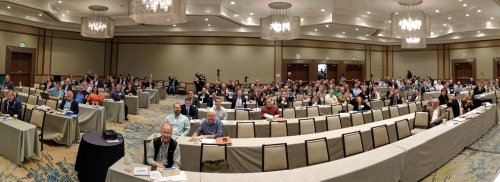
Here are the links and references to the cases we spoke about today at our opening session on the national trends in eminent domain law at the 2017 ALI-CLE Eminent Domain and Land Valuation Litigation Conference in San Diego. 

We again have a record attendance, and a good number of new attendees. If you aren’t here now, we’re sorry you didn’t make it. But fear not: ALI-CLE has already set the date and location for the 2018 Conference: save the date on your calendars now — January 25-27, 2018, Charleston, South Carolina, at the Francis Marion Hotel. 


Continue Reading Day 1, 2017 ALI-CLE Eminent Domain And Land Valuation Litigation Conference, San Diego

There have been a lot of takings and takings-related decisions coming out of the Court of Federal Claims lately, and we’ve held off on posting them individually. So to start off your New Year, here is a pop quiz.

Your task: guess whether the CFC held there was a taking, or no taking (answers below):

Case 1: Sheikh Djibouti 

  • Global Freight was a subcontractor providing services to a Navy base in Djibouti. The Navy ordered it to move its vehicles from the Navy base into Djiboutian territory, after which the Djiboutians seized the vehicles. Taking or no taking? 
  • Taking. Or at least not “no taking.” In Global Freight Systems, Co. v. United States, No. 15-378C (Fed. Cl. Dec. 29, 2016), the CFC denied the government’s motion to dismiss for failure to state a claim (which argued that it was the Djiboutians and not the U.S. which took the


Continue Reading Court Of Federal Claims Pop Quiz: Taking Or No Taking?

Following up on our post earlier this week with our amicus brief, here are the remainder of the briefs filed in the Federal Circuit in a case in which the government is asking the court to bypass panel hearing and go straight to en banc review of a Court of Federal Claims opinion which held that the owners of a railroad easement which was converted to a recreational path are owed $900 in just compensation, plus EAJA fees. 

Why all this sturm und drang (as the Federal Circuit once characterized rails-to-trails cases) over 900 bucks?

As we wrote in our earlier post, this is the government’s attempt to wipe out established regulatory takings doctrine and get the Federal Circuit to effectively overrule its prior decisions holding the government liable for physical takings when it prevents reversion of the railroad easement to private owners when those easements are no longer

Continue Reading More Briefs In En Banc “Hail Mary” Asking Fed Cir To Abandon Decades Of Rails-To-Trails Rulings

When an opinion starts off like this, you just want to read the rest, even if the substance of the decision is about statutes of limitations:

This case arises from Mr. Abbas’s complaint against the United States (“U.S.” or “the Government”) in the Court of Federal Claims for an alleged taking of his property rights in certain pre-World War II German bonds. Mr. Abbas alleges that a series of post-World War II treaties between the U.S. and Germany pertaining to the handling of these bonds effected a regulatory taking without compensation of his right to enforce the bonds against Germany in U.S. courts, in violation of the United States Constitutional requirement that “private property [shall not] be taken for public use, without just compensation.” U.S. Const. amend. V.

Abbas v, United States, No.16-1342, slip op. at 2 (Dec. 6, 2016). Read the opinion for the fascinating story behind how

Continue Reading Federal Circuit: Owner Should Have Brought Takings Claim In 1959

Here’s what we’re reading today:


Continue Reading Monday Round-Up: Food Takings; Honolulu And Nebraska Takings; Property Rights And The Environment

Here’s the follow up to that cert petition we recently posted. In Romanoff v. United States, 815 F.3d 809 (Fed. Cir. 2016), a rails-to-trails case, the Federal Circuit was confronted with a question about how New York property law treated an easement. In that case, the easement was granted for railroad purposes, and after the railroad stopped using it, the City of New York converted it into a public recreational park, the vaunted “Highline.”

Of course, no one bothered to pay the owner of the reversionary interest just compensation as the Fifth Amendment requires, so it was forced to bring a claim in the Court of Federal Claims to recover compensation. That court, affirmed by the Federal Circuit, concluded that the reversionary owner owned nothing, because the easement its predecessor had granted wasn’t really for railroad purposes, but allowed the grantee to do anything with the

Continue Reading Amici Brief: On Unsettled Questions Of State Law In Takings Cases, Federal Courts Shouldn’t Guess

Here’s the latest in a case we’ve been following (because we filed an amicus brief in the Federal Circuit in support of the property owners, and will be filing a brief in support of the cert petition). 

This is the case about New York City’s “Highline,” the abandoned elevated rail line which was converted into a public parkway. The problem, however, was that the federal government failed to pay just compensation to the owner of the railway easement, who was supposed to have the easement revert to it when the city stopped using it for a rail line.

The owner brought a rails-to-trails takings case for compensation in the Court of Federal Claims but that court, and the Federal Circuit, concluded that under New York law, the terms of the easement (what the Federal Circuit called a “general easement”) meant that the easement was granted not only for railway

Continue Reading New Cert Petition: When Faced With A Question Of State Property Law, Should A Federal Court Make Its Best Guess?