


Here’s the Brief in Opposition which responds to the cert petition in Ilagan v. Ungacta, No. 12-723 (cert. petition filed Dec. 7, 2012).

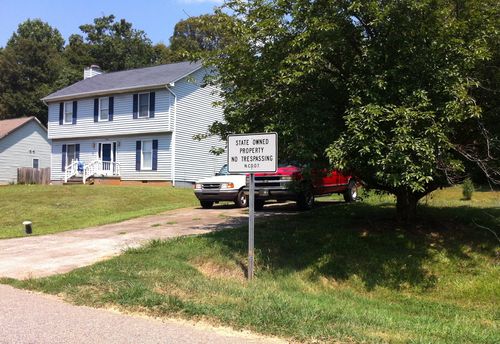
In that case, an Agana, Guam property owner is alleging that a taking of his residential property so that his neighbor (the former mayor of Agana) could have a driveway for his lot, violated the Public Use Clause. Of course, the taking was not justified by private necessity but as part of the “Agana Plan,” an economic development plan adopted following World War II to reconfigure irregular lot lines in the city. The Guam trial court invalidated the taking, but the Guam Supreme Court unanimously reversed, holding that under Kelo v. City of New London, 545 U.S. 469 (2005), the taking was for a public use.

Disclosure: we represent the Owners’ Counsel of America, which has joined an amici brief supporting the property owner/petitioner
Continue Reading BIO In Eminent Domain Pretext Case: Redevelopment Plan Established “Order Out Of Chaos”

Grab a Tim Hortons double double and get ready to read an interesting opinion.

What we call “eminent domain” Canada calls “expropriation.” But that’s not the only thing different about the takings law of the U.S. and that our neighbors in the Great White North.

Generally, under the law of most U.S. states, lost business goodwill is not recoverable as just compensation even when the losses are incurred by the owner whose land is taken. Some jurisdictions such as California allow compensation when the affected business is conducted on the property taken, or on the remainder if the property is part of a larger parcel. But even those jurisdictions do not allow a property owner whose business is impacted by a taking, but whose property is not actually taken, to recover. 

It looks like Canada takes a different approach. In Antrim Truck Centre Ltd. v. Ontario (Transportation), No 34413

Continue Reading O Canada! Supreme Court Affirms Compensation For Causing Business Losses

Dot-owned-2

From North Carolina colleague Matthew Bryant comes a heads-up to this report from WFDD, the NPR affiliate, “Possible Twist in Winston Northern Beltway.”

It’s about an ongoing inverse condemnation fight in the Winston-Salem area over the N.C. Department of Transportation’s designation in the mid-to-late 1990’s of certain properties for acquisition for a bypass highway. But despite these designations — which, under the state’s Transportation Corridor Official Map Act meant that the property owners’ development options were limited — DOT acquired some, but not all of the properties. The DOT didn’t buy them all because “[w]e simply do not have enough funding.” For a scope of the acquisitions, see this map which shows the DOT-acquired parcels in red, the unacquired parcels in green, and the plaintiffs in the inverse condemnation case in yellow.

After more than a decade of waiting, the owners of some of the unacquired brought inverse

Continue Reading “Lines On A Map” Or Inverse Condemnation: How Long Can A Taking Be Only “Planned” But Not Executed?

Did we say free? (If you are an ABA member, that is.)

Join us for a teleconference jointly sponsored by the ABA’s Section on Litigation’s Environmental Litigation Commitee and the Condemnation, Zoning, and Land Use Committee to discuss the latest and greatest in takings law, specifically the three cases the U.S. Supreme Court is ruling on this Term.

Moderated by Dwight Merriam (Robinson & Cole, Hartford), panelists include me, Amy Bourlris (Gunster, Yoakley & Stewart, Miami, Professor Steven Eagle (George Mason School of Law, Arlington), and Robert Meltz (Attorney-Adviser, American Law Division, Congressional Research Service, Adjunct Professor of Law, Georgetown Law, Washington)

Date: Tuesday, February 26, 2013

Time: Noon – 1:00 p.m. Eastern Time

Register here.

More information here. See you there. Come with your questions or comments.
Continue Reading Still Time To Join Us Tomorrow For ABA Takings Roundable (Free!)

Bulldozersatyourdoorstep

Our Owners’ Counsel of America colleague Michael Rikon and his law firm have launched a new blog, “Bulldozers at Your Doorstep – A National Blog on Eminent Domain.”

The blog will give us Michael’s and his colleagues’ view of eminent domain and condemnation issues from their unique New York perspective, from lawyers who specialize in eminent domain defense.

Recent posts include a discussion of corridor valuation, the introduction of a bill in North Carolina to limit Kelo‘s impact, and how the U.S.’s energy independence may result in an upswing in the exercise of eminent domain.

Definitely worth following. Continue Reading New Eminent Domain Blog – “Bulldozers at Your Doorstep”

Here’s what we’re reading on this Tuesday-after-a-long-weekend:

  • Economic Impact in Regulatory Takings Law,” a forthcoming article by lawprof Steven J. Eagle about one of the prongs of the Penn Central takings test. Professor Eagle “concludes that unresolved issues and complexities in adjudicating the ‘economic impact of the regulation on the claimant’ test provide an additional reason why the conceptually incoherent Penn Central doctrine must be replaced.”
  • NY Fed report sees cracks in eminent domain proposals” – “… a new blog from researchers at the Federal Reserve Bank of New York suggests such a plan would have proved to be ineffective anyway. Their reasoning for this conclusion is that many of the targeted borrowers have already benefited from either falling interest


Continue Reading Tuesday Tidbits

Mark your calendars: on Thursday, February 21, 2013, James Burling, director of the Pacific LegalFoundation and principal attorney at PLF’s Property Rights practice group and U. Hawaii lawprof Maxine Burkett willdiscuss “Do Property Rights Matter When The Environment IsGoing To Hell In A Handbasket?

The forum — presented by the EnvironmentalLaw Program and the Federalist Society — will beginat 12:15 p.m. in CR1. Light refreshments will be served. Please RSVP to elp@hawaii.edu.

More below.

Do Property Rights Matter When the Environment is Going to Hell in a Handbasket?


Continue Reading PLF’s Jim Burling To Discuss Property Rights And The Environment At U.H. Law School

You may remember the opinion of the New York Appellate Division in 49 Wb, LLC v. Village of Haverstraw, 839 N.Y.S.2d 127 (N.Y. App. Div. 2007), in which the court held that a taking of private property for affordable housing was an improper use of eminent domain because “the Village invoked its power of condemnation for the sole purpose of benefitting private, and not public, interests,” and the “Village’s sole purpose [was] assisting private entities by means of condemnation.” In other words, the taking was irrational. The court concluded “[t]he Village’s justification for the condemnation, that it serves a public use, benefit, or purpose, is merely pretextual, and hence, improper.”

Based in part on that finding, the property owner went to federal court on a substantive due process claim (the government treated me irrationally). The District Court denied the owner’s motion for summary judgment and granted the Village’s cross

Continue Reading 2d Cir: Irrational Taking Is Not Irrational Or Outrageous Government Action

If you are a member of the ABA, mark your calendars for Tuesday, February 26, 2013, noon to 1:00 p.m. Eastern Time, for a free teleconference jointly sponsored by the ABA’s Section on Litigation’s Environmental Litigation Commitee and the Condemnation, Zoning, and Land Use Committee to discuss the latest and greatest in takings law, specifically the three cases the U.S. Supreme Court is ruling on this Term.

Here’s the description:

For the first time since 2005, the U.S. Supreme Court hasthree property rights cases on its docket. One of them, Arkansas Game &Fish, regarding compensation for flooding, was decided in December.  Another,Koontz, concerning the applicability of the Nollan and Dolan nexustests, has been argued. The final case, Horne, a most unusual case about whatmight be described as raisin sequestration, is still on the sidelines.

An expert panel — two practitioners, a federal researcher,and a law professor

Continue Reading ABA Takings Roundtable – The U.S. Supreme Court Property Rights Cases – Feb. 26, 2013