Earlier, we posted the opinion of New York’s Appellate Division in New York Central Lines, LLC v. State of New York, No. 2011-03494 (Dec. 19, 2012), in which the court determined how to value a rail corridor when it is taken by eminent domain.

The court’s opinion was somewhat cryptic, so we thought we would post the briefs to help understand the arguments better. If this is your game, check them out:

These briefs come to us by way of Jonathan Houghton, counsel for the prevailing property owner. Jonathan is the partner of our Owners’ Counsel of America colleague Mike Rikon. Two more kudos: Jonathan recently became a named partner of the firm, which has recently moved back into its permanent offices in Manhattan after being displaced by Hurricane Sandy. Congratulations on all Continue Reading Briefs In NY Rail Corridor Valuation Case
You know how we’re always saying that certain parties have an enviable record of success in the Hawaii Supreme Court? Well, now the statistics are official.

The latest edition of the University of Hawaii Law Review published an article by lawprof David Callies summarzing the decisions of the court during the tenure of now-retired Chief Justice Ronald Moon. The article sets forth the stark numbers (83% win rate, 65% reversal of the intermediate appellate court), and contains a sharp comment about the often-lengthy nature of the court’s opinions:

Second, the Moon Court decided some of thestate’s most important property and related environmental and Native Hawaiianrights cases in favor of the various non-governmental organizations bringingthem (Sierra Club, Earthjustice, Hawaii’s Thousand Friends, and the NativeHawaiian Legal Corporation) approximately eighty-two percent of the time,sixty-five percent of which reversed the Intermediate Court of Appeals (ICA).Third, the court increasingly rendered lengthy opinions, many triple the

Continue Reading U.H. Lawprof: HAWSCT’s 1993-2010 Record On Private Property Rights “Appalling”

One for you just compensation mavens. In City of Wichita v. Denton, No. 97952 (Kan. Jan. 4, 2013), the Kansas Supreme Court held that the city owed no compensation for the value of a billboard or the advertising income it produced for its owner when the city condemned the land on which the billboard was located. The court concluded that as a matter of law, the billboard was the personal property of its owner, not part of the taken land, and thus not a compensable item, and evidence of its value must be withheld from the jury.

The court started with the “undivided fee” rule (aka the “unit rule”), under which the court values the property taken as if it were owned by a single entity, even though it is not (more on that here).

Because the current case is an appeal from the valuation stage of the

Continue Reading Kansas: Billboard Is Personal Property, Not Compensable

Update: More here (Ilya Somin at Volokh), and here (Ilya Shapiro at CATO).

A coalition of property rights advocates including the National Federation of Independent Business Small Business Legal Center, the CATO Instiutute, the Owners’ Counsel of America, and lawprofs James Ely, David Callies, Todd Zywicki, Randy Barnett, Eric Claeys, and D. Benjamin Barros — has filed an amicus brief brief supporting the cert petition in Ilagan v. Ungacta, No. 12-723 (cert. petition filed Dec. 7, 2012).

Lawprof Ilya Somin, a noted scholar on public use issues, authored the brief, which argues:

This case presents an opportunityfor this Court to clarify the definition of a “pretextual taking” under thePublic Use Clause of the Fifth Amendment. In Kelo v. City of New London, 545 U.S. 469 (2005), the Court ruledthat “economic development” is a public use justifying the use of eminentdomain. But

Continue Reading Amicus Brief In Eminent Domain Pretext Case: Time For SCOTUS To Clear Up The “Extreme Confusion”

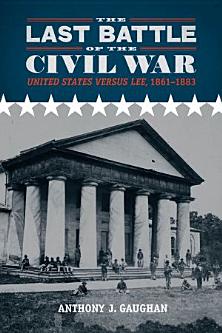
LastbattlebookYou know how we’re always saying that the provisions in the Takings Clause are “self-executing,” that even in the absence of a waiver of sovereign immunity, the Tucker Act, and section 1983, property owners would still be able to maintain a claim for compensation? Well here’s an article that explains that how that rule was first articulated, and not in a dry academic way, but with a fascinating historical story.

It’s the tale of United States v. Lee, 106 U.S. 196 (1882). We knew the land that is now Arlington National Cemetery was once owned by Robert E. Lee, but we can’t say that we gave much thought to how it became public property. We always assumed that it had simply been seized as war booty from Lee during the Civil War, and that was that.

In The Arlington Cemetery Case: A Court and a Nation Divided, 37

Continue Reading Arlington National Cemetery And The Takings Clause

Cover_42_3_ The Summer 2012 issue of the Urban Lawyer, the law review published quarterly by the ABA’s Section of State and Local Government Law and UMKC law school is now available on-line, and includes my short article on the latest developments in public use in eminent domain law.

To download your copy, click here. The article covers the “common carrier” issue from Texas, necessity in private takings, several procedural issues including appealability of a determination that a taking is (or isn’t) for public use, and First Amendment spin-off issues related to eminent domain. (Recent Developments in Eminent Domain: Public Use,  44 Urb. Law. 705 (2012)).

If you are not already a Section member, please consider it – the included subscription to the Urban Lawyer is one of the most worthwhile benefits. Continue Reading New Article – Recent Developments in Eminent Domain: Public Use

LgoIt’s time for the annual ALI-CLE (fka ALI-ABA) eminent domain conferences, to be held January 24-26, 2013 in Miami Beach, Florida.

In the “advanced” course, Eminent Domain and Land Valuation Litigation, we’ll be covering topics such as “Condemning Underwater Mortgages,” “An Engineer’s Role in Damage,” “How To Develop and Implement a Business Plan for an Eminent Domain Practice,” and “Condemnor Beware: What Activities Will Make You Liable for Pre-Condemnation Damages.” Along with Pacific Legal Foundation’s Jim Burling and Cornell lawprof Robert Hockett, I’ll be speaking on the panel about underwater mortgages. More details on the agenda and the faculty here.

The companion course, Condemnation 101: How to Prepare an Eminent Domain Case, covers the basics of eminent domain law, and although designed as an overview of condemnation law for the beginner or general practitioner, it’s a great refresher course for the seasoned eminent domain lawyer. More

Continue Reading Upcoming ALI-CLE Eminent Domain Conferences

DrhouseA quick one from the California Court of Appeal (Third District), holding that a trial court in an eminent domain case should not have granted the condemnor’s motion in limine, but should have allowed the property owner’s appraisal expert to testify regarding comparble sales. County of Glenn v. Foley, No. C068750 (Nov. 26, 2012, published Dec. 21, 2012).

Our friends over at the California Eminent Domain Report have a great write-up on the opinion here, so instead of doing our own analysis, we commend it to you.

Be sure to read the opinion and check out the name of the property owner’s appraiser. Pretty appropriate for a property appraiser.

Continue Reading Cal App: Court Should Not Have Excluded Evidence Of Comparable Sales

Check out New York Central Lines, LLC v. State of New York, No. 2011-03494 (Dec. 19, 2012), a short opinion from the New York Supreme Court Appellate Division (Second Department) (if you didn’t know that in New York, the trial court of general jurisdiction is the “Supreme Court,” and the intermediate court of appeals is the “Appellate Division” of the Supreme Court, you have not been watching enough Law & Order).

Both the state’s and the property owner’s valuation experts testified that the highest and best use of the property was its current use, a rail corridor. But the two experts differed on the proper method of valuation.

The State’s expert advocated a cost, or reproduction cost less depreciation, approach to valuation, which is employed in valuing “specialty” properties (see generally Matter of Allied Corp. v Town of Camillus, 80 NY2d 351, 357; Matter of Al

Continue Reading NY Appellate: How To Value A Rail Corridor

Well, this is unusual, althought it should not be. 

In this short order, the Supreme Court of Ohio has held the state’s Department of Natural Resources in contempt for not moving fast enough to compensate property owners whose land had been flooded. (In California, that would be called “normal planning delay.”)

In Ohio, what would be called an inverse condemnation or regulatory takings claim in other jurisdictions takes the form of a mandamus petition to compel the government to institute eminent domain. Several property owners instituted a mandamus action after their lands were flooded because the state did not draw down the level of a lake, despite its ability to do so. In 2011, the Ohio Supreme Court issued the writ, ordering the Department to institute eminent domain proceedings “immediately” amd tale steps to compensate the owners. See State ex rel. Doner v. Zody, 958 N.E.2d

Continue Reading Ohio Supreme Court Finds Dep’t of Natural Resources In Contempt For Dragging Its Feet In Compensation