In which we join the Pendulum Land Podcast (again, thank you hosts!) to talk about the Virginia Supreme Court’s recent opinion in Johnson v. City of Suffolk, the case we label the “oyster takings” case in which Hampton Roads oystermen claimed that their property was taken when the City of Suffolk and the Sanitation District dumped sewage into the river and declared a “condemnation zone” (i.e., no oyster harvesting).

Short story: the court concluded that the leases of Commonwealth-owned bottomlands in the Nansemond River did not confer a property interest. Or at least not a property interest worthy of constitutional protection. Thus, no takings claim when Suffolk and the Sanitation District dumped sewage into the river and pretty plainly interfered with some kind of right the plaintiffs owned in the lease. Just not enough of a right to require compensation.  

Our thoughts on the court’s decision

Continue Reading We Join Pendulum Podcast To Debate Oysters, Property Rights, Takings
Here are links to the summaries and analysis of yesterday’s oral arguments in Cedar Point Nursery v. Hassid, No. 20-107, the case asking whether California’s forbidding of agricultural property owners from keeping out union organizers is a taking:

Neutral


Continue Reading Cedar Point Oral Arguments Round-Up

PICT1199

Here’s the recorded arguments.

  1. California will try and push the Court to seeing this as an “anti-union” lawsuit: this is not that big of an intrusion, we’ve been doing it for 50 years under both Cal and federal law, and a ruling for the property owners will upset this apple cart and prevent unions from organizing.
  1. The property owners will try and push the Court to seeing the case as one upholding the “keep out” nature of private property. There are other means of contacting the workers, so why need to do it on this private property? Convenience? [Disclosure: my law firm, Pacific Legal Foundation, represents the property owners.]
  1. Is this case different from Kaiser and Nollan in that California’s invitation to access the nursery property is not to the general public and only to union organizers?
  1. Is this case different from PruneYard in that the owner did not


Continue Reading In California, Can A Landowner Really Say “Keep Out?” Things To Look For In Today’s SCOTUS Cedar Point Nursery Arguments

Check out the unusual facts in the West Virginia Supreme Court of Appeals’ opinion in Scherich v. Wheeling Creed Watershed Protection and Flood Prevention Comm’n, No. 19-1065 (Mar. 15, 2021).

This started back in 1990, when the Commission instituted a condemnation action to take two parcels belonging to the Scheriches for a dam, as part of a flood prevention project. Okay, nothing too unusual there. The Commission deposited $97k (its estimate of just comp), the owners objected to the amount, and the court approved the quick take. Defeasible title transferred to the Commission, subject to the adjudication of the actual just compensation owed. The owners withdrew the deposit. Again, nothing out of the ordinary there.

But “[f]ollowing such payment, nothing further occurred in the matter for nearly three decades.” Slip op. at 4. Twenty-eight years to be exact. Flash forward to 2018. Someone noticed something. Hey, whatever happened in

Continue Reading West Virginia: Thirty-Year-Old Quick-Take Wasn’t That Quick

Those statutes that require that if a condemnor doesn’t use property taken, that it must try and sell it back to the (former) owner seem like a pretty good thing. You have your property taken, but if the taker doesn’t actually need it or use it, hey you can get it back. Feels pretty good. In theory.

But in practice, maybe not so much. Try tracking down the former owners after years and see how easy it is to find them (not). Try figuring out the price. Now don’t get us wrong: we’re not saying that these provisions aren’t good or — especially — don’t mean well. Just that, as in many things in law, the devil is in the details.

So it is with Utah’s version. At least according to the Utah Court of Appeals in Cardiff Wales, LLC v. Washington County School District

Continue Reading Utah App: Sale Under Threat Of Condemnation Wasn’t Really A Sale Under “Threat Of Condemnation”

For you original MTV folks

Here’s the latest in a case we’ve been following for a while (even since before the last time it went up to the Court). See this post (“The Chicago Way: City Taking Non-Blighted Property For Economic Development Was Not Pretextual Because…Studies“) and this one (“Illinois App: We Haven’t Changed Our Mind – Chicago’s Sketchy Redevelopment Taking Is Still For Public Use“), for example.

After the latest ruling from the Illinois Appellate Court, we guessed that we had not seen the last of the case. And it turns out that our prognostications were accurate: the property owner has filed a cert petition asking once again for the Supreme Court to take up (ha) a Public Use Clause case.

Have I got your attention now?

Five years ago, in City of Chicago v. Eychaner, 26 N.E.3d 501 (Ill. Ct. App. 2015), the

Continue Reading The Future’s So Blight, I Gotta Wear Shades: New Cert Petition Asks To Reconsider Kelo In A Case Where The Stated Public Use Is To Avoid Possible Future Blight

DSCF1327

When we think “New Mexico,” we imagine scenes like this. Endless sky, seemingly infinite open roads, high desert … you know, “the West.”

But after reading the New Mexico Supreme Court’s opinion in City of Albuquerque v. SMP Properties, LLC, No. S-1-SC-37343 (Feb. 25, 2021), we’re going to think “inverse condemnation.” (Yeah, that may be sad, but come on, remember the title of this blog!)

The case: the city did a partial taking of SMP’s property for a road project. Just a thirty foot wide strip of SMP’s nearly 10 acres. But prior to the taking, the city told one of SMP’s tenants, “hey, we’re going to be taking this strip and doing a road project.” As a result, SMP’s inverse condemnation claim alleged, the tenant decided to not renew its lease. See slip op. at 11 (“SMP alleges that its claim for inverse condemnation arose prior to the

Continue Reading Enchanted: Inverse Condemnation For Damaging Is A Fact Thing – City Could Be Liable For Chasing Away Tenant

We’ve been meaning to post this one, a short per curiam opinion from the Ohio Supreme Court, for some time. Not because it deals with earth-shattering substantive eminent domain issues, but because it highlights a somewhat niche, but pretty important, procedural issue. 

Say an owner challenges the take, either by way of a public use or a necessity challenge. Some jurisdictions, Ohio included, permit the owner whose challenge is initially denied, to an immediate interlocutory appeal. The question before the court in State ex rel. Bohlen v. Halliday, No. 2020-1245 (Jan 27, 2021) was whether, while that appeal was being considered by the court of appeals, the trial court could move forward and determine just compensation. The trial court thought it could, and set a trial date. The property owners thought otherwise, and sought a writ in the Supreme Court.

This mostly turned on a question of how Ohio’s

Continue Reading Ohio: It Doesn’t Make A Whole Lot Of Sense To Have A Compensation Trial When The Necessity Question Is Being Appealed

6a00d83451707369e20240a51cc266200b-800wi

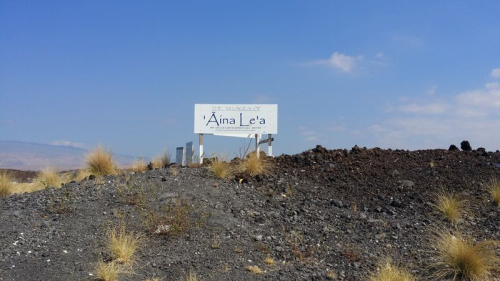
We were hoping for better news in a case we’ve been following in its various forms for what seems like forever. But today, the U.S. Supreme Court in this order declined to issue a writ of certiorari to review the Ninth Circuit’s decision in Bridge Aina Lea, LLC v. Hawaii Land Use Comm’n, No. 20-54, a case in which a federal court jury concluded the property owner suffered both a Lucas and Penn Central taking, but the Ninth Circuit reversed, concluding that no reasonable jury could have found a taking.

We’ve always been told that bright lines are not appropriate in takings. That there are myriad ways in which government can affect property interests and property rights. That the courts should defer to the government’s exercise of regulatory power. That per se rules such as Lucas and Loretto are not generally applicable. Instead, we’re told, go prove a taking

Continue Reading Thomas, J., Dissenting From Denial Of Cert In Penn Central And Lucas Takings Case: “If there is no such thing as a regulatory taking, we should say so. And if there is, we should make clear when one occurs.”

IMG_20180720_152126

If you are ever in Boston, it is worth a few minutes of your time to pay a visit to the John Adams Courthouse. The interior architecture is pretty neat, it is full of history (Oliver Wendell Holmes was here), and it is one of the few places in the country where the state’s supreme court is actually below the intermediate appellate court. 

On that last one, we’re being very technical and a bit cheeky: yes, the Massachusetts Supreme Judicial Court is indeed the “supreme” court jurisdiction-wise, but it is located on the second floor, while the Appeals Court is on the third.

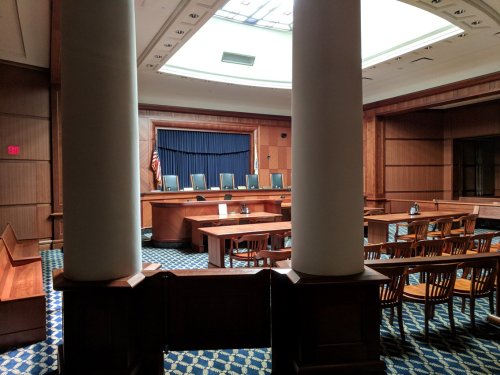
Our story today takes place in the SJC (courtroom depicted above).

In Abuzahra v. City of Cambridge, No. SJC-12920 (Feb. 17, 2021), the court was faced with what to do in a quick take: can an owner who accepts the pro tanto payment

Continue Reading Mass SJC: In Quick Take, Owner Can Accept The Pro Tanto Payment (Deposit) And Also Challenge The Take