


16CA1198-PD

Under Colorado law, a property owner has an inverse condemnation claim when “a governmental or public entity with the power of eminent domain takes action that ‘substantially depriv[es] the property owner of the use and enjoyment of the property, but the [entity] has not formally brought condemnation proceedings.'” Kobobel v. Colo. Dep’t of Nat. Res., 249 P.3d 1127, 1133 (Colo. 2011).

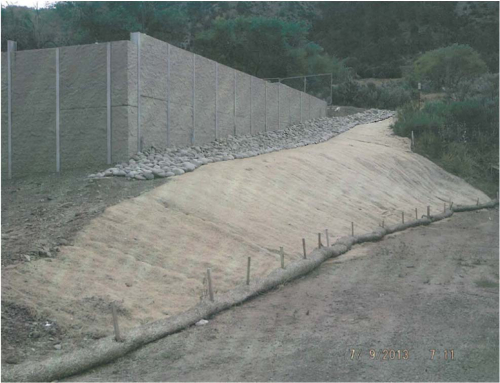
In Sos v. Roaring Fork Transportation Authority, No. 16CA1198 (Nov. 16, 2017), the Colorado Court of Appeals concluded the RFTA possesses the power of eminent domain (and thus could be liable for inverse condemnation), and, more interestingly, that the RFTA relying on Mr. Sos’s property for lateral support for RFTA’s retaining wall was a “damaging.” 

Sos has a tire business, and there is a dirt embankment on the portion of his lot adjacent to RFTA’s property, where Sos stored tires and stuff. RFTA built a new bus station
Continue Reading Colorado App Clarifies State Constitution’s “Damaging” Clause: Forcing A Neighbor To Provide Lateral Support Is Compensable

You should be following along with Clint Schumacher’s Eminent Domain Podcast on your own, but in case you missed this one in your feed, be sure to check out the latest episode, which features U. Virginia Law School prof Molly Brady talking about “damage clauses” in state constitutions.

The podcast and links to the materials and cases discussed are posted here

There’s also a short segment on Brott v. United States, currently at the cert stage in SCOTUS. That’s the one about Article III judges, and juries in inverse cases against the federal government (which under the Tucker Act, you don’t get in the Article I Court of Federal Claims). This case presents the issue we’ve focused on for a while: whether the self-executing nature of the just compensation requirement is subject to the power of Congress, and needs a waiver of sovereign immunity in order

Continue Reading Eminent Domain Podcast, Episode XI – State Damaging Clauses, Jury Trials In Federal Inverse Cases?

The title of West Virginia Lottery v. A-1 Amusement, Inc., No. 16-1047 (Nov. 13, 2017) alone may not give you an indication that this is a takings case, but yes, it’s a takings case. 

As the title might indicate, it’s a case involving the state-run lottery and video lottery machines. If we’re reading the details right, the lottery issued permits to the plaintiffs, after which they were instructed to use a different software program, and informed that using any other software would render their machines illegal. The amusement companies were not prepared to retool (they’d have to buy new machines, they alleged), and brought regulatory takings, due process, and civil conspiracy claims. 

The trial court refused to dismiss the complaint, concluding that damages for the takings and due process claims could not be limited to the lottery’s insurance policy limits, and that the lottery had waived its sovereign

Continue Reading West Virginia: Takings Clause Protects More Than Just Land – Owners Of Personal Property Can Bring Inverse Condemnation Claims

The Georgia Supreme Court’s analysis in Diversified Holdings, LLP v. City of Suwanee, No. S17A1140 (Nov. 2, 2017) reminded us of that old trope from logic, “no true Scotsman.” 

According to a completely reliable source (Wikipedia):

No true Scotsman is a kind of informal fallacy in which one attempts to protect a universal generalization from counterexamples by changing the definition in an ad hoc fashion to exclude the counterexample. Rather than denying the counterexample or rejecting the original claim, this fallacy modifies the subject of the assertion to exclude the specific case or others like it by rhetoric, without reference to any specific objective rule (“no true Scotsman would do such a thing”; i.e., those who perform that action are not part of our group and thus criticism of that action is not criticism of the group).

(And, in case you were wondering, “For the practice of

Continue Reading Georgia: No True Taking – Challenge To City’s Refusal To Rezone Isn’t Really Inverse Condemnation

Border walls, pipelines, and state takings law. All topics we dig. So for today’s reading, we recommend “When the Government Grabs — the Border Wall, Pipelines and New Challenges to Eminent Domain,” an interview with U. Va. lawprof Molly Brady on these topics. Check it out. 

PS – Professor Brady will be speaking on another one of her areas of expertise (land use and regulatory takings) at our upcoming ALI-CLE Eminent Domain and Land Valuation Litigation Conference in Charleston, SC, January 25-27, 2018. Her session, “Overlap of Condemnation and Regulatory Takings: Murr and Other Blurred Lines” is one of our featured presentations on the first day of the Conference. Sign up now (space is filling quickly)Continue Reading Monday Reading: “When the Government Grabs — the Border Wall, Pipelines and New Challenges to Eminent Domain”

We’re looking forward to a good crowd at the upcoming ALI-CLE Eminent Domain and Land Valuation Litigation Conference, when we shall converge on Charleston, SC, January 25-27, 2018. We’ve received word that our main conference hotel, the Francis Marion, has sold out.

But if you haven’t reserved your space yet, don’t despair. The conference organizers have made arrangements at a hotel that is very nearby, the Marriott Courtyard, for a special conference rate. That hotel is just across the park from the Francis Marion. ALI is also making arrangements for conference room blocks in two other nearby hotels. Details on all of these alternatives are posted here.  

One more thing that we didn’t mention in our preview: there will also be a special sneak preview of the movie about Kelo v. City of New LondonLittle Pink House. If you joined us in Austin in

Continue Reading ALI-CLE Eminent Domain Conference Hotel Block Selling Out – Overflow Available

20170918_190120
No soup for you!

Update: our colleague Bryan Wenter has his take on one of the cases denied review here (“U.S. Supreme Court Again Declines to Consider Important Property Rights Issue Regarding the Unconstitutional Conditions Doctrine“) (“Because the current composition of the U.S. Supreme Court leans ideologically conservative by any traditional measure and it takes only four of nine Justices to grant certiorari, on the surface it is surprising that the Court has yet to take up a case, such as CBIA or 616 Croft Ave., that would finally resolve this distinction between sweeping legislative takings and particularized administrative takings. The surprise is enhanced to a degree by the fact that the Court considered both cases in conference four times, which suggests a serious interest in the issue.”).

* * * *

To bring you up to speed on cases of interest in the Supreme Court’s cert pipeline

Continue Reading Cert Denied, Denied, Denied, Denied In Property Cases (But Don’t Give Up The Ship Just Yet)

We’ve been receiving a lot of visits lately from folks looking for information on inverse condemnation liability after the recent Northern California wildfires, and the flooding in Houston. In addition to the news stories (see SF Chronicle wildfire story here, and the Texas Tribune flood story here) which we’ve already posted, here are other links which may be useful:


Continue Reading More On Inverse Condemnation Liability For Fires And Floods

Update: Forbes is covering this story, here: Nick Sibilla, “Landowner’s Bill Of Rights Are Not ‘Suggested Guidelines,’ Georgia Supreme Court Rules

* * * *

Here’s a decision which we’ve been waiting for in a case we’ve been following since it was decided in the intermediate appellate court, involving Georgia’s “landowner bill of rights.” 

In City of Marietta v. Summerour, No. S17G0057 (Oct. 30, 2017), the Georgia Supreme Court concluded that when a statute says “before the initiation of negotiations” with a property owner, the condemnor must “establish and amount it believes to be just compensation,” and “shall make a prompt offer” of that amount to the owner, and that the agency “shall provide” the owner a written statement of how it determined that amount — that it means just that. “Shall” means must, and “before” means before. So the failure of the agency to provide

Continue Reading Georgia’s Eminent Domain Requirements Are Not The Pirate’s Code: “Before” Means “Before,” And Bad Faith Need Not Be Shown When Condemnor Didn’t Strictly Comply With The Statute

Here are the final two amici briefs in in Jarreau v. South LaFourche Levee District, No. 17-163 (cert. petition filed July 31, 2017), the case asking the Court to consider whether a property owner whose business is destroyed due to an exercise of eminent domain is entitled to just compensation for business losses under the Fifth Amendment’s Just Compensation Clause.  Our amici brief in the case is available here. (sidebar: it’s pronounced “lafoosh”).


Continue Reading Amici Briefs In SCOTUS Just Comp Case: Does Fifth Amendment Allow Categorical No-Comp Rule For “Business Losses?”