This just in, in a case we’ve been following closely.

In City of Perris v. Stemper, No. S2133468 (Aug. 15, 2016), the California Supreme Court held that the judge, and not the jury, determines the validity of a dedication which a condemnor asserts it would impose to get the condemned property “for free” if the owner ever asked it to develop the property to its highest and best use. The case involves whether the city can avoid paying just compensation by showing that it would, in the future, exact from the owners the very same property which the city is condemning. The only way the city wouldn’t require dedication of this property is if the owner continued to use it for agricultural purposes. The second issue which the court considered was the “project influence” rule, and whether the city’s dedication requirement must be ignored in determining just compensation.  

Continue Reading California Supreme Court: In Just Comp Trial, Judge, Not Jury, Determines Reasonable Probability Of Nollan-Dolan Exaction

2016 BrighamKanner Property Rights Conference Program_Page_01

As we mentioned a few weeks ago, the final agenda for the 2016 Brigham-Kanner Property Rights Conference has been released. Here’s the complete conference brochure, which has all the details, including registration information. 

This is the annual program, sponsored by the William and Mary Law School, in which there’s a day-long discussion of all things property rights among members of the academy, the bench, and the practicing bar. The Brigham-Kanner Prize is also presented “to an individual whose work has advanced the cause of property rights and has contributed to the overall awareness of the important role property rights occupy in the broader scheme of individual liberty.” The pantheon of prizewinners is a who’s-who in our area of law: Richard Epstein, James Ely, Michael Berger, Frank Michelman, Carol Rose, and Thomas Merrill, to name a few. Here’s the complete list of prizewinners

This year, the prize is being

Continue Reading Property Rights Take Center Stage At The World Court: 2016 Brigham-Kanner Conference, October 19-21, 2016, The Hague

A short one from the Georgia Court of Appeals.

In Summerour v. City of Marietta, No. A16A0640 (July 8, 2016), the city condemned a grocery store for a recreation center. After multiple attempts to contact the property owner and multiple offers of compensation, the city and the owner finally began the negotiation process, during which Summerour asked the city to produce a summary of its appraiser’s report as required by Georgia statute. The city eventually provided the summary, and its full report. They still could not agree, and the city instituted condemnation.   

The court of appeals’ opinion starts on a good note, reiterating that “private property rights are among ‘the most basic of human rights.'” Slip op. at 7 (quoting William K. Lane III, “Your Raisins or Your Life”: The Harrowing of the Takings Clause in Horne v. U.S. Department of Agriculture, 750 F.3d 1128 (9th Cir.

Continue Reading Ga App: Requirement To Provide Appraisal Summary “Before” Negotiations Means Just That

IMG_20160804_161355 (1)

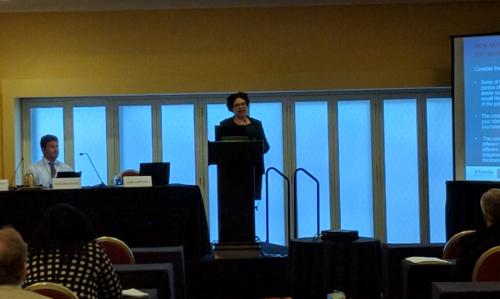
We’re experiencing the madness that is the ABA Annual Meeting — this time in San Francisco — hanging with colleagues from the State and Local Government Law Section (where we’re slated to be the Chair-Elect this year), and at the Council of Appellate Lawyers. These meetings are a lot of … meetings .. but there’s also a healthy dose of CLE programming, some of it focused on things like eminent domain and land use, and other topics near and dear. 

Pictured above is our friend and colleague from the Northwest, Jamila Johnson, who gave a spirited defense of the Fifth Amendment and property rights in her session on energy corridors. We were discussing the pros and cons of “quick take” statutes, and to counter the assertion that these things allow for efficient, convenient, and cost-effective government projects, Jamila responded (and we’re recalling this from memory here), “the government has

Continue Reading Eminent Domain Programming At The ABA Annual Meeting

In City of Missoula v Mountain Water Co., No. DA-15-0365 (Aug. 2, 2016), a sharply divided Montana Supreme Court upheld the City of Missoula’s exercise of eminent domain to take a private water system. We’ve been following the case (see our oral argument notes here). The court’s majority concluded that the takings clause of the Montana Constitution isn’t really any impediment to a government takeover of property, even when it will use the property in exactly the same way as the former owner. 

The court addressed eight issues, with issues 6-8 being the most interesting to us, because they consider the meaning of the phrase “more necessary public use” in Montana Code Annotated § 70-30-111, and and what kind of proof is necessary to support such a claim. The city of Missoula is condemning Mountain Water Company, a private company which supplies municipal water to the city. The company (and its

Continue Reading City Can Take Over Water Company: Montana Supreme Court Writes Out “More” From The “More Necessary” Statute

20160722_141908

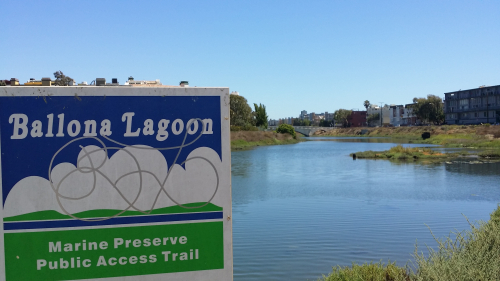
Petitioner owns the fee title to property known as the Ballona Lagoon, a narrow body of water connected to Marina del Rey, a manmade harbor located in a part of the city of Los Angeles called Venice. Venice is located on the Pacific Ocean between the Los Angeles International Airport and the city of Santa Monica.”

Summa Corp. v. Cal. State Lands Comm’n, 466 U.S. 198, 199-200 (1984). 

As you know, when we’re in the neighborhood, we like to visit the sites of famous cases. In the past, we’ve stopped by the sites of the Hadacheck, Kaiser Aetna, Nollan, Dolan, and PruneYard cases.

Here’s the latest, the location of a somewhat obscure case (if any Supreme Court case can be called “obscure”), smack dab in the middle of urban Los Angeles. As the above quote from the case notes, Ballona Lagoon lies

Continue Reading Public Trust, Tidelands, And Land Titles: A Short Visit

Last year, we posted about the Brigham-Kanner Conference, the annual meeting at William and Mary Law School where we talk all things property rights and award the Brigham-Kanner Property Rights Prize. (By the way, this year’s conference will be held in The Hague, The Netherlands in October. But more on that soon, in a separate post.)

What we are posting today is a follow-up about Mike Berger’s presentation at the 2015 conference. His article — then only in draft form — is a critique of the theories of the 2015 Brigham-Kanner prizewinner, Harvard lawprof Joseph Singer. Recall that Berger was presented with the prize in 2014 — the first and thus far only practitioner to receive the award — which makes this article even more important.  

Berger’s article is now finalized, and has been published by the Brigham-Kanner Property Rights Conference Journal: “Property, Democracy, &

Continue Reading Must Read: Michael Berger On “Property, Democracy, & The Constitution”

Here’s one we’ve been meaning to post up for a while. Not because it isn’t an important decision, but because other things intervened. 

In State of West Virginia ex rel. West Virginia Dep’t of Transportation v. Burnside, No. 15-1112 (June 13, 2016), the Supreme Court of Appeals of West Virginia held that under the statutory quick-take scheme, the condemnor has the total discretion to determine the amount of the deposit, an estimate of just compensation. In that case, the DOT took land formerly occupied by a service station, which needed some environmental clean up due to old gas and oil storage tanks buried on the land.

The DOT calculated the deposit supporting the quick-take by adding up the overall value of the land, the severance damages to the remainder, and the value of the fixtures and the temporary construction easement, and then subtracting the cost of the clean up which

Continue Reading W Virginia: Govt, Not Judge, Gets To Determine Quick-Take Deposit

Kauaipark

Here’s the latest in that case we told you about a couple of months ago, a published ruling in an eminent domain case from the Hawaii Intermediate Court of Appeals. We wrote that in our view, the court got it really wrong on one of the three issues in the case, whether two parcels which the condemnee alleged he used together could be considered the “larger tract” for purposes of severance damages.

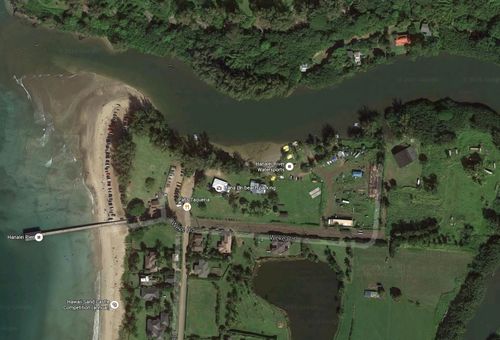
The case involves three parcels on Kauai — one of which is owned by a fellow who has been a thorn in the County’s side — which were condemned by the County for the expansion of a public beach park. The County was taking Parcels 49, 33, and 34. Sheehan owned 49, and HRH, a corporation, owned 33 and 34. Sheehan asserted his use of Parcel 49 stretched across 33, 34, and Area 51 — a portion of

Continue Reading Hawaii Supreme Court Amicus Brief: In Eminent Domain, Parcels Need Not Abut In Order To Be Considered Part Of A Larger Tract

Today, in a case we’ve been following (because we filed a brief in support of the property owner), the California Supreme Court in a unanimous opinion essentially rewrote California’s precondemnation entry statute to give the government a pass.

The court assumed that entries which exceed the relatively minor entries contemplated by its prior decisions are takings (they are physical occupations, after all), but held that the burden is on the landowner to sue for inverse condemnation, and that the California Constitution doesn’t require a predeprivation process or payment of just compensation. 

The vibe of the government’s argument has always been that were the California Supreme Court to affirm the ruling by the Court of Appeals — that as takings, these entries themselves are subject to the protections of the eminent domain process — the sky was going to fall. It would just be so bloody inconvenient for condemnors.

Continue Reading California Supreme Court Rewrites Eminent Domain Entry Statutes To Give Government A Free Pass