Skip to content

Today we have a guest post by New York colleague Jennifer Polovetsky, who writes about the intersection of administrative law (Chevron deference) and public use in eminent domain.Thanks to Jennifer (and to the New York Law Journal) for allowing us to republish her intriguing piece.

_____________________________

Is Judicial Deference to Government Agency Decisions in Eminent Domain Cases at Risk?

by Jennifer Polovetsky

Since 1984, when the U.S. Supreme Court decided the Chevron U.S.A., v. Natural Resources Defense Council case, it has been well-settled law that the judiciary must defer to agency determinations in connection with the interpretation of a statute when the law was ambiguous or unclear (so long as the agency’s interpretation was reasonable and not arbitrary or capricious). See Chevron, 468 U.S. 837 (1984). The Chevron standard has been applied across the board in many legal cases since then.

On June 28, 2024, however, SCOTUS overruled Chevron


Continue Reading Guest Post (Jennifer Polovetsky): “Is Judicial Deference to Government Agency Decisions in Eminent Domain Cases at Risk?”

BK banner

Here’s the full report from David Morrill about the 21st Brigham-Kanner Property Rights Conference earlier this month. Pictured above: Professor James Stern (responsible for the overall planning of the B-K Conference), this year’s Prizewinner Professor Lee Fennell (U. Chicago Law School), and Andrew Brigham, St. Augustine, Florida – property rights lawyer extraordinaire).

Here are what Prof. Fennell had to say:

Upon accepting the Property Rights Prize, Fennell said that spending time in myriad places through the years piqued her interest in how property can work better for complex systems like large and interconnected cities and ecosystems. In the process, she tried to learn more about what sorts of interconnectedness matter most for humans and other animals, and what forms of adaptability and property forms can best serve needs going forward.

“We can’t make any headway on property as an institutional response to interdependent systems without practicing interdependence ourselves, getting together

Continue Reading 21st Brigham-Kanner Property Rights Conference Report

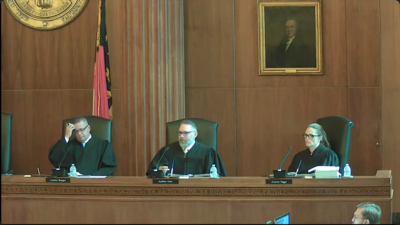
Screenshot 2024-09-25 at 09-31-31 206PA21 and 410PA18-2 Town of Apex v Rubin - YouTube

Here’s the latest in a case we’ve been following (and in which we filed an amicus brief in favor of the property owner).

Yesterday, the North Carolina Supreme Court heard oral arguments in Town of Apex v. Rubin. Here’s a link to the recording (YouTube prevents us from embedding it, sorry).

This is a somewhat unusual case. The Town of Apex sought to take an easement across Rubin’s land. She objected, asserting the taking was not for a public use or purpose, but rather to benefit a private party: a developer who needed the easement to connect two of his non-contiguous parcels to the municipal sewer system, a precondition of the Town’s development approvals for his proposed residential subdivisions.

While Rubin’s public use objection was pending, the Town went ahead at installed the sewer line, purportedly under its quick-take power. That was not the best of moves, however, because

Continue Reading Unringing The Bell: NC Supreme Court Arguments – What Happens If A Taking Lacks A Public Use, But They Take It Anyway?

Heads up: the second episode of the rebooted Eminent Domain Podcast is live, with host Bobby Debelak and guest law professor Ilya Somin. Here’s the description of this ep:

Professor Ilya Somin of George Mason University and the Cato Institute discusses his work in drafting amicus papers in the Kelo case, working with Jane Jacobs, writing a book on Kelo (The Grasping Hand) a decade after the decision, and his current work on the costs of exclusionary zoning. Throughout, Bobby and Prof. Somin discuss the common ground that otherwise-differing philosophies find in property law.

We’re not going to post up every new episode (you really should subscribe and get notifications yourself), but we figured while the podcast was getting its sea legs back it couldn’t hurt to remind you. Check it out. Continue Reading New Ep, Eminent Domain Podcast: Lawprof Ilya Somin

As we hinted at a couple of weeks ago, we have some good — nay, great — news: the Eminent Domain Podcast, retired earlier this year by its originator Clint Schumacher, is back with a new host and a slightly new title: “Come and Take It: The Eminent Domain Podcast.”

Bobby Debelak has stepped into the host’s chair. As you might be able to tell from the new title, Bobby is also a Texas lawyer.

Here’s the first episode, where Client figuratively hands the baton to Bobby. If you haven’t already subscribed to the feed, now’s the time so you don’t miss an episode. Available on all pod feeds, so be sure to get subscribed.

Are you as excited about this as we are?Continue Reading The Eminent Domain Podcast Is Back!

This would not be authorized.

Here’s the latest in an issue that found new vitality after the U.S. Supreme Court’s decision in Cedar Point affirming that government-authorized physical entry to private property is presumptively a taking.

This is the “precondemnation entry” issue in eminent domain which several courts have addressed:

This is where a condemnor contemplates taking property and wants to get on site to check it out. Do things like surveys, examinations, tests, and sample-taking. Often, the owner of the property doesn’t mind: pay me a bit for my trouble, indemnify me in the event someone gets injured, and you can have limited access to do your business and then go on your way, condemner. But sometimes, an owner says no.

In Betty Jean Strom Trust v. SCS Carbon Transport, No. 30317 (Aug. 21, 2024), SCS is planning a CO2 pipeline though South

Continue Reading S Dakota: Only Way To Read Precondemnation Entry Statute Constitutionally Is Allowing “minimally invasive superficial inspections” and “minor soil disturbances”

Here’s the latest takings cert petition. This one seeks review of the Seventh Circuit’s affirming the district court’s sua sponte abstaining from considering a property owner’s challenge to a Wisconsin municipality’s exercise of eminent domain.

The court concluded that federal courts could — but shouldn’t — consider the owner’s public use challenge because there were ongoing parallel state proceedings (this this case, an eminent domain case in a Wisconsin court). That alone doesn’t seem terribly controversial.

But as the petition points out, there was not actually a “parallel” state court proceeding here, because Wisconsin law apparently doesn’t permit an owner to challenge public use in the proceeding the Village filed. As the Petition puts it:

The Seventh Circuit Court of Appeals’ particularly broad approach to the Colorado River doctrine stands out among the circuits. In the case at hand, the court of appeals expanded the doctrine even

Continue Reading New Cert Petition: When State Law Bars Owner From Challenging A Taking, Can Federal Court Abstain?

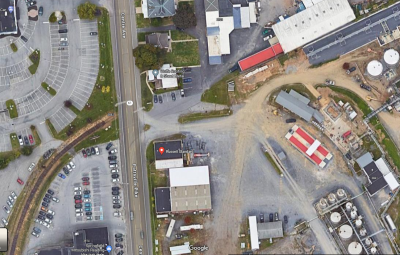
Russell standard

It is worth your time to check out the Pennsylvania Supreme Court (Middle District)’s decision in Wolfe v. Reading Blue Mountain & Northern RR Co. No. J-10A-2024 (Aug. 20, 2024).

The court invalidated an exercise of eminent domain by a railroad, concluding the taking was not for a public purpose because it was intended to keep open a road used to access a single business.

The conflict arose after the property owners exercised their right to close off the railroad’s two easements on which rail siding track and a road crossing had been located. The owners’ predecessor-in-title had obtained the property from the railroad’s precedessor, and the grant contained express reservations of those two easements. The grant also contained a termination provision. which required the railroad to remove the siding within 90 days of the owners’ demand.

The railroad had stopped using the siding and the road crossing in

Continue Reading PA: No Funny Business – It Isn’t A Public Purpose For Railroad To Take Property To Benefit Single Customer

PXL_20240819_120202700.MP
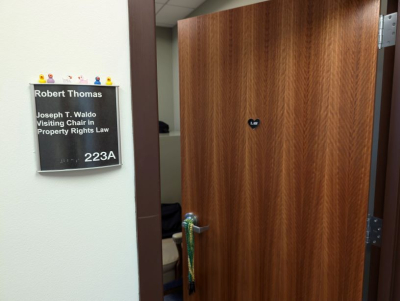
Yes, the mysterious ducks remain — and seem to have multiplied.

It’s that time of the year again. Fall’s-a-coming, and that means that starting today, we’re back at the William and Mary Law School in Williamsburg, Virginia to lead two courses:

  • Eminent Domain and Property Rights (W&M is one of the few law schools in the country that offer a course in eminent domain, just compensation, and takings)
  • Land Use Controls (an especially hot topic at the moment)

The registration numbers for both courses are good (really good), and two full classrooms of Dirt Law goodness tells us something about this area of law — it’s really interesting, and a good place to make your way in the practice, and law students recognize that.

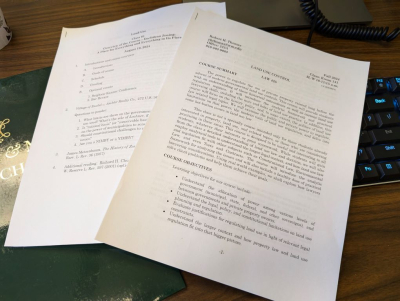
PXL_20240819_121031630.MP
We don’t use $400 casebooks in either class.

Time to jack back into the (takings and land use) Matrix.

6a00d83451707369e20240a476d216200c-800wiContinue Reading Back To School For Dirt Law @ William & Mary, Season VII

Screenshot 2024-08-09 at 09-59-51 Brigham-Kanner Property Rights Conference 2024 Tickets Williamsburg Eventbrite

Come join us in Williamsburg, Virginia at the William and Mary Law School for the 21st edition of the Brigham-Kanner Property Rights Conference. The Conference is unique, because its express purpose is to bring property legal scholars and property law practitioners together to discuss, what else, property and property rights law.

Yes, there’s a healthy dose of theory and academics, but also the real-world perspectives of practicing lawyers who bring the cases that put theory into practice. (New to this event and want a preview? Here’s our write-up of the 2024 Conference.)

More details here. Register here.

The days prior to the Conference launch on Thursday All that week, we’re putting on student-oriented programming.in conjunction with the WM Law Career Services Office. Sessions on “Careers in Dirt Law,” “Land Use and Real Estate Law in Practice,” and “Comparative Property Rights,” for example, presented by experienced practitioners

Continue Reading Register Now: 21st Brigham-Kanner Property Rights Conference, William & Mary Law School, Sep. 12-13, 2024