


EjqLrfkWAAAB5QF

In between talking about eminent domain-y songs, the goofy cult film “Snakes on a Plane” (yes, we really do have a cast-signed poster of that film in our office), and other fun stuff, we returned to the Pendulum Land Podcast for part II of our guest spot, where we also discussed Virginia Uranium, Inc. v. Commonwealth, No. CL15-623 (July 30, 2020), a recent decision from a Virginia trial court about regulatory takings and “damagings.” 

[Stream the podcast above, or better yet, subscribe and become a regular listener. The podcast is both entertaining and informative.]

The Virginia Uranium case involves a long-standing — but “temporary” — moratorium on uranium mining, and the court’s order analyzes Palazollo, the Salt-peter case (Lord Coke alert!), Penn Central, and Lucas.

The court concluded that the inability to mine uranium was a damaging under the Virginia Constitution because it “directly
Continue Reading In Which We Return To The Pendulum Land Podcast To Talk “Snakes on a Plane,” Eminent Domain Songs, And What Might Be Virginia’s First True Regulatory Takings Case

What place do you think of when you hear the word “earthquake? Most likely California, we’re betting.

And it’s also very likely that you didn’t think “Ohio.”

Well, that’s probably what everyone involved in the Ohio Supreme Court case State ex rel. AWMS Water Solutions, LLC v. Mertz, No. 2019-0493 (Sep. 23, 2020) thought too. Until AWMS sought salt-water injection well permits from the State of Ohio, and “[t]he next day, a 2.7-magnitude earthquake was recorded in Youngstown, Ohio, about seven miles from AWMS’s Weathersfield Township site and about one mile from an injection well known as “Northstar #1” that was not related to AWMS’s wells.” Slip op. at 3. Earthquakes? In Ohio?

A week later, the State determined that Northstar #1 should be taken out of operation, and the very next day, a 4.0 earthquake “was recorded within one mile of Northstar #1. Slip op. at 3. [That

Continue Reading Earthquake In Ohio: The Jury Should Decide Lucas And Penn Central Takings After State Shut Down Injection Wells For Causing Earthquakes

News just in: we’ve just received confirmation that the Conference will not be in-person in Scottsdale in January 2021, and we’re going online.

Not a big surprise, but still a bit disappointing, and it’s a shame that the circumstances won’t allow us to meet in-person to talk shop and to renew our friendships like we do every year. 

But rest assured we’re making lemonade out of these lemons, and we’d appreciate everyone holding the dates on your calendars to join your colleagues from across the nation for the online Conference. And no, we’re not going to do two-and-a-half-days remotely, we’re paring down the agenda and will be focusing on hot topics, and great presenters. The remote format has some advantages, and we’re taking advantage of the circumstances to plan a conference more interactive and a bit different than usual.

This will also be a great program for first-time Conference participants.

Continue Reading Breaking: News About The 2021 ALI-CLE Eminent Domain & Land Valuation Litigation Conference (Jan. 28-29, 2021)

Ainalea

A short while ago, we featured the cert petition in a case from the Big Island that we’ve been following as various pieces of it went up and down through both the state and federal court systems. See “New (Mike Berger) Cert Petition: ‘This case is the proverbial ‘Exhibit A’ of much that is wrong [with takings law].

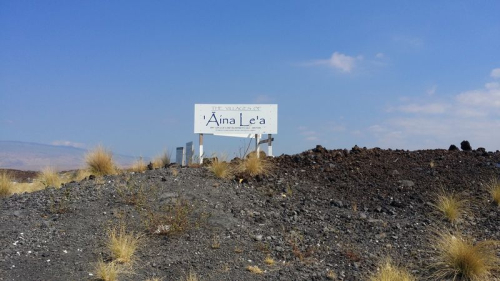
Now, after the State of Hawaii waived its right to file a BIO, five briefs of amici curiae (including one in which we played a small part) have been filed in support of the petition, urging the Court to review the Ninth Circuit’s opinion. We wrote about the case in a recent issue of the American Planning Association’s magazine. The short story is that a federal jury concluded that the State of Hawaii Land Use Commission took the owner’s property under both a Lucas and a

Continue Reading No Shortage Of Amicus Support For Takings Cert Petition (Lucas and Penn Central!)

In Utah Dep’t of Transportation v. Coalt, Inc., No. 20161063 (Aug. 17, 2020), the Utah Supreme Court dealt with a public use and a just comp issue.

The first is perhaps the more interesting. After a federal court upheld environmentalists’ challenge to the Environmental Impact Statement prepared by UDOT for its Legacy Parkway Project and enjoined highway construction, UDOT and the enviros settled. The settlement called for “additional measures to protect the wetlands and its wildlife inhabitants from the effects of the Parkway.” Slip op. at 6.

One of those measures? Get additional land for the Legacy Nature Preserve. Guess whose property was, as a consequence, now slated for eminent domain? You guessed it: Coalt’s. It objected to the taking, “arguing that UDOT did not have the authority to condemn Parcel 84 because it was not doing so for a transportation purpose or a public use, but to settle

Continue Reading Utah: As Long As A Taking Is For The Birds, Not The Enviro Plaintiffs, It’s A Public Use

There’s a lot going on in the Michigan Supreme Court’s opinion in Mays v. Governor, No. 157335 (July 29, 2020). After all, the case involves claims for personal and property damages resulting from the Flint (Michigan) water crisis. That’s an issue we’ve been following that has also grabbed national headlines.

But if you takings mavens don’t want to take a deep dive into the non-takings parts of the opinions (that resulted in an “affirmed by an equally divided court” situation on the plaintiffs’ bodily injury claims and Bivens-type damage remedy), here are the takings highlights. We thought the most interesting part of the opinion is at pages 11 through 15, where the three-Justice plurality/majority concluded that the plaintiffs alleged property damage and injuries different from the public, and alleged enough to avoid the government’s motion for summary judgment.

The class action complaint in Mays alleged:

Plaintiffs brought

Continue Reading Michigan SCT: Flint Takings Plaintiffs Alleged Unique Property Injuries, And That’s Enough To Survive Summary Judgment

Here’s a cert petition that we’ve been waiting to drop in a case we’ve been following. This one asks whether a state legislature’s virtual elimination of a cause of action is a taking.

The harsh reality is that farms and ranches can stink. But in Right to Farm Acts, many state legislatures, Indiana’s included, have concluded that farming and ranching are so important that the consequences (“negative externalities“) that naturally occur have to be accepted. One Indiana court summed up Right to Farm Acts as well as anyone when it noted, “so long as the human race consumes pork, someone must tolerate the smell.” Shatto v. McNulty, 509 N.E.2d 897, 900 (Ind. App. 1987). Let’s call it a “stink easement.”

Indiana’s version stands somewhat apart from others, however. Like many other states, it bars lawsuits which assert that a long-standing agricultural operation is a

Continue Reading New Stinky Cert Petition: By Wiping Out Nuisance Claims, Right-To-Farm Act Is A Taking

Here’s the amicus brief filed yesterday in a Virginia Supreme Court case we’ve been following.

This is a case at the intersection of property and takings law, and environmental protection. Several Nansemond River oystermen own a lease from the state for the riverbed, which among other things, allows them to harvest some of the oysters that Virginia is so well known for. But they were forced to bring an inverse condemnation claim in state court, asserting that the City’s dumping of wastewater in the river — and prohibiting the harvesting of oysters during those times — was a taking under the Virginia Constitution’s taking or damaging clause (article I, § 11).

The trial court sustained the City’s demurrer, accepting the City’s argument that it has the right to pollute the river, based in part on the U.S. Supreme Court’s decision in Darling v. City of Newport News, 249

Continue Reading Amicus Brief In Virginia Oyster Takings Case: City’s Purposeful Pollution Of River Is A Taking Under The Virginia Constitution

A private pipeline company obtained a certificate of public convenience from FERC. Under the Natural Gas Act, FERC may issue such certificates conditioned on the applicant meeting the Clean Water Act’s requirement of obtaining state environmental check off on the project. The pipeline needed an easement across Schuecker’s land, and began the condemnation process under New York law. It attached to its condemnation petition the conditional FERC certificate. 

Schuecker objected, asserting that the FERC certificate was no good, because the pipeline had not met the condition: it had not certified to FERC that it had received all state approvals (as required by the federal Natural Gas Act). Indeed, the New York Department of Environmental Conservation had denied the pipeline’s water quality certification. The pipeline responded that it was seeking reconsideration with FERC, and that the NYDEC could not deny water quality certification because it was too late to do so.

Continue Reading NY Takes Eminent Domain Law From Worse To Worse* – Conditional FERC Certificate Only Prohibits Construction, Not Eminent Domain

A long opinion, but a short post. In Stanford Vina Ranch Irrigation Co. v. California, No. C085762 (June 18, 2020), the California Court of Appeal held that water rights are not really property rights.

That’s a bit of an overstatement, of course. But not a huge one.

In an inverse condemnation case, the court held that the owner of riparian rights did not have a protectable property interest in any amount of water, because riparian use, by definition, must always be reasonable. And the state gets to define what use is “reasonable.” Thus, the logic goes, because the State Water Resources Control Board determined by emergency regulation that any uses which might jeopardize the flow of water into a creek (to protect fish) were unreasonable, there’s no takings claim for an owner who claimed a vested right to the water. No property, no taking:

We have already explained the

Continue Reading Cal App Backs Into The Question: Riparian Rights Are Limited To Reasonable Use, So No Property Right In What Agency Deems Unreasonable Use