104481738_2170057539806372_2938554143515873721_nphoto: Patricia Salkin

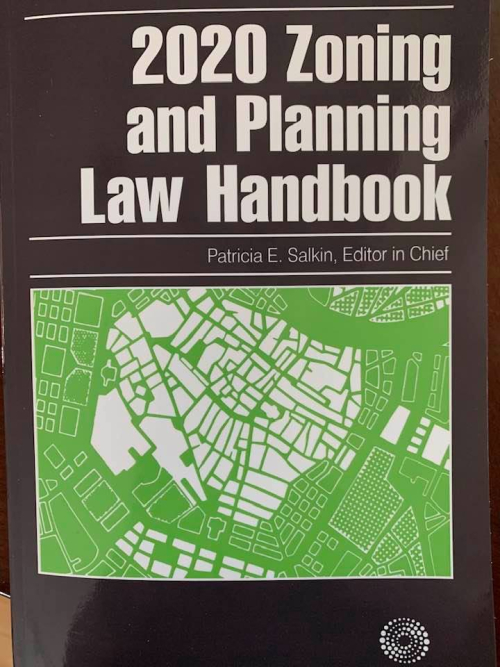
Just published: the 2020 Zoning and Planning Law Handbook (Green Book). The first section of the Summary of Contents is about Takings, and includes as the lead piece Professor Gideon Kanner and Michael Berger’s tour-de-force article, “The Nasty, Brutish, and Short Life of Agins v. City of Tiburon.” It also includes my articles on Murr, “Restatement (SCOTUS) of Property: What Happened to Use in Murr v. Wisconsin?”

Check it out. The Green Book is a one-stop shop for the best articles on land use in a given year, and this edition includes chapters on housing, agriculture, cell tower placement, RLUIPA, and (of course) zoning.

Our thanks to Dean Patty Salkin who edited the volume for including us.

Summary of Contents, 2020 Zoning and Planing Law Handbook (Green Book)

Continue Reading Available Now: 2020 Zoning and Planning Law Handbook (Green Book)
MVIMG_20191108_125325

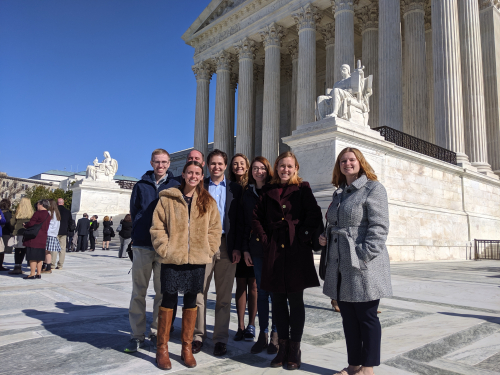
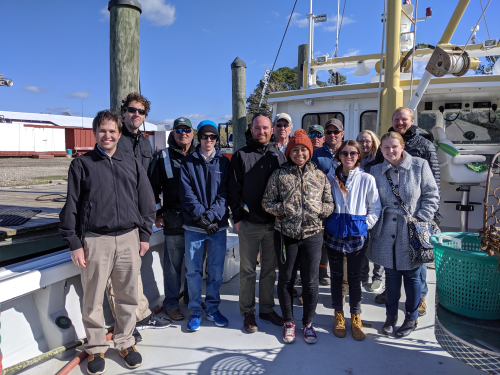
Here’s the latest in a case we’ve been following (we visited the site last November with our William and Mary class), the property owners’ Opening Brief in  a case being considered by the Virginia Supreme Court.

This is a case at the intersection of property and takings law, and environmental protection. Several Nansemond River oystermen own a lease from the state for the riverbed, which among other things, allows them to harvest some of the oysters that Virginia is so well known for. But they were forced to bring an inverse condemnation claim in state court, asserting that the City’s dumping of wastewater in the river — and prohibiting the harvesting of oysters during those times — was a taking under the Virginia Constitution’s taking or damaging clause (article I, § 11).

The trial court sustained the City’s demurrer, accepting the City’s argument that it has the right to

Continue Reading Property Owners’ Brief In Virginia Supreme Court “Oyster Takings” Case

Our shut-in time has got us to thinking.

We’re all environmentalists now. This is the precautionary principle writ large. In a way, this is only part of a greater problem.

Welcome to the Twitterverse. We now have access to a vast amount of data — very often on a granular level — and this moves faster than the ability

Americans like to work

Americans are pretty wiling to give our elected leaders a lot of slack

playground Constitution has serious legs

Most don’t understand that their rights are, in normal time, highly restricted, at least in courts

takings lawyers are not really surprised as everyone else – we’re used to courts deferring to what may look like excessive and unwarranted assertions of governmental power. Unlike a lot of other litigation involving the government, representing property owners in eminent domain or takings cases

basic takings doctrine is really incoherent

we already

Continue Reading Things I’ve Learned (Am Learning) About #CoronavirusLaw

A development in the “oyster takings” case that we’ve been following as it has worked its way up to the Virginia Supreme court: that court today issued this Order, in which it awarded an appeal by Nansemond River oystermen (and the City of Suffolk’s cross-appeal) who claim that their property was taken when the City dumped sewage into the river and declared a “condemnation zone” (i.e., no oyster harvesting). Along with our William and Mary Law class, we took a field trip to the site last year (video above).

Some background, since this is a case at the intersection of property and takings law, and environmental protection. The oystermen own a lease from the state for the riverbed, which among other things, allows them to harvest some of the oysters that Virginia is so well known for. But they were forced to bring an inverse condemnation claim

Continue Reading Virginia Supreme Court To Consider Whether City Has The Right To Pollute Chesapeake Bay

Screenshot_2020-05-12 William Mary Law Review

Looking for some property and takings scholarly reading while you cool your heels at home? Well, the William and Mary Law Review has recently published no less than three worthy pieces, all available for download.


Continue Reading Three New Property And Takings Articles From William & Mary Law Review

LUI 2020 slider

Join us starting tomorrow, Tuesday, May 12, 2020 for the 34th Land Use Institute. Originally scheduled for April in Tampa, we obviously couldn’t do tha, so we did the next best thing — moved this venerable course online. The Planning Chairs (Frank Schnidman and Dean Patricia Salkin) have assembled the usual hot topics session and a lineup of expert faculty (we’re speaking at the 2:45 ET session on Federal Laws (in our case, NEPA, Water, and Wetlands (including the Maui case from SCOTUS)). 

The program takes place over three days Tuesday, Wednesday, and Thursday, and you can either register for the sessions or all three days, with various discounts if you are a member of the American Bar Association, and even more if you are a member of the Section of State and Local Government Law. 

Here’s the three-day agenda. There is a lot here to like, and we

Continue Reading Join Us This Week: May 12-14, 2020 For (Virtual) Land Use Institute Webinar Series

Fire up your web browsers, turn up your speakers, and tune in tomorrow, Tuesday, May 5, 2020, at 10am Hawaii Time (1pm Pacific, 2pm Mountain, 3pm Central, and 4pm Eastern) for a first: the Hawaii Supreme Court will be livestreaming oral arguments in an important case about administrative law, water rights, environmental law, and native Hawaiian rights.

(For all you “mainland” folks, you may want to tune in even if those topics don’t interest you, just to hear the way our court crier opens the proceedings. Yes, the traditional “Oyez” call is made, but if these arguments are like in-person OA at the court, there’s a very Hawaiian touch also.)

Here’s the summary of the issues, from the Judiciary web site:

HEALOHA CARMICHAEL, LEZLEY JACINTHO, and N MOKU AUPUNI O KO OLAU HUI, Petitioners/Plaintiffs-Appellees/Cross-Appellees/Cross-Appellants, vs. BOARD OF LAND AND NATURAL RESOURCES, SUZANNE CASE, in her official capacity as

Continue Reading Hawaii Supreme Court Livestream Oral Argument In Water Rights, Admin Law Case (Tuesday, May 5, 2020, 10am HT, 1pm PT, 4pm ET)

If you missed the three-and-a-half hours (!) of this morning’s teleconferenced oral argument of the en banc U.S. Court of Appeals for the D.C. Circuit in a case we’ve been following (along with a related case), well, you are in luck. There are multiple ways to listen in. You can stream it from YouTube above. you can stream it below, or you can download the mp3 from the court’s website. Whatever way you choose, you should do so. 

This is the case that reminded us of Samuel Beckett’s classic absurdist play, Waiting for Godot. Two guys spend the entire time waiting for another guy (you know who) to show up, but he never does. There are nearly endless interpretations of its meaning (if any), but everyone pretty much agrees that it is at least about the nature of life and its existential meaningless, while both characters and the

Continue Reading DC Cir (En Banc) Hears 3.5 Hours Of Oral Argument In Pipeline Public Use Challenge To FERC’s “Waiting for Godot” Process

IMG_20191106_112246

As any takings lawyer can tell you, ad hoc rules and non-exhaustive lists of “factors” a fact-finder considers can be seductive. After all, shouldn’t the outcome of a case turn on its particular facts? Who could argue with that?

The problem lies when those factors are applied in a way that seems more like one of the very bright-line rules that a list of factors is meant to avoid. For example, in the takings context, we see the “polestar” Penn Central ad hoc regulatory taking three-factor test being applied most consistently as a one-strike-and-your’re-out test that (almost invariably) means the property owner loses. In theory, it might make some sense, but in practice it has become more like a per se rule: you lose, property owner. That isn’t truly a “case-by-case” analysis. 

Now, in takings that may be by design — you at least can see why the Supreme Court

Continue Reading We’re All Ad Hoccers Now: SCOTUS Penn Centralizes The Clean Water Act (“From” Is Too Hard To Define, So Here’s A List Of Factors)