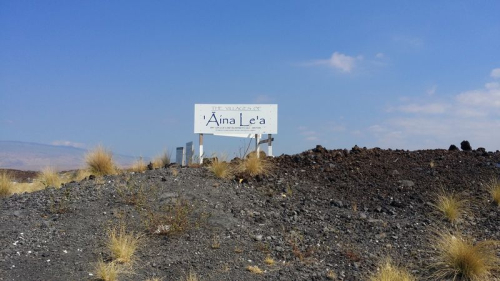
A short but mildly interesting one from the Arizona Court of Appeals, Maricopa County v. Rovey, No. 1 CA-CV 190659 (Dec. 29, 2020).

The County sought to condemn portions of the Rovey land for the expansion of existing roads. The roads had been used “as public roadways for decades,” slip op. at 2, and ownership of the land on which the roads sat was disputed. The Roveys asserted they owned it in fee and the County had to pay compensation for the taking, while the County claimed it already owned an easement. All of the cases — the County’s condemnation, the Roveys’ quiet title, trespass, and inverse condemnation counterclaims, and their stand-alone claims for trespass and inverse — were consolidated. 

The owners argued that application of the rule of “strips and gores” (a presumption that unless expressly otherwise noted, a conveyance of a lot adjacent to a road conveys

Continue Reading Ariz App: “Strip And Gore” Rule Guts Inverse Condemnation Claim
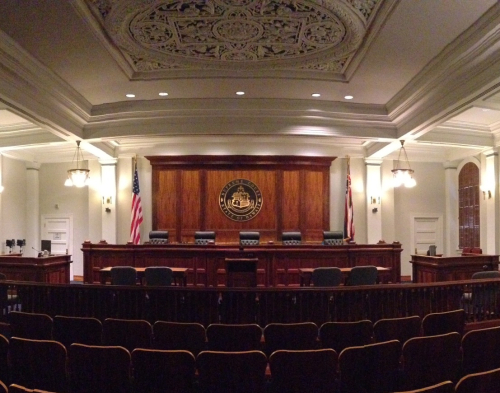
The Town of Fort Myers Beach, Florida, barred the sale of alcohol on beaches in 1995. Turns out that a beachfront business was already (legally) selling alcohol on its property at the time of the ban. And we know what that usually means: a grandfathered nonconforming use.

Today’s case from the Florida District Court of Appeal (Second District), Persaud Properties FL Investments, LLC v. Town of Fort Meyers Beach, No. 2D19-1282 (Dec. 11, 2020), is at the intersection of two of our favorite subjects, land use and inverse condemnation.

No one questioned whether Persaud possessed a nonconforming use. The issue was whether it had it abandoned it when it closed the establishment “to begin extensive renovations.”

The Town was well aware of the renovations as various construction permits had to be issued and inspections had to occur; additionally, during the renovation period, multiple stop-work orders were issued by

Continue Reading Florida: You Can’t Unintentionally Abandon A Nonconforming Use

As we noted in this post (“CA4 (Over Dissent): No Taking When Maryland Outlawed ‘Rapid Fire Trigger Activators’“), it was likely that a cert petition would follow after the U.S. Court of Appeals for the Fourth Circuit held (over a strong dissent) that it was not a taking when Maryland outlawed previously lawful personal property, but did not require the owners to physically turn over the banned property — here, devices that allow semi-automatic rifles to fire rapidly — to the government.

Well, here it is. In this cert petition, the owner argues that “[t]he Fourth Circuit’s decision also creates a direct conflict with the Federal Circuit which has long applied
Lucas to personal property and held that personal property is protected without regard to whether the government or a third party takes possession.” Pet. at 8.

Here are the Questions Presented:

This case is about whether

Continue Reading New Cert Petition: Declaring Property Illegal To Own Is A Taking, Even If The Govt Doesn’t Confiscate It

A short one from the Florida District Court of Appeal (Second District) on exactions.

More precisely, what is an “exaction.”

In Murphy Auto Group, Inc. v. Fla. Dep’t of Transportation, No. 2d19-1236 (Nov. 20, 2020), the court held that the requirements of Nollan/Dolan (nexus and rough proportionality) apply when the DOT demanded the owner spend money to improve government-owned land as a condition of granting a permit to develop the owner’s own land.

Initially, the DOT demanded that the owner dedicate a strip of land as a condition of the DOT’s grant of a drainage and driveway connection permits the owner needed to develop its commercially-zoned property (DOT controlled access to the adjacent highway). The owner declined to make the dedication, and in a counter-proposal, the DOT “required that Murphy, at its sole expense, reconstruct the drainage collection system as a condition for approval of the drainage

Continue Reading It’s An “Exaction” When Govt Requires Landowner To Spend Money To Improve Govt Land

Photo

Here’s a big development in a case we’ve been following for a while (and in which we filed an amicus brief in support of the prevailing property owner).

In DW Aina Lea Dev., LLC v. State of Hawaii Land Use Comm’n, No. SCCQ-19-156 (Dec. 17, 2020), the unanimous Hawaii Supreme Court held that the statute of limitations governing a regulatory takings claim under the Hawaii Constitution’s “takings or damagings” clause is six years.

The case started out in a Hawaii state court, and was removed to the U.S. District Court by the State Land Use Commission. The district court dismissed the state takings claim for missing the limitations cut-off. Hawaii has not adopted a statute of limitations expressly for takings or inverse condemnation claims. Thus, the question is what is the closest analogue claim. If there isn’t one, Hawaii has a “catch all” statute (six years) for civil claims.

Continue Reading Hawaii: State Takings Are “Self-Executing” Constitutional Violations (Not Torts Or Breaches Of Contract), Subject To A Six-Year Statute Of Limitations

Earlier this week the U.S. Supreme Court heard oral arguments in its latest takings case.

Wait, what? Did we miss something? A takings case, argued this week?

No, you didn’t miss a land use or eminent domain case, but one in which Holocaust victims sued Germany in a U.S. court for seizure of property in the Second World War. The issues centered around the Foreign Sovereign Immunities Act, under which foreign countries are mostly immune from being haled into an American courtroom. But there is an exception for “expropriation,” when property is “taken in violation of international law.”

The plaintiffs argued that their property — artwork and medieval treasures — were literally taken from them by German and Hungarian authorities, so they qualified under the “taken” exception. The German and Hungarian governments, supported by the United States, argued that “taken” means expropriated, as in seized in the sense

Continue Reading The Latest Supreme Court Takings Case, Argued This Week

Often, the dispositive question in many takings cases tuns on whether the plaintiff owns “property,” and if so, what rights does that recognize. If you define the property in such a way that ipse dixit excludes the “stick” the owner claims was taken, then the answer is always going to be no property, no taking. To us, this is largely a question of definitions and policy: is this interest, in a judge’s view, worthy of constitutional protection?

And that’s the wrong approach, because this analysis often seems more like a semantic exercise, undertaken by the wrong party. Instead of concluding, for example, that the property in a case is a lease (a recognized property interest) and then going on to ask whether there’s been a sufficient interference with an owner’s distinct investment-backed expectations, the question shifts from what we think is the proper focus (a fact question of the impact

Continue Reading Surf And Turf (Our Beef With The Virginia Oyster Takings Case): Although Leases Are “Property,” They Don’t Confer A Right To Exclude Government Sewage

Here’s the Reply in Support of what we think is a very worthy cert petition, and which responds to the recently-filed BIO.

For the background of the case, check out this post (“What Constitutes a Loss“). The property owner has also summarized the situation thusly in its petition:

The State of Hawaii zoned for agricultural use land that it knew was not viable or appropriate for such use. At the property owner’s request, it rezoned it for urban use but, after Plaintiff Bridge Aina Le‘a began developing it, the State illegally (as the Hawaii Supreme Court later held) “reverted” the land to agricultural use. A jury found this to be a 5th Amendment taking under this Court’s standards in both Lucas v. South Carolina Coastal Council, 505 U.S. 1003 (1992) and Penn Central Transp. Co. v. City of New York, 438 U.S. 104 (1978).

Continue Reading Reply In Penn Central And Lucas Takings Case

A short (unpublished) one from the Federal Circuit, Albright v. United States, No. 19-2078 (Dec. 1, 2020).

This rails-to-trails takings case turned on the predicate question: do the plaintiffs own private property? That question turned on the lex loci, and whether, under Oregon law, the original right-of-way conveyance meant to grant to the railroad an easement or a fee simple interest. 

Thus, the opinion naturally relies solely on Oregon’s property law: if the grant was for a limited purpose (“right of way” or “railroad”), then it was an easement; if the grant did not specify the use or was otherwise unlimited, it was a conveyance of fee simple. That was enough for the federal court:

In addition, none of the deeds provide for a reverter or otherwise contain language limiting the use that the grantee could make of the land. To the contrary, each of the deeds purport

Continue Reading Fed Cir: No Taking, Because Oregon Property Law Is Clear (But Is It?)

Ainalea

Here’s the State of Hawaii’s Brief in Opposition in a case we’ve been following for what seems like forever.

Check it out. The State waived response, but after a whole bunch of amici filed briefs in support of a cert grant (ours included), at least one of the Justices wanted to hear its arguments in opposition. 

Instead of the State’s “Solicitor General” filing the brief, it hired a SCOTUS player to argue that this case isn’t worth the Court’s time. The need to hire the D.C. big guns with name-recognition instead of relying on the in-house lawyers who are the State’s appellate experts somewhat belies any assertion that the State isn’t concerned about this case. 

Here are the Questions Presented as (re)framed by the BIO:

1. Whether the Ninth Circuit correctly held that Petitioner did not suffer a taking where the State rezoned Petitioner’s property because

Continue Reading BIO In Penn Central And Lucas Takings Case