00100lPORTRAIT_00100_BURST20191023131755040_COVER

These days, parts of California often looks more like a developing country than the world’s fifth most powerful economy. Urban encampments — complete with medieval diseases — have become legendary. The streets of its glittering cities of tech are paved not with gold, but with human waste (but there’s an app for that!).

No longer the Golden State, it is more The Land Of No (no market rent, no plastic straws, no natural gas heating or cooking, no foie gras, no plastic bags, no fur, no teeny bottles of hotel shampoo, (no cheap gasoline, either), no early morning school, no state-funded travel to retrograde locales, no “lunch shaming,” no smoking outside. No this, no that. You name it, California will probably eventually ban it. (Except weed; weed anywhere is just fine.)
Most recently, no

Continue Reading Lights Out In The Land Of No: The Practical Effects Of California’s Wildfire Inverse Condemnation Doctrine

We read the Nebraska Court of Appeals’ opinion in Russell v. Franklin County, No. A-18-827 (Oct. 15, 2019), twice, just to be sure we were understanding the holding and rationale correctly. Apparently we were: the court held that when the State (inadvertently) takes property — here, the County highway maintenance department entered the plaintiffs’ rural undeveloped land with permission to cut and remove certain trees, but then went to the wrong place and cut the wrong trees — the only way to measure damages for the taking of the trees is to value the land with the trees, and the land without the trees. In this case, a grand total of $200. 

This case wasn’t a fight about whether the County had taken property. It had, and it admitted its inverse condemnation liability for just compensation. The County’s appraiser used this method:

In his analysis, Gerdes used comparable market

Continue Reading Apparently, Trees Are Not Property In Nebraska

We’re in California, where we’re playing Lincoln Lawyer for a few days because in its infinite wisdom, the utility company has preemptively shut off power for one week due to the threat of wildfire inverse condemnation lawsuits. We’re actually playing Chevy Tahoe Lawyer, because we’re literally working out of a truck since that’s the only place with power, and we can at least drive to where there’s a (weak) connection to the developed world. 

But court deadlines don’t wait for California’s absurdities, so we do what we need to do.

And that includes filing this amicus brief in a case we’ve been following, Campbell v. United States. That’s the case in which a Federal Circuit panel held that the Tucker Act’s six-year statute of limitations in takings claims against the United States starts to run upon the taking, and “the taking may occur before the effect

Continue Reading Amicus Brief: Federal Circuit Assumes Plaintiffs Understand SCOTUS’ Regulatory Takings Doctrine Better Than SCOTUS Understands Regulatory Takings Doctrine

IMG_20191004_124327

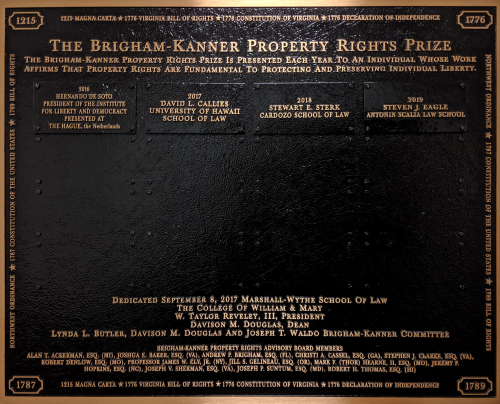
Here is a transcript of the remarks I delivered today at the 2019 Brigham-Kanner Property Rights Conference. I was honored to join lawprof Henry Smith and Florida Supreme Court Justice (ret.) Ken Bell (who authored the Florida court’s opinion in Stop the Beach Renourishment which was challenged in SCOTUS as a “judicial taking”) to speak about “Public Resources and Private Rights” (moderated by Professor Katherine Mims Crocker). After paying our respects to 2019 B-K Prize winner Professor Steven Eagle, we each addressed some part of the question.

—————————-

The New New Property

As always, I bring to you tidings of “aloha” from the state where the legislature thought it was a going to reduce the price of residential housing by taking fee simple interests from “A” and giving them to “B,” the leaseholders

Where now, the median price for a single-family, two bedroom, one bath

Continue Reading 2019 Brigham-Kanner Conference: The New New Property – Public Resources And Private Rights

Klingonsnippet

Takings mavens know lawprof Ilya Somin. Among other things, he’s authored some of the more interesting and useful scholarship in our field.

Here’s his latest, published in the 2019 Cato Supreme Court Review, about the Supreme Court’s latest takings case, Knick v. Township of Scott

We naturally recommend you read the entirety of his article, Knick v. Township of Scott: Ending a Catch-22 that Barred Takings Cases from Federal Court, which he has posted on SSRN here

And for those of you wondering about the snippet above, Prof. Somin was brave enough (or geeky enough) to include a reference to our commentary on the SG’s amicus arguments in Knick, comparing it to the weak-sauce Klingon forehead “retcon” in Star Trek. How could we resist highlighting the inclusion of an impossibly nerdy Trek reference in a published scholarly work? 

Thank you, and bravo, Sir. 

Continue Reading New Article: “Knick v. Township of Scott: Ending a Catch-22 that Barred Takings Cases from Federal Court”

6a00d83451707369e2022ad3b86fce200d-800wi

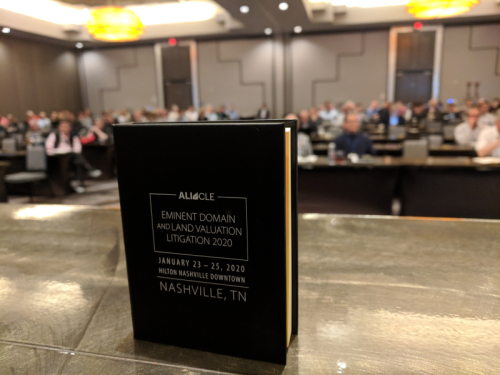
You overwhelmingly asked for Nashville, and we’re bringing it to you!

Get ready, and hold your place now: here’s the list of programs and speakers for the 36th Annual ALI-CLE Eminent Domain and Land Valuation Litigation Conference, to be held at the Downtown Nashville Hilton, January 23,- 25, 2020. Two-and-a-half days with top-notch national faculty (lawyers from both sides, judges, legal scholars, appraisers, relocation experts, and others).  

Early registration and group rates are available now

Here are just some of the programs:

  • Featured Presentation: Property Rights as Civil Rights: Seeking Justice Though the Fourth and Fifth Amendments. Hon. Jonathan Apgar, Jamila Johnson, Alan Ackerman. Moderator: Leslie Fields.
  • Making Sense of the New Rules After Knick v. Township of Scott: Where Do I Go, What Do I Do? David Breemer, Smitha Chintamaneni, Professor Bethany Berger. Moderator: Professor Steven Eagle.
  • When A River Runs Thought It: Water Rights and


Continue Reading Here’s The Agenda And Faculty For The 2020 ALI-CLE Eminent Domain And Land Valuation Litigation Conference, Nashville, Jan 23-25, 2020

Today, we’re featuring a post written by our Tennessee colleague, economist William Wade. He writes about the Massachusetts Court of Appeals’ recent decision in Smyth v. Conservation Comm’n of Falmouth, and the more recent cert petition in that case. Bill writes and comments frequently on takings cases. See, e.g., William W. Wade, “Theory and Abuse of Just Compensation for Income Producing Property in Federal Courts: A View from above the Forest,” 46 Tex. Envt’l L. Rev. 140 (2016). 

* * * *

Smyth and Massachusetts’ “New” Penn Central Factor

William W. Wade, Ph.D.

The Massachusetts case, Janice Smyth v. Conservation Commission of Falmouth,[1] is current again. Pacific Legal Foundation lawyer J. David Breemer, filed a petition for writ of certiorari to the U.S. Supreme Court. Mr. Breemer’s petition is encyclopedic in its survey of regulatory takings cases, which demonstrates that Penn Central’s

Continue Reading Guest Post: An Economist Looks At Takings Law – Smyth And Massachusetts’ New Penn Central Factor

ALI Nashville 2020

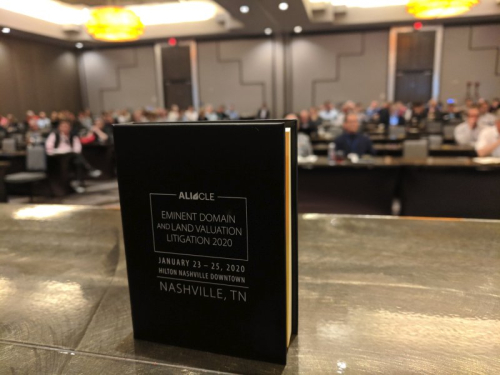
The final agenda and faculty list will soon be officially published, but we wanted to give you a preview of what is in store at the ALI-CLE Eminent Domain and Land Valuation Litigation Conference, January 23-25, 2020, at the Nashville Hilton (downtown, just a few steps away from everything that Nashville has to offer). 

Don’t miss out: in recent years, we’ve been at-or-near capacity, and the conference hotel has even sold out a couple of times. Visit the ALI-CLE website to register and hold your space

Here are some of the things we’ll be discussing: 

  • Making Sense of the New Rules After Knick v. Township of Scott: Where Do I Go, What Do I Do?
  • The Missing Link in Valuing Fixtures
  • When a River Runs Through it: Water Rights and Takings
  • Responding to Project Changes: Valuation When Government Action is Ongoing
  • Property Rights as Civil Rights: Seeking Justice Through


Continue Reading Get Ready: The 2020 ALI-CLE Eminent Domain And Land Valuation Litigation Conference Agenda Coming Soon

IMG_20170810_183940
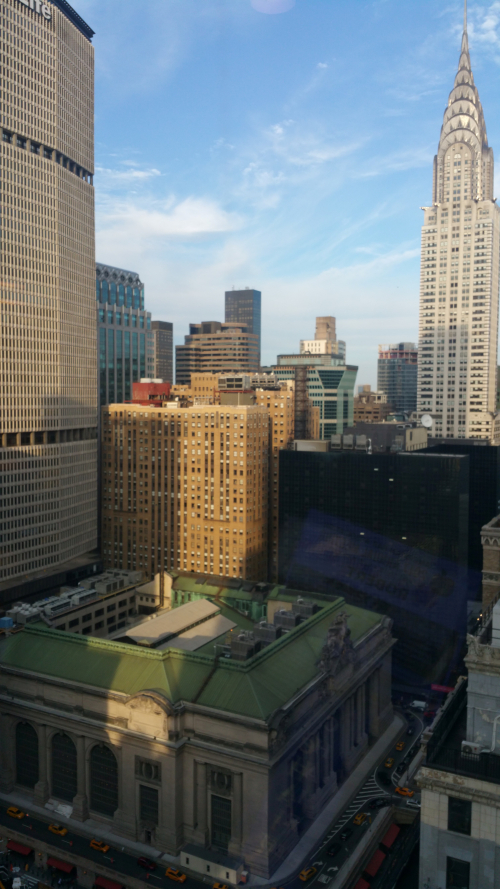
You know where this is. 

Here’s the cert petition filed recently in a case we’ve been tracking. (See also this guest post by economist Bill Wade about that case.)

As the above photo tells you, this one is going into what may the last truly unexplored frontier of regulatory takings law, the details of the ad hoc Penn Central test, the “default” test in most situations where the regulation does not wipe out all economically beneficial use (Lucas), doesn’t physically invade the property (Loretto, Kaiser Aetna), or doesn’t render useless a fundamental attribute of property (Webb’s Fabulous Pharmacies). 

In all but those situations, the Court has told us to apply the multifactor three-part (or as Professor Steve Eagle argues, the four-part) test from Penn Central. But only in a few cases have property owners successfully navigated that minefield to

Continue Reading Hic Sunt Dracones – New Cert Petition Argues Penn Central Results In “Inconsistent,” “Unprincipled,” “Amorphous,” “Illegitimate” Decisions