DSCF2762

When you think “LA” or Southern California, what comes to mind? Things like “the hills of Beverly Hills, the Hollywood Hills, and the Los Angeles basin, including the Hollywood sign, the Griffith Observatory, downtown Los Angeles, and … Mount Baldy,” perhaps?

Or maybe, like us, you think of prehistoric elephants stuck in tar.

But no matter, because our point is that each of us recognizes what we call “cliche litigation.” You know, the cases that involve just the thing you think about when you imagine a certain place. We have our beach cases in Hawaii; the south has alligator cases, for example. 

Well, here’s the LA version, Boxer v. City of Beverly Hills, No. B258459 (Apr. 26, 2016).

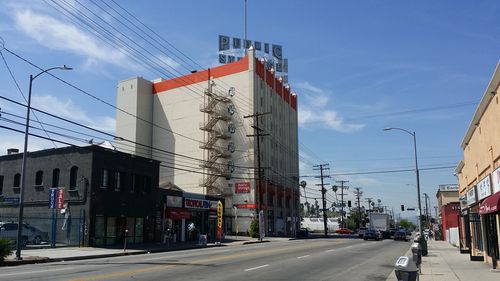
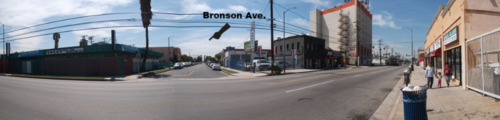
The City of Beverly Hills planted redwood trees in a public park. These trees apparently blocked the views from the plaintiffs’ backyards of some very So Cal-ish things like
Continue Reading Cal App: Beverly Hills Blocking Views Of The Hollywood Sign Isn’t Inverse Condemnation

The Supreme Court has declined to review the Second Circuit’s summary order upholding the dismissal of a federal court regulatory takings claim on Williamson County ripeness grounds. 

In this order, the Court denied cert, over the dissent of Justice Thomas (joined by Justice Kennedy). We’ve said here many times why Williamson County is a bad rule, and needs to be tossed aside. We filed an amicus brief in the case in support of the cert petition which covers most of the reasons why. 

The two dissenting Justices argued that the state-litigation requirements “are suspect,” and appear to be “inconsistent with the text and original meaning of the Fifth Amendment’s Takings Clause.” 

Read the entire dissent (it’s not long), but here are the highlights:

  • “In short, both the text of the Takings Clause and historical evidence cast doubt on Williamson County’s treatment of just compensation as a mere remedy,


Continue Reading Quagmire Unabated: SCOTUS Will Not Revisit Williamson County (Yet)

The Pribeagus asserted the County’s failure to maintain a road caused their home to be flooded repeated. They sued in inverse condemnation, including in their suit a claim for damages both to their real property and their personal property. 

The trial court kept the Pribeagus from introducing evidence of the value of the personal property, believing that such damages are not recoverable in inverse condemnation, and the only thing an owner can recover is damage to real property. 

In Pribegeau v. Gwinnett County, No.A15A2026 (Apr. 13, 2016), the Georgia Court of Appeals disagreed, concluding that the term “property” is the Georgia Constitution “is a very comprehensive one, and is used not only to signify things real and personal owned, but to designate the right of ownership and that which is subject to be owned and enjoyed.” Slip op. at 7 (citation omitted). So yes, personal property is “property” and

Continue Reading Ga App: Owners Can Recover Personal Property In Inverse Condemnation Action

Continuing with our posting of the amicus briefs in Murr v. Wisconsin, No. 15-214, the “parcel as a whole” case now being considered by the Supreme Court, here is the brief filed in support of the property owner by several western states, principally authored by lawprof Ilya Somin.

Rather than summarize the brief here, we point you instead to Prof Somin’s post at the Volokh blog, “Our amicus brief on behalf of nine states in an important Takings Clause property rights case.” 

More briefs coming. 

Continue Reading Another Amicus Brief In SCOTUS “Parcel As A Whole” Case: Aggregation Has “No Basis In Text, History, Or Predecent”

The amicus briefs supporting the property owners/petitioners in Murr v. Wisconsin, No. 15-214, the “parcel as a whole” case now being considered by the Supreme Court, are rolling in.

Here’s the first one, the amici brief for the Cato Institute and the Owners’ Counsel of America. [Disclosure: we represent OCA on this filing.]

Regulatory takings are about the impact of a regulation on an owner’s use of property and how it has a similar economic impact on that property as an exercise of the government’s eminent domain power. Thus, most regulatory takings claims will hinge in large part on “the extent of the interference with rights in the parcel as a whole.” Penn Central Trans. Co. v. New York City, 438 U.S. 104, 130-31 (1978). This is also known as the denominator issue, because the size of the property often dictates the severity of the regulation’s impact.

Continue Reading SCOTUS Amici Brief: In Regulatory Takings, No Aggregation Of Separate, Commonly-Owned Parcels

Here’s the property owners’ Merits Brief, filed earlier this week in the case in which the U.S. Supreme Court is considering the “parcel as a whole” doctrine in regulatory takings (also known as the “denominator” issue).  

The Wisconsin Court of Appeals held that the owners did not have their property taken because they also own the parcel next door. When measured against their use of the two parcels combined, the court concluded their loss of use of the single parcel — otherwise a Lucas “wipeout” — was not a taking.

The brief argues:

Under the facts of this case, there is no reason to deviate from Penn Central. Although the Murrs own two parcels that happen to be adjacent, those parcels were purchased at different times, for different purposes, and have never been considered as a single economic unit or jointly developed. Absent the effect of

Continue Reading Merits Brief In SCOTUS “Parcel As A Whole” Case – No Aggregation Of Lots Which Owners Treated As Separate

20160325_125208

A nondescript corner of what could be just about any urban city street in America. Nothing of overwhelming interest, just the usual commercial buildings, traffic signals, and small businesses. A self-storage facility. Pretty typical in a Commercial district. Here, the “C-4 District.”

Nothing at all, in fact, to indicate that just over a century ago, this was the site of what was to become one of the most important land use cases in U.S. history — the place that gave us the first Supreme Court decision that dealt with how the expanding power to regulate the uses of property meshes with private property rights.

DSCF2746

For this area — the block southeast of the corner of Pico and Crenshaw Boulevards — was once a Los Angeles brickyard owned by Joseph C. Hadacheck.  

What is now the Arlington Heights neighborhood was once outside of the city limits. Indeed, Hadacheck’s title went back

Continue Reading Takings Pilgrimage, LA Edition: Police Power, The Zoning Game, And Nuisances

Today’s post is by colleague William Wade, an economist in Nashville, Tennessee, who has thought a lot — and written extensively — about the just compensation and damages available in inverse condemnation and regulatory takings cases.

He provides his thoughts on a recent trial court decision in a closely-watched Texas water case, in which the appellate court earlier applied the Penn Central test to find liability, resulting in a remand to determine just compensation. As the title reveals, Bill takes issue with the way the issues were framed, and the conclusions the court reached. You may or may not agree with his conclusions, but Bill always considers these issues deeply, and his writings are always thought-provoking.  

Find him online at energyandwatereconomics.com

Bragg:  Wrong Question, Wrong Result in Texas to the Detriment of Sustainable Water Supply

by William W. Wade, Ph. D.[1]

Earlier in March, the Medina County Texas

Continue Reading Guest Post: Bragg – Wrong Question, Wrong Result In Texas, To The Detriment Of Sustainable Water Supply

20160131_103348

The photo above has pretty much nothing to do with today’s case, except it also involves a Texas barbecue joint. More on the photo after a short review of the Texas Court of Appeals’ decision in Lenox Barbeque and Catering, Inc. v. Metro. Transit Authority of Harris Cnty., No. 14-14-00383-CV (Feb. 23, 2016).

Lenox Barbeque, a “Houston landmark” according to its owner” (stickler’s note: landmark it may be, but we don’t care for that spelling of “barbecue”) sued the Transit Authority for inverse condemnation for lost profits resulting from the authority’s earlier exercise of eminent domain to take a portion of land Lenox owned for a road widening project. That earlier condemnation action resulted in a settlement between the Authority and Lenox under which Lenox got approximately $600 grand for its land and costs, and resulted in a partial demolition and reconstruction of the barbecue’s building. Lenox

Continue Reading Eminent Domain, Inverse Condemnation, And Texas Barbecue: Selling Property To Transit Authority Precluded Later Inverse Condemnation Claim For Lost Profits

Read this: “The Accidental Abstention Doctrine: After Thirty Years, the Case for Diverting Federal Takings Claims to State Court Under Williamson County Has Yet to Be Made,” by R.S. Radford and Jennifer Fry Thompson, published in the most recent edition of the Baylor Law Review.  

If the title weren’t enough to tell you what this article is about, here’s a summary:

The Supreme Court has never directly reviewed the question of whether, as a general matter, abstention is required or even appropriate in Fifth Amendment takings cases. Yet in a seemingly unrelated decision handed down more than a decade after Williamson County, the Court held that dismissing such cases would be improper under its express abstention doctrines. The Court has thus created a doctrinal paradox: couched in terms of “ripeness,” Williamson County in fact created a de facto abstention doctrine that applies under circumstances in

Continue Reading Today’s Must Read: “The Accidental Abstention Doctrine: After Thirty Years, the Case for Diverting Federal Takings Claims to State Court Under Williamson County Has Yet to Be Made”