The roof collapsed and damaged the building. In the view of the City, that created an immediate danger so it demolished it. But the building owners had plans to fix it up, and claimed the demolition was a taking. Trial court said no, the Connecticut Appellate Court affirmed:

On the basis of our review of the record, we conclude that the court properly determined, in light of the circumstances shown by the evidence presented at trial, that demolition of the plaintiff’s building pursuant to the defendant’s police power did not amount to a taking. Lawson, Sr., testified that he purchased the subject property for $65,000 in August, 2009, with a goal of renting out eighteen apartment units. At the time of trial, the plaintiff still owned the subject property. There was no testimony or other evidence indicating that ‘‘no reasonable use may be made of the [subject] property’’; (internal quotation marks

Continue Reading Emergency Demolition Of Damaged Building Not A Taking
Here’s the long story short in Metropolitan Theater, LLC v. YES Prep Public Schools, Inc, No. 01-15-00480 (Feb. 25, 2016), a decision from the Texas Court of Appeals:

The theater sued “YES Prep Public Schools” because (allegedly), the school screwed up the theater’s agreement to buy a parcel of land from a third party. How did the school screw up the contract? By purchasing the property from the third party itself, and for more money. The theater claimed breach of contract, fraud, and similar. The school responded that as a “public enrollment charter school” it is a governmental entity, immune from such suits. In response, the theater added a claim that if the school is a governmental entity, then it also was liable for a taking of the theater’s property (the theater’s contract to purchase the land). The trial court dismissed the takings claim, and the theater appealed. 

Affirmed. The

Continue Reading Public School Was Not Acting As A Condemnor When It Purchased Property Which The Seller Already Promised To A Theater

20160114_125445

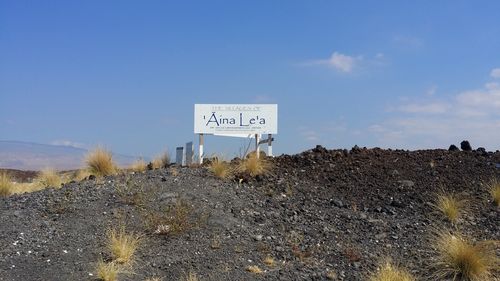
As we noted here (“Latest On The Latest Hawaii Takings Case: Unconstitutional Conditions, Statutes Of Limitations, And Vested Rights“) the U.S. District Court for the District of Hawaii is considering a regulatory takings case (removed by the defendant State of Hawaii from Hawaii courts) involving a stalled development on the Big Island.

At the hearing last month, District Judge Mollway stated she was inclined to grant a part of the State’s motion for summary judgment and deny the rest, and that she would issue a formal ruling by the end of the month. In this order, filed on the last day of an extended February, the court as promised issued its decision. 

Bottom line: the plaintiff’s takings claims (Lucas and Penn Central) are going to trial, the balance of the remaining claims (vested rights, etc.) are gone.

This case came about after a property owner

Continue Reading Hawaii Federal Court: Get Ready For Trial On Lucas And Penn Central Takings Claims

Let’s say that you didn’t know much about regulatory takings, or municipal employment and Fair Labor Standards law (in our case, the latter would most certainly be correct). And let’s say you were asked to predict how the plaintiff would fare with a claim that the city’s regulatory regime for taxicabs was so oppressive that it resulted in taxi drivers effectively working for less than minimum wage, and thus the city must make up the difference, on either of two theories: (1) the regulatory scheme is a taking, or (2) taxi drivers are city employees and the city must pay the difference between minimum wage and the amounts actually earned.Any guesses whether she succeeds?

We don’t think it would be too hard to predict that the plaintiff got nowhere, on either theory.

In Callahan v. City of Chicago, No. 15-1318 (Feb. 17, 2016), the U.S. Court of Appeals for the

Continue Reading 7th Circuit: Bring Your Regulatory Takings Claims In Federal Court (At Least Those That Come Out Of Illinois)

Kirbyncsctarguments2-2016

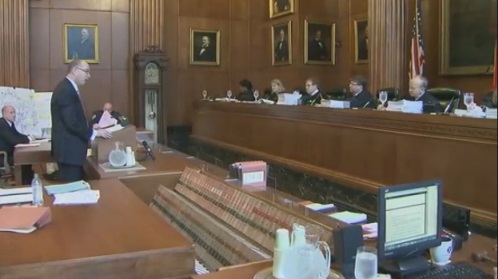
All of the drama playing out in the North Carolina Supreme Court yesterday as the court heard oral arguments in its review of Kirby v North Carolina Dep’t of Transportation, No. COA14-184 (Feb. 17, 2015) came down — as they often do in these things — to a single question from the bench, and an advocate’s response. At about the 8:40 mark on the the video, this colloquy took place:

Q [Justice Newby]: How would you characterize the benefit, or the purpose of the Map Act. Isn’t it to set in place the value of the property … by restricting improvements or subdivision to keep the ultimate cost of the project at a particular level?

A [NCDOT counsel]: Well that is certainly one aspect or element of the rationale behind the Map Act. The public purpose and benefit can be broadly described as coordinating future road projects with current

Continue Reading NC Supreme Court Hears Arguments In Important Takings Case

Hawaii has recently become the second jurisdiction to create an Environmental Court, a topic which we’re written about earlier (“What You Need To Know About Hawaii’s New Environmental Court“). We’ve asked whether Hawaii also might need a Property Rights Court, too.

Well, it looks like the good people of Guahan (“Guam” in the old parlance) may beat Hawaii to the punch, because according to this story, the Legislature is considering creating a special court to handle “inverse condemnation cases as well as real property boundary disputes and land registration proceedings.” SeeLandowner compensation bill again up for debate.”

The bill would streamline the settlement process of what’s known as “inverse condemnation” – when the government takes land but does not compensate the owner. According to the bill, agencies that took private property would be required to pay for any costs associated with proving

Continue Reading Time For A “Property Court?” Guahan (aka Guam) May Be Getting One

Those of us who represent private parties in litigation know that when we appeal and we want to suspend enforcement of the judgment, we can do so if we post a supersedeas bond (aka appeal bond). In other words, if we put our money where our mouths are. We also know that some parties — generally governments — are often exempt by statute from this requirement, and can appeal without having to post a bond.

But here’s a case where that exemption may have come back to bite a city which exercised it.

Holmquist v. King County, No. 733354 (Feb. 8, 2016) started off as a quiet title action for property which became private after the County vacated a Seattle-area street back in the 1930’s. A dispute arose about ownership, and the private owners sued the County. The City of Seattle thought it owned the property — it also

Continue Reading City’s Treating Private Property Like City Property During City’s Appeal Is A Taking

Here’s what we’re reading today:


Continue Reading Tuesday Round-Up: Inversely Condemning Flint, “Well Nigh Conclusive?,” Parcel-As-A-Whole

20160114_125445

Here’s the latest on a takings case that is winding its way through the U.S. District Court in Honolulu. Yes, you read that right: a takings case being litigated in federal court.

Intrigued? Read on. 

We’ve covered this case and the related state court litigation several times here before, so this isn’t entirely unfamiliar ground. This is a case in which a property owner (the developer of the Aina Lea project on the Big Island, just north of the Waikoloa beach area) filed a case in Hawaii state court seeking, among other things, just compensation for the temporary taking of its right to develop its property. The case ended up in federal court because the State of Hawaii Land Use Commission waived the State’s 11th Amendment immunity and removed the case from state court under federal question jurisdiction. 

The litigation began as two lawsuits originating in state court in the

Continue Reading Latest On The Latest Hawaii Takings Case: Unconstitutional Conditions, Statutes Of Limitations, And Vested Rights

We’ve posted a lot lately reporting on the 2016 ALI-CLE Eminent Domain and Land Valuation Litigation Conference, recently held in Austin. We have a couple of more posts for you before we turn to other things. Here is the first, a run-down of the blogs of faculty members, and others we were in the audience. If your blog is missing from this list, email me the link and I will update the post to include it.


Continue Reading The Blog Lineup From The 2016 ALI-CLE Eminent Domain Conference