20160129_091552

The second day of the 2016 ALI-CLE Eminent Domain and Land Valuation conference went as well as the first. Here are some highlights:

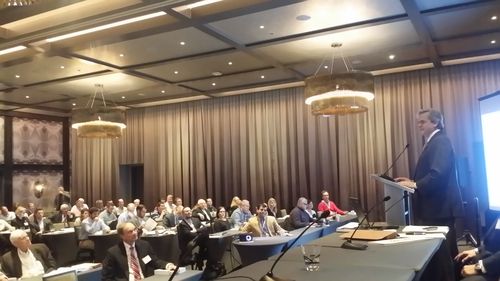
  • Austin Mayor Steve Adler (pictured above), who is (was?) also an eminent domain lawyer, welcomed us to his city. 
  • We moderated a discussion between Andy Gowder and Dana Berliner about “First Amendment for Fifth Amendment Lawyers: Free Speech, Signs, Defamation, FOIA, and RLUIPA Claims,” how takings lawyers deal with these issues when they crop up in their cases. 
  • One update from that session: at nearly the same time that we were talking about Central Radio, the case about the Norfolk, Virginia “anti-eminent domain” sign, the Fourth Circuit issued its opinion on remand from the U.S. Supreme Court. We’ll have more in a full post soon, but here’s the bottom line for now: no, the City can’t ban the sign (“we hold that the sign


Continue Reading 2016 ALI-CLE Eminent Domain Conference, Austin: Second Day
20160128_091958

20160128_092004

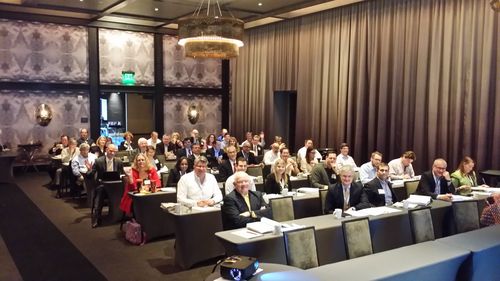
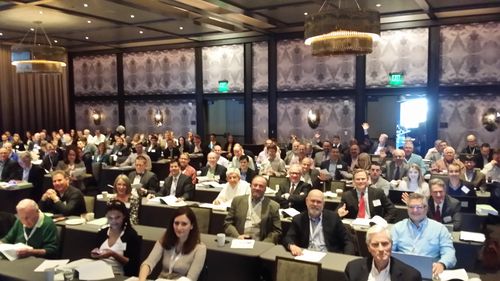
Here’s what’s going on today, the first day of the 33d annual ALI-CLE Eminent Domain and Land Valuation conference in Austin, Texas. We’re at standing room only, with a record number of attendees and our usual nationally renown faculty.

We started off the day with our usual “Eminent Domain Update” session with Amy Brigham Boulris, and as mentioned, the links to the opinions which we discussed are going to be posted in a separate post today. 

We are being followed by a panel on pipeline takings, one of the hot issues nationwide, with Joe Waldo, Matthew Ray, MAI, Thomas Peebles, and Dave Domina.

That session was followed by Professor Ilya Somin, talking about his book, “The Grasping Hand: Kelo v. City of New London and the Limits of Eminent Domain.”  

Above are our annual “proof of life” photos taken from the lectern, to show

Continue Reading ALI-CLE 2016 Eminent Domain Conference, First Day: Standing Room Only, National Expertise

20160126_164326

Austin, Texas, is where we’re at for the next few days, for the 2016 edition of the American Law Institute-CLE Eminent Domain and Land Valuation conference, now in its 33d year. First time we’re in Austin, however, and our registration numbers are looking very good, and we haven’t had this big a turnout in years.

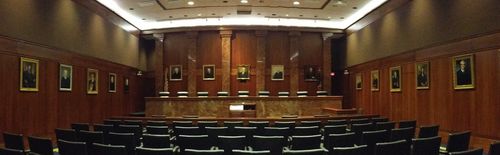
We haven’t been back to Austin in a few years ourselves, so we did what law nerds sometimes do when we go to new towns: visit the local courtroom to check out the scene. So we dropped by the Supreme Court of Texas to take a look. Turns out it was an off-day for the court and it was not in session and the courtroom was locked. But Security suggested that if we asked the Clerk nicely, she might retrieve the key and let us take a look around. And you know what? She did.

Continue Reading ALI-CLE 2016 Eminent Domain Conference: Austin Scouting Report

We know inverse condemnation liability can be triggered by intentional government action. But what about when government doesn’t act?

That was the issue before the Court of Appeals of Maryland in Litz v. Maryland Dep’t of the Environment, No. 23 (Jan. 22, 2016). And when the opinion starts this way, you just know where this is going to end up:

“The nine most terrifying words in the English language are, ‘I’m from the government and I’m here to help.’”

-Ronald Reagan, 40th President of the United States, News Conference (12 August 1986).

Petitioner, Gail B. Litz, might have welcomed hearing those nine words spoken to her, but, according to her Third Amended Complaint, they were not forthcoming.

Slip op. at 1.

The case involved “human sewage” flooding onto Ms. Litz’s once-popular campground from nearby septic fields, which, quite naturally resulted in a dearth of people who wanted to camp

Continue Reading “We’re Here From The Government, And We’re Here To … Do Nothing” – Gov’t Inaction Gives Rise To Inverse Condemnation

Here’s the amici brief filed last week by the Cato Institute and the National Association of Reversionary Property Owners in Resource Investments, Inc. v. United States, No. 16-802. That’s the case in which the property owner is claiming that the delay in issuing Clean Water Act permits was so extraordinary, it was a temporary taking. Ultimately, the Federal Circuit upheld the dismissal of a takings claim by the Court of Federal Claims for lack of jurisdiction under of 28 U.S.C. § 1500.  

We also filed an amicus brief in the case (posted here). 

Here’s a summary of the Cato/NARPO brief:

In United States v. Tohono O’odham Nation, 131 S. Ct. 1723 (2011), this Court considered 28 U.S.C. 1500, a Civil War-era statute intended to relieve the United States from responding to duplicative litigation in multiple courts. The Tohono majority found that Section 1500

Continue Reading Amicus Brief: Congress Cannot Bar Property Owners From Vindicating Right To Just Compensation

A longer one from the California Court of Appeal, but unfortunately, we don’t have the time to digest it in detail. But you really should read Pacific Shores Property Onwers Ass’n v. Dep’t of Fish and Wildlife, No. C070301 (Jan. 20, 2016), in which the court upheld a ruling that the Department of Fish and Wildlife inversely condemned the plaintiffs’ property by a physical taking, when it allowed their land to be flooded.

The interesting part of this decision is the Department’s purpose in allowing the flooding, environmental protection. Local government had historically provided some flood protection to these properties by “breaching” a sandbar when the water reached a certain level. When the Department took over that function, it decreased the level of protection, and although it required the water to reach a higher level before breaching, it didn’t eliminate it completely. The Department argued that it could not

Continue Reading Cal App: Intentionally Flooding Land To Protect The Environment Is A Physical Taking

Here’s the amicus brief we filed today in support of the Petitioner/property owner in Resource Investments, Inc. v. United States, No. 16-802. That’s the case in which the property owner is claiming that the delay in issuing Clean Water Act permits was so extraordinary, it was a temporary taking. Ultimately, the Federal Circuit upheld the dismissal of a takings claim by the Court of Federal Claims for lack of jurisdiction under of 28 U.S.C. § 1500.  

That statute, as federal takings mavens know (and as the Supreme Court recently held in United States v. Tohono O’odham Nation, 131 S. Ct. 1723 (2011)), deprives the CFC of subject matter jurisdiction if there’s a claim based on the same operative facts “pending in any other court any suit or process.” In this takings case, the property owner filed its CFC complaint — which alleged that the


Continue Reading Amicus Brief: Applying Civil War-Era Statute To Toss Federal CFC Takings Claims “Gives Credence To The Belief That ‘The Law Is An Ass.’”

When we first read the caption in Metropolitan St. Louis Sewer Dist. v. City of Bellefontaine Neighbors, No. SC94831 (Jan. 12, 2016), we admit to a bit of confusion because this is an inverse condemnation case, and it appeared that a public entity was suing one of those activist groups, “The Bellefontaine Neighbors.”

A public entity bringing an inverse claim against some citizens? We’re intrigued.

But then we read the caption more carefully and noticed the “City of” part, which caused us to do what we usually do these days when curiosity strikes: we googled it. And we learned something new: there is a City of Bellefontaine Neighbors in Missouri. In addition to having a very friendly name and an imposing motto (“Strong Traditions … Strong Moral Values”), it also has the distinction of having, “[a]t 22 letters, … the longest name of any incorporated place in the United States.”

Continue Reading City With Really Long Name Didn’t Take Private Property When It Damaged Publicly-Owned Pipes

Appellate decisions reversing a grant of summary judgment because there are disputed factual questions are not 100% satisfying. Yes, if you are the plaintiff/appellant, you live to fight another day instead of facing the exit door. But you haven’t won yet either, and the hard part — proving that you should win, and not merely that you shouldn’t lose — is still to come.   

But that’s not the reason why we don’t quite get the Washington Court of Appeals’ opinion in a takings case, TT Properties, LLC v. City of Tacoma, No. 46803-4-II (Jan. 12, 2016). It reversed in part a grant of summary judgment to the city, so we can’t dislike the ruling. Yet at the same time, we can’t understand why the court reached this result.

A project by the regional transit authority on a city-owned right-of-way ended up impacting two separate parcels owned by TT.

Continue Reading In A Takings Case, Jury Decides Whether There’s Been A Substantial Impairment Of Access

ALI-CLE-2016-masthead

We’re now only a bit more than two weeks away from the 2016 Eminent Domain and Land Valuation LitigationCondemnation 101 Conference, which runs from January 28-30, 2016, in Austin, Texas. 

As we’ve noted here earlier, we think that this is going to be a fantastic conference that will cover a lot of ground, and the hot topics of the day. Here’s the full agenda for the program. If you are not familiar with the conference or have not attended recently, we’ve undergone some formatting changes lately, but are still bringing the best faculty and topics to bear. Here’s a summary of last year’s San Francisco conference, to give you an idea of how we’ve updated the programs, while keeping the best elements and traditions unchanged.  

This is the first time the conference has been held in Austin, and thus far, the registration figures are doing exceedingly

Continue Reading ALI-CLE Eminent Domain Conference, Austin, TX – Nearly Here, But There’s Still Time To Register