2012-02-06_11-19-51_574

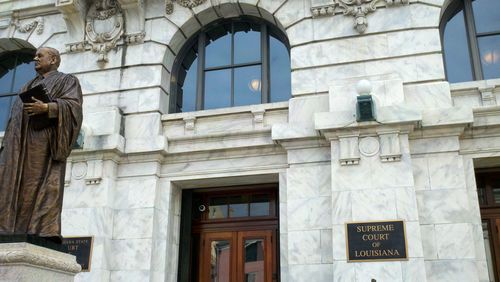
A private pipeline did what pipelines often do: it started negotiating with property owners for the property needed, but at the same time pressed forward. It reached agreement with some owners, others not. It filed “expropriation” lawsuits (for it is in Louisiana that our scene lies). It started to build, even before judgments of expropriation.

Aaslestad, owner of 38.00 acres (more or less) sued the pipeline to enjoin further construction. He also asserted in the expropriation case a counterclaim for due process and trespass (again, this is Louisiana, so they call that a “reconventional demand). Trial followed.

The trial court issued a judgment of expropriation and concluded the takings were for a public purpose. But it also upheld the property owner’s trespass counterclaim. The owner’s interest was pretty minor, so the total award was a whopping $150. Seventy five bucks for the expropriation and the same amount for the trespass.
Continue Reading Louisiana SCT: No Statutory Attorneys’ Fees For Pipeline Taking – But LA Constitution’s Just Comp Clause Requires Owners Recover “The Full Extent” Of Their Loss (Which Includes Fees)

Titles

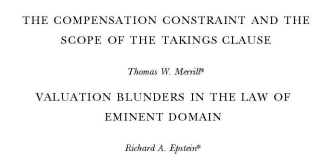
Two very interesting law review articles (essays) by well-known property experts are now available in the Notre Dame Law Review:

  • Thomas Merrill, The Compensation Constraint and the Scope of the Takings Clause, 96 Notre Dame L. Rev. 1421 (2021). Professor Merrill asks “whether the established methods for determining just compensation can shed light on the meaning of other issues that arise in litigation under the Takings Clause.” This idea is worth exploring in much greater detail, and amplifies a thought we’ve long had: instead of trying to forge new ground when trying to figure out whether a government action results in a taking, might it not be simpler and more consistent to look at an established body of law that truly informs the subject, valuation and just compensation? For example, see our thoughts on Murr v. Wisconsin, in which we suggested that instead of a new federal


Continue Reading Your Friday (And Weekend) Reading: Merrill On Compensation; Epstein On Valuation

Like a lot of jurisdictions, Kentucky allows (or requires upon demand) the jury to view property being taken by eminent domain. In Kentucky, it’s a matter of statute, which requires the court to allow a jury view upon the demand of any party, unless “unusual or extreme circumstances” are present.

In Comm’w of Kentucky v. PTL Warehousing, LLC, No. 2019-CA-388-MR (Apr. 2, 2021), the trial court did not approve of the condemnor’s request that the jury view the site and the warehouse taken. The court concluded that a view would not be helpful to the jurors because “the jurors had likely eaten at an Arby’s which was located across the street from the subject property.” Slip op. at 3. The court asked the jurors whether they indeed had eaten at Arby’s. The court concluded they were already familiar enough with the property (the condemned property, not the Arby’s).

Trial

Continue Reading Google Maps And Arby’s Visit Aren’t Enough To Overcome Jury View

Here’s the Wisconsin Supreme Court’s 4-3 opinion in a case we’ve been following, Christus Lutheran Church of Appleton v. Wis. Dep’t of Trans., No. 2018AP 1114 (Apr. 1, 2021). Even though it was close, after oral arguments, we were hoping for a more positive result.

This is the case in which the Court of Appeals concluded that DOT’s jurisdictional offer was not based on the “full narrative appraisal” required by the statute. The offer was for $403k, but the appraisal on which it was based valued the compensation at $133k.

Wait, you ask, how so? True, the DOT offer was more than its appraisal, but it didn’t back up the increase with any appraisal other than its $133k appraisal. The increase was the result of DOT’s internal administrative review. Read that again: no appraisal supported the $403k offer.

Follow along: DOT’s appraiser opined that the owner incurred

Continue Reading Wisconsin Shrugs: Appraisal Omitting Severance Damages Qualifies As “Full Narrative Appraisal” Because DOT’s Valuation Later Went Up

Pop quiz: in eminent domain valuation proceedings, may an owner who is not qualified as an expert witness testify about the value of her or his own property?

If you said “yes,” most courts would agree with you, either as percipient witness testimony or as lay expert testimony. As would the U.S. Court of Appeals for the Fourth Circuit in most circumstances. As the court noted, “federal courts routinely permit landowners to testify as to the value of their real property in eminent domain cases.”

But as shown in the court’s (unpublished) per curiam opinion in Mountain Valley Pipeline, LLC v. 0.47 Acres of Land, No. 20-1306 (Mar. 23, 2021), there are limitations.

There, the owner opposed the pipeline condemnor’s motion for summary judgment on valuation by submitting his counter-declaration in which he testified about the value of his own property. Did that create a triable issue of

Continue Reading CA4 (unpub): Owner Can Testify About Valuation Of Own Property, Unless He Also Testifies About Other Stuff

Hold on. What is a criminal appeal, Comm’w of Pennsylvania v. Solomon, No. 1407 MDA 2018 (Mar. 16, 2021) doing on inversecondemnation.com?

The case involved a theft of collectible coins. The defendant was sentenced (inter alia) to pay restitution to the victim. The issue: how to value those coins.

After starting off with the timeless legal maxim “[a] penny saved is a penny earned,” slip op. at 1, the majority concluded that the coins’ value would not be calculated by their market value at the time of the crime, but by the victim’s acquisition cost. The victim testified that it took him eight years to acquire the coins and over the years between acquisition and Solomon’s theft, some of the coins increased in value while others declined. Original cost (from the victim’s receipts): $86k. Current value (derived from looking for comps on Ebay): $58k. Trial judge:

Continue Reading “A theft of property and an eminent domain proceeding both involve the involuntary transfer of property on a particular day.”

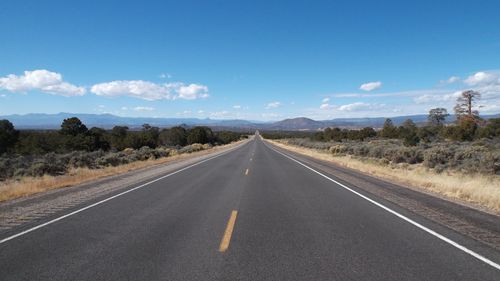
DSCF1327

When we think “New Mexico,” we imagine scenes like this. Endless sky, seemingly infinite open roads, high desert … you know, “the West.”

But after reading the New Mexico Supreme Court’s opinion in City of Albuquerque v. SMP Properties, LLC, No. S-1-SC-37343 (Feb. 25, 2021), we’re going to think “inverse condemnation.” (Yeah, that may be sad, but come on, remember the title of this blog!)

The case: the city did a partial taking of SMP’s property for a road project. Just a thirty foot wide strip of SMP’s nearly 10 acres. But prior to the taking, the city told one of SMP’s tenants, “hey, we’re going to be taking this strip and doing a road project.” As a result, SMP’s inverse condemnation claim alleged, the tenant decided to not renew its lease. See slip op. at 11 (“SMP alleges that its claim for inverse condemnation arose prior to the

Continue Reading Enchanted: Inverse Condemnation For Damaging Is A Fact Thing – City Could Be Liable For Chasing Away Tenant

Goofus-gallant

Yes, it starts tomorrow, Thursday, January 28, 2021, but we’re “remote” this year, so it is not too late to register to join us for the 38th Annual ALI-CLE Eminent Domain & Land Valuation Litigation Conference. This is the “big one” where the nation’s best practitioners, scholars, jurists, and other industry professionals gather to talk shop about the subjects we know and love.

Details here (ALI-CLE’s page with faculty, agenda, and times), or here (a recent episode of Clint Schumacher’s Eminent Domain Podcast, where we preview the Conference). Here’s your chance to be a part of what is the best conference on these topics.

We have set it up to take advantage of the remote format, and tuition has been reduced (thank you to ALI-CLE for recognizing this, and for our sponsors for being so generous). We’re seeing a lot of first-time registrations, and this is a great opportunity

Continue Reading Still Time To Join Us: ALI-CLE Eminent Domain & Land Valuation Litigation Conference (Online!) This Thursday & Friday. Tuition Deals! #EminentDomain2021

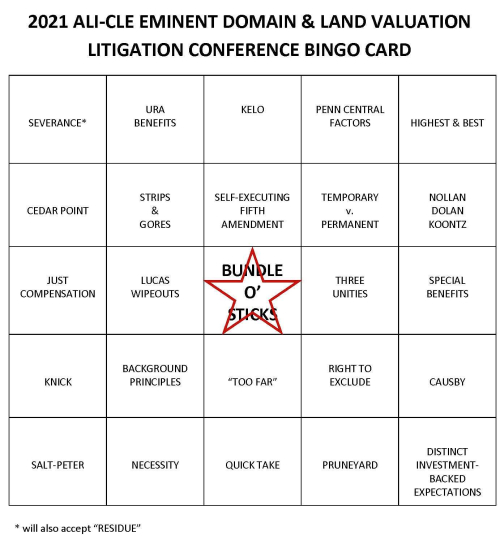
ALI-CLE 2021 Bingo card

If you “get” this, you should be registered for the 38th Annual Eminent Domain & Land Valuation Litigation Conference, to be held remotely on Thursday and Friday, January 28-29, 2021.

The list is growing rapidly, and you need to join us!

This is the “big one” where the nation’s best practitioners, scholars, jurists, and other industry professionals gather to talk shop about the subjects we know and love. We’re having programs with intriguing subjects such as “Planning to Win: Practical Strategies for a Successful Inverse Condemnation Case,” “How Do I Keep My Firm’s Doors Open When the Courthouse Doors Are Closed? Making Your Practice More Efficient When You Can’t Try Cases,” “Where Is the Supreme Court Headed on Takings Cases? Regulatory Takings Update and Cedar Point Preview,” “No Show and All Tell: Breaking News in Property Rights and Takings,” “More Than the Fifth Amendment: Other Tools for Upholding

Continue Reading Your 2021 ALI-CLE Eminent Domain & Land Valuation Litigation Conference (Jan 28-29, Remote) BINGO Card

1o 11 ALI-CLE

Are you a law student interested in takings, eminent domain, land use, environmental, and other dirt-lawyering related topics? If so, good news: thanks to the generosity of ALI-CLE, you can register gratis (free!) for the upcoming 38th Annual Eminent Domain & Land Valuation Litigation Conference, to be held remotely on Thursday and Friday, January 28-29, 2021.

This is the “big one” where the nation’s best practitioners, scholars, jurists, and other industry professionals gather to talk shop about the subjects we know and love. We’re having programs with intriguing subjects such as “Planning to Win: Practical Strategies for a Successful Inverse Condemnation Case,” “How Do I Keep My Firm’s Doors Open When the Courthouse Doors Are Closed? Making Your Practice More Efficient When You Can’t Try Cases,” “Where Is the Supreme Court Headed on Takings Cases? Regulatory Takings Update and Cedar Point Preview,” “No Show and All Tell:

Continue Reading Law Students: Register Free For The 38th Annual ALI-CLE Eminent Domain & Land Valuation Litigation Conference (Jan 28-29, 2021)