


Westerville

In City of Westerville v. Taylor, No. 13AP-806 (Aug. 12, 2014), the Ohio Court of Appeals concluded that it didn’t matter what professed “plans” the city had the property it took from Taylor, only that the city had taken fee simple absolute title.  

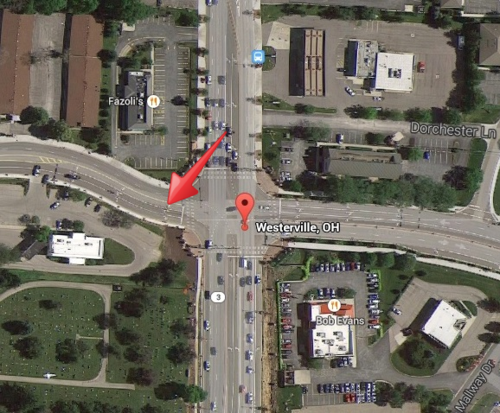
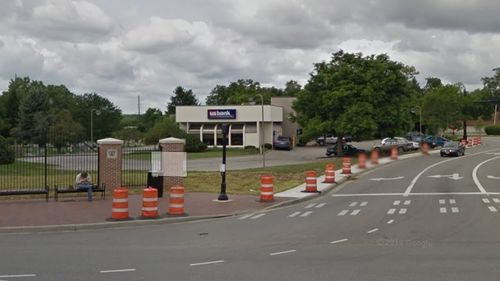
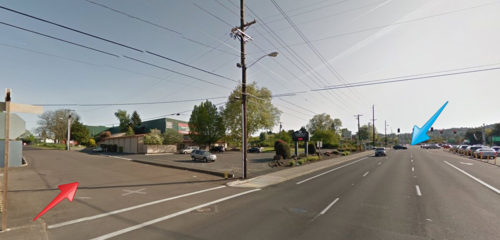
As part of a highway project, the city condemned a portion of the land shown above (red arrow), and here:
Southstatestreet

“In this case, the City appropriated two fee simple parcels from Taylor.” Slip op. at 2. Before the taking, Taylor’s property had two driveways. On appeal, the city argued that this didn’t change, because after the taking, “Taylor still had a right of access.” Id. at 4. 

The City argues that because the resolution appropriating the property in fee simple did not specify that it was taking all rights, title and interest in the property, Taylor retained his right of access to and from the property. The
Continue Reading Ohio App: You Took It, You Bought It – Taking Of “Fee Simple” Means Taking Of All Rights, Regardless Of Intent

St. Charles Land Co. II, LLC v. City of New Orleans, No. 14-CA-101 (Dec. 23, 2014), involved the amount of compensation in an inverse case over 8.08 acres of New Orleans land used for the extension of an airport runway. The trial court determined just compensation at $30,740.

Here’s the heart of the opinion:

Upon review of the record in its entirety, we find the trial court committed manifest error in valuing the property at issue as unimproved wetlands and canal bottom outside the levee protection system, or “wet.” The first step in valuing appropriated land is to determine the highest and best use of the property. As discussed above, the current use of the property is presumed to be the highest and best use. However, the landowner may overcome this presumption by proving a different highest and best use based on a potential future use. See Exxon Pipeline

Continue Reading La App: Wetlands Should Have Been Valued As “High And Dry”

Most of you already know that under the Fifth Amendment’s Takings Clause, the fees expended by a property owner to recover just compensation are not recoverable as part of just compensation. That has never made much sense to us, for how does a condemnor fulfill its obligation to put the property owner in as good a position pecuniarily as if her property had not been taken, if the property owner must bear the cost of obtaining just compensation when the condemnor has not offered it? As a practical matter, this alone keeps many property owners from challenging a condemnor’s offer, which results in systematic undercompensation. Some states have deemed fee shifting a requirement of their state constitutions, while others have adopted statutes that allow fee-shifting (but those are matters of legislative grace). 

South Carolina is an example of the latter, and has a statute (scroll all the way to the bottom

Continue Reading Eminent Domain, Contingency Fees, And Fee-Shifting Statutes: A “Constellation Of Factors”

Here’s the Virginia Department of Transportation’s answering brief in the case which we posted about last week, Ramsey v. Commissioner of Highways, now pending before the Virginia Supreme Court. 

Under Virginia’s condemnation procedures, as a prerequisite to a court exercising jurisdiction over an eminent domain action, a state condemning agency must as an initial step present to the property owner a statement of “the amount which [the condemnor] believes to be just compensation,” and must include an appraisal if an appraisal is required.

The trial court viewed the required “statement” as a “settlement offer,” and prohibited the property owner from both telling the jury about the statement, and cross-examining the state’s appraiser about it. Even though the state’s initial statement of just compensation was $246,292, and later, its new appraiser at trial testified that just compensation was only $92,127. The “Savage Appraisal” in the headline of this post

Continue Reading A “Savage Appraisal” Indeed: DOT Argues That Its Statement Of Valuation Is A Confidential Settlement Offer

The first time the government tried to take the property, it screwed up: the ordinance authorizing the taking failed to state that the property was necessary, and failed to adequately describe the property to be taken. The trial court dismissed the case.

As we all know, in most cases that means the government just reboots and tries again. Which it did. It adopted another ordinance in which it attempted to cure the problems that led to the first dismissal. When negotations between the agency and the property owner could not be concluded successfully, the agency filed a second condemnation action.

The owner asserted res judicata, arguing that the two eminent domain actions were the same, and thus the agency could not get a second bite of the apple. 

In Rock River Reclamation District v. Sanctuary Condominiums of Rock Cut, No. 2-13-0813 (Dec. 11, 2014), the Illinois Court of Appeals

Continue Reading Ill App: First Condemnation Was Not Res Judicata To Second

Under Virginia’s condemnation procedures, as a prerequisite to a court exercising jurisdiction over an eminent domain action, a state condemning agency must as an initial step present to the property owner a statement of “the amount which [the condemnor] believes to be just compensation,” and must include an appraisal if an appraisal is required:

The state agency concerned shall provide the owner of real property to be acquired with a written statement of, and summary of the basis for, the amount it established as just compensation, and, if an appraisal is required or obtained, such written statement and summary shall include a complete copy of all appraisals of the real property to be acquired that the state agency obtained prior to making an offer to acquire or initiating negotiations for the real property.

Virginia Code § 25.1-204(E)(1)

In a case we posted about briefly here, a Virginia trial

Continue Reading Amicus Brief: Eminent Domain Jury Can’t Be Kept In The Dark About The Condemnor’s Initial Valuation

Here’s the Opening Brief on the Merits, filed by the State of California in Property Reserve, Inc. v. California, No. s217738 (Sep. 26, 2014).

That’s the case in which the California Supreme Court is reviewing a court of appeal decision which invalidated California’s entry statute (Cal. Civ. Pro. Code § 1245.010 et seq.), concluding it was unconstitutional because it allowed an uncompensated taking. We summarized the court of appeal opinion here.

The property owner’s answering brief is due to be filed shortly, and amici briefs will be filed thereafter. Disclosure: we are authoring an amici brief in the case in support of the property owner. 

Opening Brief on the Merits, Property Reserve, Inc. v. California, No. S217738 (Sep. 26, 2014)

Continue Reading Opening Brief In Property Reserve: Eminent Domain Is Such A Bother

For those of you who couldn’t join us at the William & Mary Law School last month for the Brigham-Kanner Property Rights Conference (see our report here), the law school has made videos of the four panel presentations available here

They’re high quality videos, so be prepared for big downloads, but the presentations are worth it. While they are all good, our favorite was the impromptu discussion/debate during the third panel, “Balancing Private Property and Community Rights,” featuring panelists Kames Burling (Pacific Legal Foundation), Professors Richard Epstein (NYU), Steven Eagle (Geo. Mason), Mark Poirer (Seton Hall), and James Stern (William & Mary). 

Continue Reading Brigham-Kanner Property Rights Conference – Panel Videos Now Available

Alderwoods

In reading State of Oregon v. Alderwoods (Oregon), Inc., No. A146317 (Sep. 17, 2014), we learned two things we didn’t know before: that the Oregon Court of Appeals can sit “en banc,” and also that it can affirm by an equally-divided court. Eight judges considered the case, and since the split was 4-4, the court affirmed per curiam, with several of the judges filing separate opinions.

As we detailed in our earlier post on the case,

fjfjfkdjd

The court of appeals’ opinions

fjfkriridk

Alderwoods2

tttrtrtr

Petition to the Review the Decision of the Court of Appeals, State of Oregon Dep’t of Transportation v…

State of Oregon v. Alderwoods (Oregon), Inc., No. A146317 (Or. App. Sep. 17, 2014) (en banc) 

Continue Reading Oregon Supreme Court Asked To Rule Whether Highway Access Is Property Right

To all who were able to join today’s ABA Section of Real Property, Trust and Estate’s Condemnation, Zoning and Land Use Committee’s call on the AIG takings trial, currently pending in the U.S. Court of Federal Claims, thank you for participating. I’ve posted the entire talk (minus questions) above.

Here are the links to the stories, analysis, and materials I mentioned: 

  • The original complaint, first filed in the CFC in November 2011. 
  • Second Amended Complaint in the CFC case, along with Mr. Boies’ quote that this will be “an easy case to litigate.” We described the case as “audacious,” if only because it seeks $25 billion in just compensation. 
  • Professor Gideon Kanner’s (who has been following this case more closely than we have) first thoughts on the complaint. 
  • The CFC’s Opinion and Order granting in part and denying in part the United States’ motion to dismiss.  


Continue Reading Links From Today’s ABA Talk On The AIG Bailout Takings Case