Remember that recent First Circuit case which held that just compensation judgements cannot be subject to a governmental bankruptcy plan (cert denied, by the way)? There, the court concluded that “[t]he Fifth Amendment provides that if the government takes private property, it must pay just compensation. Because the prior [bankruptcy] plan proposed by the Board [the bankruptcy trustee] rejected any obligation by the Commonwealth [of Puerto Rico] to pay just compensation, the Title III [bankruptcy] court properly found that the debtor was prohibited by law from carrying out the plan as proposed.”

Well, here’s the other shoe dropping. In In re Financial Oversight & Management Board for Puerto Rico v. Cooperativa de Ahorro y Credito Abraham Rosa (Suiza Dairy Corp.), No. 22-109 (Aug. 22, 2023), the same court held that a just compensation judgment may not be subject to reduction or discharge in a subsequent bankruptcy, but
Continue Reading CA1: Settling A Just Compensation Claim Trades Your Property Rights For Contract Rights – Which, Unlike Just Compensation Claims, Can Be Wiped Out In Bankruptcy

Here’s our colleague and friend, Pepperdine lawprof Shelley Saxer, an expert on inverse condemnation and its use in mass disaster cases, on the use of inverse condemnation as a theory of recovery for the Maui disaster. Here’s the description from Bloomberg Law Podcast:

“Shelley Ross Saxer, a law professor at Pepperdine University, discusses the Lahaina fire victims using a legal shortcut to secure compensation from Hawaiian Electric. June Grasso hosts.”

Worth a listen.Continue Reading Lawprof Shelley Ross Saxer Joins Bloomberg Law Podcast On Maui Wildfires And Inverse Condemnation

Untitled Extract Pages

Two years ago, Owners’ Counsel of America endowed a scholarship in the name of its founder, property rights advocate and trial lawyer Toby Prince Brigham (1934-2021). The scholarship is for a second- or third- year law student to attend the annual three-day ALI-CLE Eminent Domain and Land Valuation Litigation Conference (the upcoming Conference will be in New Orleans, Louisiana, February 1-3, 2024).

The Conference affords the Scholar an all-expenses-covered opportunity to meet and network with leading property rights and eminent domain lawyers from across the country, while also learning about property law and practice. 

Here’s the official description from OCA:  

In honor of Toby’s legacy of professionalism and achievement, in 2021 OCA established the Toby Prince Brigham OCA Scholarship to pay for all expenses of a second or third year law student to attend the ALI-CLE Eminent Domain conference and associated OCA events held annually in January. This unique

Continue Reading Owners’ Counsel Toby Prince Brigham Scholarship – Applications Being Accepted

Every law school graduate surely remembers that 1L Contracts case about the two ships named “Peerless” and the doctrine of mutual mistake.

In Marchbanks v. Ice House Ventures, LLC, No. 2022-0047 (June 8, 2023), the Ohio Supreme Court rejected the DOT’s claim that a previously-agreed-upon agreement to settle an eminent domain action did not reflect a meeting of the minds, because it was the product of a mutual mistake.

Here’s the story. ODOT instituted an eminent domain case to take the property of Ice House Ventures for a freeway improvement project. A few days before the jury trial on valuation was to get underway, the parties settled. ODOT agreed to two things: (1) pay $900k compensation, and (2) transfer to IHV a separate small parcel of land owned by the City of Columbus, to be used by IHV for a 12-car parking lot. ODOT believed the city would be

Continue Reading “Peerless” Eminent Domain Settlement Agreements: No Mutual Mistake In “Damages” Term

Screenshot 2023-07-08 at 12-41-47 Property as Service Streams

New noteworthy dirt law scholarship, from U. Chicago’s Prof. Lee Anne Fennell, “Property as Service Streams.” Here’s the Abstract:

Property’s job is to help people derive benefits from resources. But often it cannot do this work well. A core problem is an outmoded model of benefit production that treats the individually owned parcel or “thing” as the relevant unit of analysis. In this paper, I argue for a conceptual shift from a property-as-thing-ownership (PATO) paradigm to a property-as-service-streams (PASS) model. I start with the simple point that resources are only valued for the streams of beneficial services that they can provide. Further, owned items can only stream services to their users when combined with other resources and entitlements, many of which are controlled by other parties. Keeping discrete owned assets at center stage misdirects energy towards allocating and protecting things, when we should be examining how to nurture

Continue Reading New Scholarship: “Property as Service Streams” (Prof. Lee Anne Fennell)

Here’s a short one from the Kansas Supreme Court. In Kansas Fire and Safety Equipment v. City of Topeka, No. 123,063 (June 30, 2023), the court concluded that the requirements of the Kansas Relocation Act do not give rise to a private right of action, and that relocation costs are not a component of just compensation. 

We’re not going to dwell on the decision too much, since it is limited to Kansas law. But here are your highlights:

  • “Kansas Fire and Safety Equipment, Hal G. Richardson d/b/a Bueno Foods Brand and Topeka Vinyl Top, and Minuteman Solar Film (the tenants), were forced to relocate when the City of Topeka (the City) bought the real property the tenants leased for their business operations. The tenants alleged that the property was acquired before a condemnation action. And they sued the City to recover relocation expenses in an action filed directly with


Continue Reading Kansas: No Private Enforcement Of State Relocation Act (And Relocation Isn’t Part Of Just Compensation)

Here’s the latest in a case we’ve been following.

In Ideker Farms, Inc. v. United States, No. 21-1949 (June 16, 2023), the U.S. Court of Appeals for the Federal Circuit held that temporary, but recurring government-caused flooding was correctly treated by the Court of Federal Claims as a categorical per se taking, and not under Arkansas Game & Fish‘s Penn-Central-plus multifactor test. The court also held that the property owners are entitled to just compensation for their lost crops.

The opinion is pretty dense (39 single-spaced pages) so we’re not going to provide a blow-by-blow account of the arguments and the court’s reasoning. But we will hit some of the highlights:

  • The Missouri River floods annually. In the 1990s, the Corps of Engineer and Fish and Wildlife Service “began discussions concerning proposed changes to the River designed to mitigate the environmental impact” of the federal flood


Continue Reading CAFED: Temporary But Recurring Flooding Is A Categorical Taking, Not Penn-Central-Plus

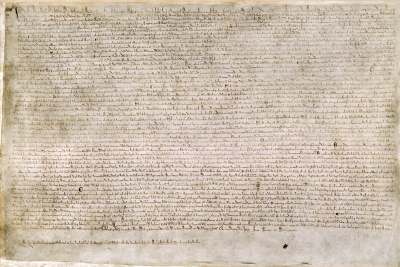
Magna_Carta_(British_Library_Cotton_MS_Augustus_II.106)

808 years ago today* on a grassy plain down by the river, the barons convinced bad King John to affix his seal to Magna Carta. Or the Magna Carta. Or Magna Charta. However you want to grammarize it. (And no, he didn’t “sign” it, they didn’t do things like that back then.)

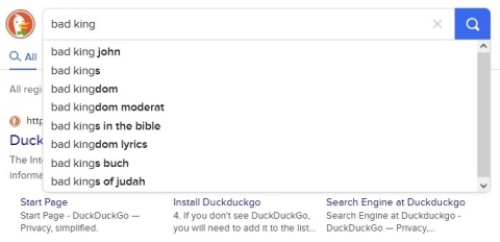
And boy was that guy bad even by the standards of medieval royals: when you type “bad king…” in your search engine, the first suggested search is “bad king … John.”

Badkingjohn

There’s a lot of good stuff in Magna Carta — and a lot of stuff that has been rendered irrelevant or quaint by the passage of time, and even some stuff that we’d consider cringe-worthy today (see art. 10, for example).

But we takings geeks all know and continue to appreciate article 28:

Nullus enarius aries, vel alius ballivus noster, capiat enar vel

Continue Reading Happy 808th (The) Magna Carta (Charta) Day!

A new cert petition to check out. We don’t need to explain it much, because the petition does a good job of it.

Here’s the Question Presented:

New York State redevelopment agency seized, via eminent domain, a large tract of real estate occupied by an existing building in downtown Brooklyn for redevelopment. The building, partially used for office space, included a useable basement of over 13,000 square feet, which had a government-issued certificate of occupancy. During eminent domain proceedings, the lower court ignored the certificate of occupancy’s determination of a usable basement as a valued property interest.

The question presented is:

1. Are government-issued attributes of private property (e.g., certificates of occupancy, building permits, business permits) entitled to constitutional protection under the Fifth Amendment when they are seized under the government’s eminent domain power, just as they are presently entitled to constitutional due process protection under the Fourteenth Amendment?

Follow

Continue Reading New Just Comp Cert Petition: Is Due Process Property Just Compensation Property?

Smiley

Check out this one from the Massachusetts Supreme Judicial Court, Smiley First, LLC v. Dep’t of Transportation, No. SJC-13300 (May 23, 2023). [But first, a disclosure: our law firm filed this amicus brief in support of the property owner.]

Now that that is out of the way, here’s the case.

Back in 1991, MassDOT’s predecessor-in-interest took an easement by eminent domain for the relocation of Conrail facilities displaced by the infamous Big Dig project. The 1991 takings order described the easement taken:

“In connection with the laying out of the State highway hereinbefore described, it is necessary to relocate portions of railroad rights of way and land is hereby acquired for said relocation as follows:

“Easements are hereby taken in parcels 60-E-RR-1, 60-E-RR-5, and 60-E-RR-6, shown on the plan hereinafter referred to, for the relocation of facilities of the Consolidated Rail Corporation, including all trees and structures located

Continue Reading Mass SJC: Big Dig Can’t Squeeze New Easement Into An Old One: Easements Taken By Eminent Domain Are Interpreted Like Every Other Easement