The bulk of the Indiana Court of Appeals’ opinion in Grdinich v. Plan Comm’n for the Town of Hebron, No. 18A-PL-1050 (Feb. 28, 2019) is devoted to details of land use law, specifically exhaustion of administrative remedies. If that floats your boat, we’ll let you read it. 

What caught our eye was at the very last part of the opinion (page 16), where the court concluded that the property owner did not adequately plead an inverse condemnation claim, when his complaint alleged “that real estate owned by him is encumbered by a 150-foot underground storm water drainage pipeline that is owned and controlled by Hebron for public use without payment for just compensation.” In other words, an uncompensated physical invasion taking. 

The court held this did not state a claim as a matter of law because the allegedly offending pipeline was already in place at the time the plaintiff purchased
Continue Reading Indiana App: No Inverse Claim Where Government’s Permanent Physical Invasion Of Property Happened Before Purchase

Mansfield flyer 3-13-2019

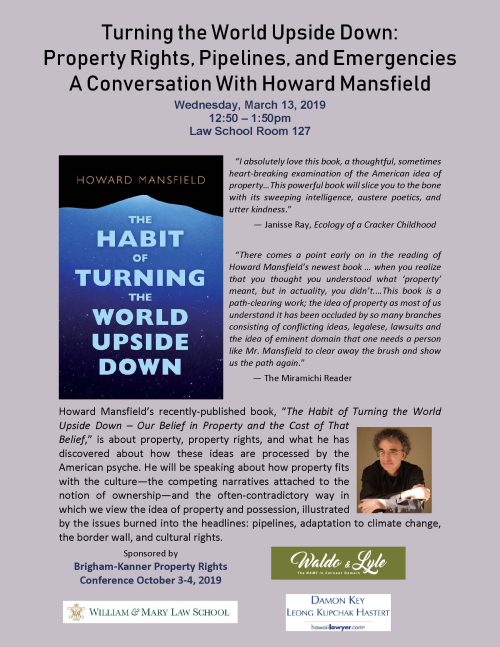
If you are in the Williamsburg, Virginia area next week Wednesday, March 13, 2019, please hold the lunch hour (12:50-1:50pm, Room L127) on your calendar to come join us for a session with Howard Mansfield, author of the recently-published book “The Habit of Turning the World Upside Down – Our Belief in Property and the Cost of That Belief.”

In November, we chatted with Mr. Mansfield, and this semester are basing a seminar on property rights at the William and Mary Law School on the book. Well worth reading. Here’s the printable flyer

His book is about property, property rights, and what he has discovered about how these ideas are processed by the American psyche. He will be speaking about how property fits with the culture—the competing narratives attached to the notion of ownership—and the often-contradictory way in which we view the idea of property and

Continue Reading Upcoming 3/13/2019 Book Talk: Turning the World Upside Down: Property Rights, Pipelines, and Emergencies – A Conversation With Howard Mansfield

IMG_20180720_151841

Rather than sum up the issue and the Massachusetts Appeals Court’s** conclusion in Smyth v. Conservation Comm’n of Falmouth, No. 17-P-1189 (Feb. 19, 2019), here’s the first part of the opinion:

GREEN, C.J. A land owner brought this action in the Superior Court, claiming that local land use regulation effected a taking of her property, requiring just compensation under the Fifth Amendment to the United States Constitution and art. 10 of the Massachusetts Declaration of Rights. This appeal presents a question of first impression in Massachusetts: whether the land owner is entitled to have her regulatory taking claim decided by a jury. We conclude that the jury right does not attach to such a claim, and that the judge erred in denying the defendants’ motion to submit only the question of damages to a jury. We further conclude that the evidence presented at the trial did not, as matter

Continue Reading Mass App: Regulatory Takings Claims Don’t Get A Jury Trial

17CA0595-PD

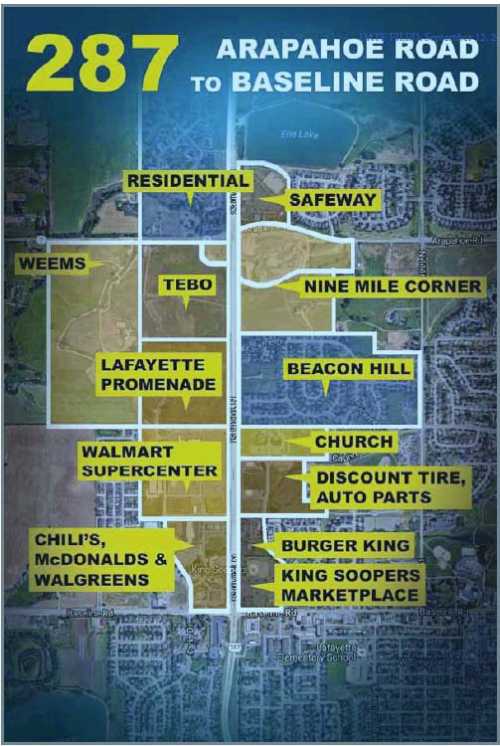
Here’s the latest in a case we’ve been following, involving what Colorado calls “bad faith” condemnations. 

In this order, the Colorado Supreme Court has declined to review the Court of Appeals’ conclusion that a taking ostensibly to preserve open space and a buffer zone between two municipalities, was an invalid exercise of the eminent domain power because the true reason for the taking was to prevent the condemnee-municipality from luring a big-box retailer, King Sooper, to its territory and away from the condemnor’s. 

So even though the case has ended with a whimper and not a bang, this does mean that the Court of Appeals’ hard look at the actual motives of the condemnor — and not merely its stated purpose — is the way to do things. The court examined the factual record, and not just the stated reasons for the taking, and tested whether the condemnor’s

Continue Reading Colorado Supreme Court Denies Cert In “Improper Motive” Condemnation

In the usual circumstance, we wouldn’t be terribly interested in an unpublished — and therefore not precedental — opinion. But the U.S. Court of Appeals’ opinion in Kerns v. Chesapeake Exploration, LLC, No. 18-3636 (Feb. 4, 2019) caught our attention because it involves “forced pooling,” which this site describes this way:

At its most basic, pooling is the joining together or combination of small tracts or portions of tracts to create sufficient acreage to receive a drilling permit under applicable state spacing rules and regulations, and for the purpose of sharing the production from the pooled unit among the pooled interest owners.

Often, pooling is done voluntarily. That is, interest owners agree to the benefits of the combined acreage. Most oil and gas leases contain provisions allowing the lessee to pool the acreage covered by the lease; sometimes this right is virtually unlimited.

At times, however, there are unleased

Continue Reading 6th Cir (unpub): “Forced Pooling” – Requiring Holdouts To Participate In Fracking – Isn’t A Taking

Those of you interested in the ongoing debate about vacation rentals (aka TVR’s) (in Honolulu, the minimum period a property owner can rent in a residential district under the zoning code is 31 days, unless the owner possesses a nonconforming use permit) should read the Hawaii Intermediate Court of Appeals’ published opinion in Dao v. Zoning Board of Appeals, No. CAAP-15-565 (Jan. 31, 2019).

You should read the opinion even though it contains a whole lot of detail, because it not only details the applicable law, but also how the City and County of Honolulu Department of Planning and Permitting goes about investigating and prosecuting violations of the ordinance. Let’s just say that the court wasn’t too impressed with the Department’s methods.

The property owner, Mr. Dao, was cited multiple times for renting to tenants for less than the required 31 days. Neighbors dropped dime (this is the source

Continue Reading Hawaii App: Slipshod Investigation By Planning Department Cannot Support Vacation Rental Citation

Psweather

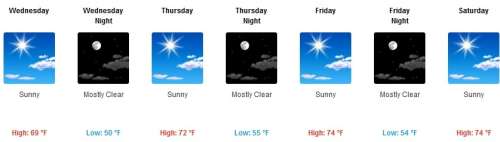
If you didn’t register to attend the 36th Annual ALI-CLE Eminent Domain and Land Valuation Litigation Conference later this week in Palm Springs, California, well then, shame on you!

According to the National Weather Service, while you and the rest of the country is freezing, we’ll be enjoying the balmy desert climes, and discussing the topics we love: eminent domain, redevelopment, relocation, regulatory takings, trial and appeal strategies, doctrinal changes on the horizon, hot topics (border wall, pipelines, wildfires, and flooding), and others. 

Featuring a national faculty (many new to the ALI-CLE dais), and attendees from the entire spectrum of practice, academia, and the bench. 

If you are not joining us, be sure to follow along on the blog (we will post updates daily), and on Twitter (@invcondemnation, @ALI_CLE #EminentDomain2019). And plan on joining us in 2020, when we’ll be in a new city (by

Continue Reading ALI-CLE Palm Springs (72º, Sunny) Here We Come

Pay special attention to Justice Breyer’s questioning of Ms. Knick’s counsel, Dave Breemer. Yes, oral argument is the Court’s time to do with as it wishes, but was Justice Breyer actually trying to get at anything, or just running out the clock with a questions that didn’t seem to have any point. Does he really think that lawyers for municipal governments actually have the type of conversations that he was alluding to? Really? 

Also, if you can’t stream the above, go to the Supreme Court’s audio page for the Knick case and download the sound file directly.  Continue Reading Knick Oral (Re)Argument Recording Available

0116190650b_HDR

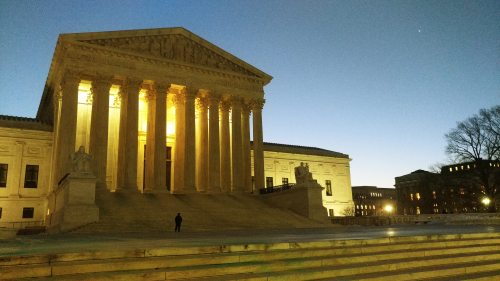
As Professor Gideon Kanner likes to remind us, eminent domain has been characterized as “the dark corner of the law.” We thought back to that phrase when we joined the queue outside of the Supreme Court this very dark (and very cold) morning, for the rehearing in the Knick v. Township of Scott case, this time with a full Court (Justice RBG was not present in the courtroom today, but will take part in the case).  

We soon got in the building, got warm, and got seated along with fellow takings geeks and the general public. 

We’ll have a detailed write-up once the written transcript is released, but for now, here are our initial thoughts. 

  • It was pretty clear right from the outset that the months intervening between October’s argument and now — and the various supplemental briefs and replies that have been filed — have not cleared things


Continue Reading Knick Argument Redux: Dark Corners, And A Lack Of Clear Consensus (Chief Justice Remains The Lynchpin)