


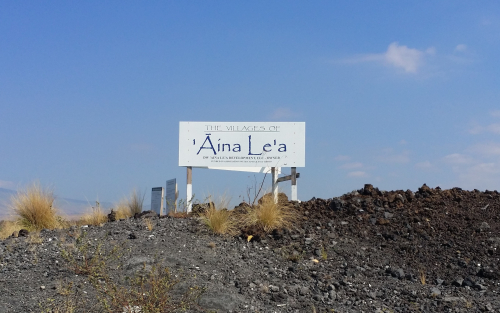
20160114_125445

Here’s the latest in a case we’ve been following, a regulatory takings dispute from the Big Island of Hawaii. 

Last we reported, the jury (after deliberating for a grand total of 15 minutes) held the State of Hawaii Land Use Commission liable for a regulatory taking. But unbeknownst to the jurors, the court had already entered summary judgment for the State that the most the owner could recover as just compensation was nominal damages of $1.

The State then renewed its (denied) motion for summary judgment on liability, or alternatively sought a new trial. In this order, however, the District Court denied the motion, concluding that Aina Lea’s property right was not a “limited” right even though by the time of the case it had sold some of its rights to another entity:

Even taking the State’s characterizations of the record at face value, they support, at

Continue Reading No New Trial In Hawaii Regulatory Takings Case; Next Stop, Ninth Circuit
Clare Trapasso has a Realtor.com piece on what a Justice Kavanaugh could mean for real estate, property, and land use issues, “What Supreme Court Nominee Brett Kavanaugh Could Mean for Real Estate,” where she correctly notes that “while commentators have been scrutinizing Kavanaugh’s record on hot-button topics like abortion and immigration, there’s been little discussion of what a more conservative court could mean for home buyers, sellers, and owners.”

She asked us for input, and here’s what we said:

“The Supreme Court has done some very interesting things on land use law that affect homeowners,” says Robert Thomas, a real estate attorney specializing in land use and eminent domain at the Honolulu-based law firm of Damon Key Leong Kupchak Hastert.

Thomas expects more property-related cases will make their way to the Supreme Court, brought by people hoping that the new bench will increase their odds of a

Continue Reading What Might A Justice Kavanaugh Mean For Takings, Land Use, And Other Issues?

Here’s one that’s been a long time coming (or coming back, more accurately).

In this recently-filed cert petition, the issue is whether an “exaction” imposed by the legislature should be subject to the nexus and rough proportionality requirements of Nollan, Dolan, and Koontz, or is merely subject to rational basis review (i.e., no review at all). 

The last time this issue was presented to the U.S. Supreme Court after the California Supreme Court concluded that an exaction imposed by the City of San Jose wasn’t really and “Exaction,” and was only a land use regulation (as if the label matters), the U.S. Supreme Court declined to consider the issue. Now its back, by way of what looks like a very tight “vehicle” for the Court (the Maryland Court of Appeals decided the issue squarely under federal law). 

Here’s the single Question Presented by Dabbs v. Anne Arundel

Continue Reading New Cert Petition: Legislatively-Imposed Exactions Subject To Nollan-Dolan-Koontz?

Remember that case from earlier this year where the Hawaii Supreme Court held that for purposes of Hawaii’s Due Process Clause, the Sierra Club (any “person,” actually) has a property right in a “clean and healthful environment?”

We asked if that were the case, then what does that “property” right look like? For example, how does the Sierra Club exclude others from this property? And if it is a property right shared by all, it it really a “property” right? 

In Delaware Riverkeeper Network v. FERC, No. 18-5084 (July 10, 2018), the U.S. Court of Appeals addressed that same question, but reached a different result. The court held that the Pennsylvania Constitution’s Environmental Rights Amendment’s guarantee of “clean air, pure water, and to the preservation of the natural, scenic, historic and esthetic [sic] values of the environment” was not a liberty or property interest triggering the Fourteenth Amendment’s due

Continue Reading DC Cir: No Property Right In A Clean And Pure Environment Because No Right To Exclude Others

Here’s a cert petition we’ve been waiting to drop, in a case we’ve been following out of Florida.

In Town of Ponce Inlet v. Pacetta, LLC, No. 5D14-4520 (Fla. Dist. Ct. App. June 16, 2017), the Florida District Court of Appeal reversed a Lucas takings verdict, concluding the case might not even be ripe under the “final decision” prong of Williamson County (the prong not being directly challenged in Knick), and that the owner needed to prove a Penn Central taking, because as a matter of law, the town had not appropriated all economically beneficial use of the land. The court sent the case back down for another view by the trial court about whether the case was ripe, and if it was, for another takings trial.  

The case presents quite a developmental horror story (we all have ’em, don’t we?). Read the petition for a flavor

Continue Reading New Cert Petition: The Other Williamson County Ripeness Test, Intentional Precondemnation Value Depression

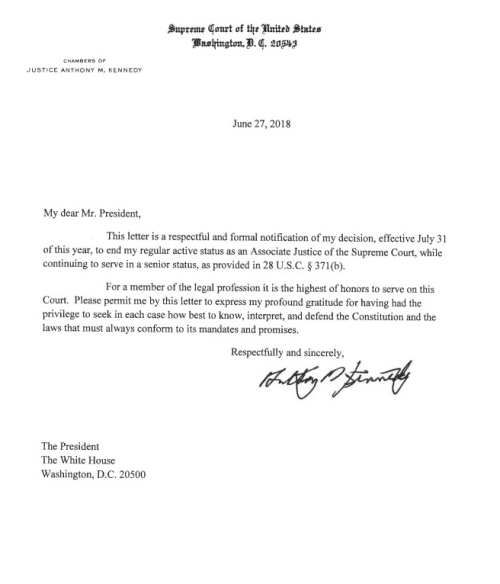
Letter

Some good (Dolan, Lucas), some bad (Kelo, Murr), some … not sure (Lingle).

But now, things get interesting.

Let’s just say that we’re not totally convinced this letter from Justice Kennedy announcing his retirement isn’t “fake news,” since it does not list the four factors he considered in deciding to step down.   Continue Reading Kennedy, J. (ret.)

A short, but published, opinion from the U.S. Court of Appeals for the Fifth Circuit.

In Archbold-Garrett v. New Orleans, No. 17-30692 (June 22, 2018), the court held that the plaintiffs’ Fourth Amendment, Fifth Amendment, and Fourteenth Amendment claims (search and seizure, compensation, and procedural due process) were ripe for federal court, even though the plaintiffs had not sought compensation in a Louisiana court under Louisiana law. 

Quick background: the city demolished a building the plaintiffs owned which they had purchased from the city at a lien sale. The prior owner had racked up a bunch of code enforcement fines, and the city claimed the building was dangerous and should come down. But after the sale to the plaintiffs and days before the demolition, the city cancelled the code enforcement lien. Predictably, the city sent the new owners a bill for the demolition. They sued in federal court, arguing

Continue Reading Fifth Circuit: Williamson County Doesn’t Require District Court Dismiss Due Process Or Takings Claim

A quick check of the Supreme Court’s docket in the Knick v. Township of Scott case shows that no less than 18 amici briefs have been filed top side. Not all of them in support of the Petitioner mind you (two, the briefs of the United States and of the American Planning Association, are in support of neither party, or ask the Court to impose a specific remedy), but whoa, that’s still a lot. 

Shows us how much a case about a very technical aspect of takings law can generate huge participation, reflecting how important the issue of whether a property owner can file a federal takings claim in federal court truly is. 

So you don’t have to read each one (although we encourage you to do so), here’s our quick summary of each: 


Continue Reading Takings Ripeness Of Apparent Interest: Eighteen—18!—Amicus Briefs In Knick. Here’s Your Rundown.

Here’s the Petitioner’s Brief on the Merits in Knick v. Township of Scott, No. 17-647, the case in which the Supreme Court is being asked to revisit our old nemesis, Williamson County‘s “state exhaustion” requirement, a doctrine which tells takings plaintiffs that they cannot press a takings claim against state or local governments until the owner has pursued and lost an inverse condemnation claim in state court.

More on the background of the case (we dubbed it “The Night of the Living Zombie Zoning Inspector” case) here.

Here’s a summary of the brief’s argument:

The jurisdictional pitfalls created by the state litigation requirement are sufficient to condemn the rule as an unworkable and unacceptable ripeness concept. But the doctrine is also deeply flawed at a theoretical level because it rests on an incorrect view of the role of the Just Compensation Clause in takings litigation. Contrary to

Continue Reading Knick Brief On The Merits: Time To Ditch Williamson County‘s State Exhaustion Requirement

In Hunter Landing, LLC v. City of Council Bluffs, No. 16-2138 (May 16, 2018), the Iowa Court of Appeals held that the jury was entitled to be instructed about all takings theories, and not just limited to a Lucas and physical invasion instruction. 

After several of Hunter’s nonconforming buildings were damaged in a flood and the City concluded all but one of them were more than 50% damaged, the City demolished them. Hunter sued, asserting the City “inversely condemned its property by limiting the right of direct access to the property, restricting the highest and best use of the property, removing buildings, removing electrical power to operate a water well system, removing drainage tubes, and removing septic systems.”

The court gave the jury this instruction:

Land-use regulation does not constitute inverse condemnation requiring compensation if it substantially advances a legitimate state interest. There are two exceptions. When the regulation

Continue Reading Iowa App: Regulatory Takings Jury Should Be Instructed About Per Se Takings, And Penn Central Test