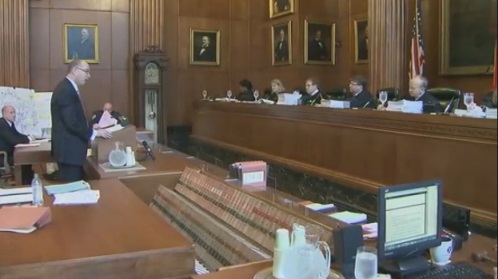
The land use and zoning game can be pretty strange to the uninitiated. If that description includes you, here’s your chance to get initiated. The American Planning Association is sponsoring a webinar about “Rules of the Game: A Framework for Fair and Effective Zoning Hearings,” on Monday, March 7, 2016. Here’s the description:

This webinar will cover the legal requirements for public hearings, including constitutional due process considerations, and provide tips on how to more effectively manage these hearings.

Details here. Thanks to colleague Evan Seeman at RLUIPA Defense blog for the heads up.  Continue Reading Upcoming Webinar: Playing The Zoning Game
20160114_125445

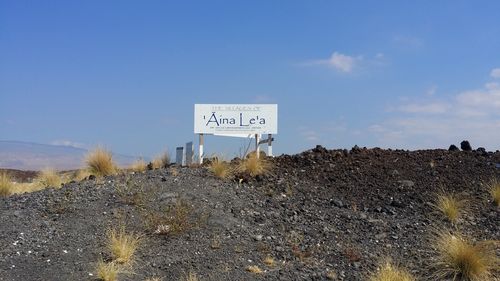
As we noted here (“Latest On The Latest Hawaii Takings Case: Unconstitutional Conditions, Statutes Of Limitations, And Vested Rights“) the U.S. District Court for the District of Hawaii is considering a regulatory takings case (removed by the defendant State of Hawaii from Hawaii courts) involving a stalled development on the Big Island.

At the hearing last month, District Judge Mollway stated she was inclined to grant a part of the State’s motion for summary judgment and deny the rest, and that she would issue a formal ruling by the end of the month. In this order, filed on the last day of an extended February, the court as promised issued its decision. 

Bottom line: the plaintiff’s takings claims (Lucas and Penn Central) are going to trial, the balance of the remaining claims (vested rights, etc.) are gone.

This case came about after a property owner

Continue Reading Hawaii Federal Court: Get Ready For Trial On Lucas And Penn Central Takings Claims

You can really breathe in San Jose
They’ve got a lot of space
There’ll be a place where I can stay.
I was born and raised in San Jose
I’m going back to find some peace of mind in San Jose

Today, in this order after a series of rescheduled considerations that had seen the U.S. Supreme Court repeatedly delay the conference, the Court declined to review the California Supreme Court’s decision in California Building Industry Association v. City of San Jose.

That’s the case in which the California Supreme Court upheld the city’s “affordable housing” requirement against a challenge which asserted that it was an exaction and thus should have been subject to the heightened scrutiny of the unconstitutional conditions doctrine of Nollan, Dolan, and Koontz. The California court disagreed, holding that because the ordinance did not require a developer to give up land, or

Continue Reading Cert Denied In Cal Affordable Housing “Exaction” Case

Worth couldn’t get to his “Section 30 property” except from Evans’ land, or from his own land after fording the 102 River.

So Worth sued Evans in a private condemnation (essentially seeking an easement by necessity). Evans filed a petition alleging that Worth could not use the eminent domain power because Worth had reasonable access to his land by way of crossing the 102 River. “Although the parties agreed there is no public or existing private access to the property, Evans claims Worth could acquire private access to the property across the 102 River by making some minor modifications to the area.”

Too hard, countered Worth. The modifications necessary to make the river crossable “is neither possible nor financially reasonable.”

Unfortunately for Worth, the trial court agreed with Evans. Evans testified that he built a “vented low water crossing” back in 2004 for $15,000. “All you have to

Continue Reading The Water Isn’t That Wide: Parcel Isn’t “Land Locked” For Private Condemnation If You Can Build A River Crossing

Appropos of nothing really, but we’re going to end this work week by recounting for you something we heard during testimony yesterday at a government agency hearing. You land use types will recognize this one, but we think this took the “unilateral agreement” fiction to new heights:

“We couldn’t reach agreement with [the other party] so we couldn’t do a bilateral agreement, so instead we did a unilateral agreement.”

Got it.Continue Reading A Unilateral Agreement

Kirbyncsctarguments2-2016

All of the drama playing out in the North Carolina Supreme Court yesterday as the court heard oral arguments in its review of Kirby v North Carolina Dep’t of Transportation, No. COA14-184 (Feb. 17, 2015) came down — as they often do in these things — to a single question from the bench, and an advocate’s response. At about the 8:40 mark on the the video, this colloquy took place:

Q [Justice Newby]: How would you characterize the benefit, or the purpose of the Map Act. Isn’t it to set in place the value of the property … by restricting improvements or subdivision to keep the ultimate cost of the project at a particular level?

A [NCDOT counsel]: Well that is certainly one aspect or element of the rationale behind the Map Act. The public purpose and benefit can be broadly described as coordinating future road projects with current

Continue Reading NC Supreme Court Hears Arguments In Important Takings Case

Hawaii has recently become the second jurisdiction to create an Environmental Court, a topic which we’re written about earlier (“What You Need To Know About Hawaii’s New Environmental Court“). We’ve asked whether Hawaii also might need a Property Rights Court, too.

Well, it looks like the good people of Guahan (“Guam” in the old parlance) may beat Hawaii to the punch, because according to this story, the Legislature is considering creating a special court to handle “inverse condemnation cases as well as real property boundary disputes and land registration proceedings.” SeeLandowner compensation bill again up for debate.”

The bill would streamline the settlement process of what’s known as “inverse condemnation” – when the government takes land but does not compensate the owner. According to the bill, agencies that took private property would be required to pay for any costs associated with proving

Continue Reading Time For A “Property Court?” Guahan (aka Guam) May Be Getting One

Here’s what we’re reading today:


Continue Reading Tuesday Round-Up: Inversely Condemning Flint, “Well Nigh Conclusive?,” Parcel-As-A-Whole

20160114_125445

Here’s the latest on a takings case that is winding its way through the U.S. District Court in Honolulu. Yes, you read that right: a takings case being litigated in federal court.

Intrigued? Read on. 

We’ve covered this case and the related state court litigation several times here before, so this isn’t entirely unfamiliar ground. This is a case in which a property owner (the developer of the Aina Lea project on the Big Island, just north of the Waikoloa beach area) filed a case in Hawaii state court seeking, among other things, just compensation for the temporary taking of its right to develop its property. The case ended up in federal court because the State of Hawaii Land Use Commission waived the State’s 11th Amendment immunity and removed the case from state court under federal question jurisdiction. 

The litigation began as two lawsuits originating in state court in the

Continue Reading Latest On The Latest Hawaii Takings Case: Unconstitutional Conditions, Statutes Of Limitations, And Vested Rights

Are you a lawyer and need something to do for the next 6-12 months? Want to make a recommendation to the Department of Land and Natural Resources about whether it should issue a Conservation District Use Permit to the Thirty Meter Telescope project on the top of the Big Island’s Mauna Kea? Want your decision gone over with a fine-tooth comb by the DLNR, the Circuit Court, and the Hawaii Supreme Court? Are you a glutton for punishment? If so, you are in luck: the DNLR is looking for someone to serve as the Hearing Officer for the contested case (administrative trial) about the TMT.

This is the remand from the Hawaii Supreme Court, which invalidated the DLNR’s earlier issuance of a CDUP to build the telescope. Here are the official qualifications for the job:

  • Being an attorney licensed to practice law in the State of Hawaiʻi and in good


Continue Reading State Looking For A TMT Hearing Officer – You Know You Want To Do This