We’ve posted a lot lately reporting on the 2016 ALI-CLE Eminent Domain and Land Valuation Litigation Conference, recently held in Austin. We have a couple of more posts for you before we turn to other things. Here is the first, a run-down of the blogs of faculty members, and others we were in the audience. If your blog is missing from this list, email me the link and I will update the post to include it.


Continue Reading The Blog Lineup From The 2016 ALI-CLE Eminent Domain Conference
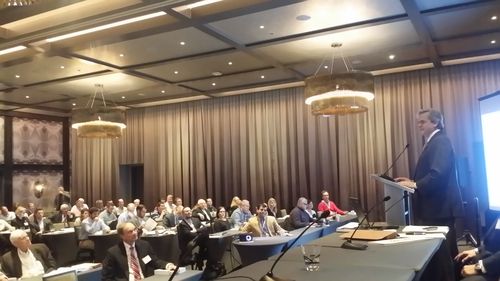
20160129_091552

The second day of the 2016 ALI-CLE Eminent Domain and Land Valuation conference went as well as the first. Here are some highlights:

  • Austin Mayor Steve Adler (pictured above), who is (was?) also an eminent domain lawyer, welcomed us to his city. 
  • We moderated a discussion between Andy Gowder and Dana Berliner about “First Amendment for Fifth Amendment Lawyers: Free Speech, Signs, Defamation, FOIA, and RLUIPA Claims,” how takings lawyers deal with these issues when they crop up in their cases. 
  • One update from that session: at nearly the same time that we were talking about Central Radio, the case about the Norfolk, Virginia “anti-eminent domain” sign, the Fourth Circuit issued its opinion on remand from the U.S. Supreme Court. We’ll have more in a full post soon, but here’s the bottom line for now: no, the City can’t ban the sign (“we hold that the sign


Continue Reading 2016 ALI-CLE Eminent Domain Conference, Austin: Second Day

20160128_091958

20160128_092004

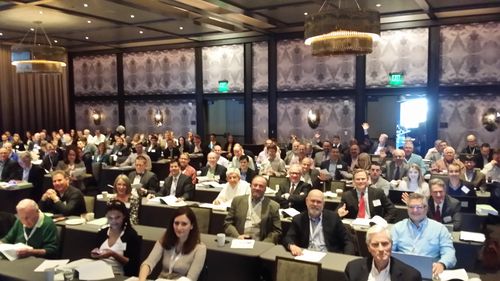
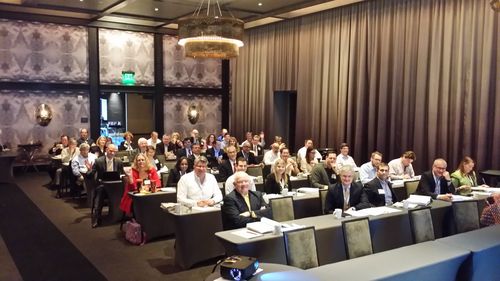
Here’s what’s going on today, the first day of the 33d annual ALI-CLE Eminent Domain and Land Valuation conference in Austin, Texas. We’re at standing room only, with a record number of attendees and our usual nationally renown faculty.

We started off the day with our usual “Eminent Domain Update” session with Amy Brigham Boulris, and as mentioned, the links to the opinions which we discussed are going to be posted in a separate post today. 

We are being followed by a panel on pipeline takings, one of the hot issues nationwide, with Joe Waldo, Matthew Ray, MAI, Thomas Peebles, and Dave Domina.

That session was followed by Professor Ilya Somin, talking about his book, “The Grasping Hand: Kelo v. City of New London and the Limits of Eminent Domain.”  

Above are our annual “proof of life” photos taken from the lectern, to show

Continue Reading ALI-CLE 2016 Eminent Domain Conference, First Day: Standing Room Only, National Expertise

20160126_164326

Austin, Texas, is where we’re at for the next few days, for the 2016 edition of the American Law Institute-CLE Eminent Domain and Land Valuation conference, now in its 33d year. First time we’re in Austin, however, and our registration numbers are looking very good, and we haven’t had this big a turnout in years.

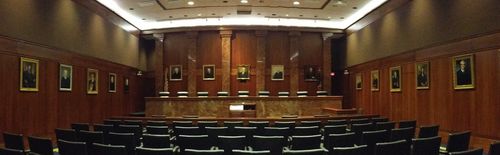
We haven’t been back to Austin in a few years ourselves, so we did what law nerds sometimes do when we go to new towns: visit the local courtroom to check out the scene. So we dropped by the Supreme Court of Texas to take a look. Turns out it was an off-day for the court and it was not in session and the courtroom was locked. But Security suggested that if we asked the Clerk nicely, she might retrieve the key and let us take a look around. And you know what? She did.

Continue Reading ALI-CLE 2016 Eminent Domain Conference: Austin Scouting Report

This morning, the U.S. Supreme Court declined to hear what might have been a major property rights case, California Building Industry Ass’n v. City of San Jose, No. 15-330 (cert. petition filed Oct. 16, 2015). 

In that case, the California Supreme Court upheld the city’s “affordable housing” requirement against a challenge which asserted that it was an exaction and thus should have been subject to the heightened scrutiny of the unconstitutional conditions doctrine of Nollan, Dolan, and Koontz. The California court disagreed, holding that because the ordinance did not require a developer to give up land, or money in lieu of land, it was a mere zoning restriction and subject to the “rational basis” test. 

We filed an amici brief in the case in support of the petitioners.

While we believed there was a good change that SCOTUS was going to hear this case (it

Continue Reading SCOTUS Won’t Review Affordable Housing Exactions And “Inclusionary Zoning” Case

This morning, the Supreme Court agreed to hear another important property rights case, California Building Industry Ass’n v. City of San Jose, No. 15-330 (cert. petition filed Oct. 16, 2015). 

In that case, the California Supreme Court upheld the city’s “affordable housing” requirement against a challenge which asserted that it was an exaction and thus should have been subject to the heightened scrutiny of the unconstitutional conditions doctrine of Nollan, Dolan, and Koontz. The California court disagreed, holding that because the ordinance did not require a developer to give up land, or money in lieu of land, it was a mere zoning restriction and subject to the “rational basis” test. 

We filed an amici brief in the case in support of the petitioners.

SCOTUS on a tear lately, as it recently also agreed to review a case on the “relevant parcel” in regulatory takings.

Continue Reading SCOTUS Takes Another “Takings” Case – Inclusionary Housing And Affordable Housing Exactions On The Menu

A longer one from the California Court of Appeal, but unfortunately, we don’t have the time to digest it in detail. But you really should read Pacific Shores Property Onwers Ass’n v. Dep’t of Fish and Wildlife, No. C070301 (Jan. 20, 2016), in which the court upheld a ruling that the Department of Fish and Wildlife inversely condemned the plaintiffs’ property by a physical taking, when it allowed their land to be flooded.

The interesting part of this decision is the Department’s purpose in allowing the flooding, environmental protection. Local government had historically provided some flood protection to these properties by “breaching” a sandbar when the water reached a certain level. When the Department took over that function, it decreased the level of protection, and although it required the water to reach a higher level before breaching, it didn’t eliminate it completely. The Department argued that it could not

Continue Reading Cal App: Intentionally Flooding Land To Protect The Environment Is A Physical Taking

Good news, takings fans. The U.S. Supreme Court today granted cert, and will review Murr v. Wisconsin, the case in which the Wisconsin Court of Appeals held that two separate parcels owned by the same family must be treated as a single unit for purposes of determining whether there has been a taking. 

The Court agreed to review this Question Presented:

In a regulatory taking case, does the “parcel as a whole” concept as described in Penn Central Transportation Company v. City of New York, 438 U.S. 104, 130-31 (1978), establish a rule that two legally distinct, but commonly owned contiguous parcels, must be combined for takings analysis purposes?

Cert petition posted here. Other cert briefs here.

More to come, naturally. 


Continue Reading SCOTUS To Take On Regulatory Takings Parcel As A Whole Doctrine

ALI-CLE-2016-masthead

We know we’ve been doing the hard sell lately, with multiple posts on the details of the upcoming 2016 Eminent Domain and Land Valuation Litigation / Condemnation 101 Conference, which runs from January 28-30, 2016, in Austin, Texas. And this will be our last pre-conference post, we promise.

But me and my co-planning chairs, Joe Waldo, Jack Sperber, and Andrew Brigham, think we’re put together a very good program that covers a lot of ground, and we really want you to come. This is also the first time the conference has been to Austin, and we’re in a brand new (as in just opened) hotel, so we’re looking forward to this perhaps more than usual.

The full agenda is posted here, but here are highlights:


Continue Reading Final Post: More Reasons To Attend The ALI-CLE Eminent Domain Conference

In a segment called “Are the Courts Crazy?,” (their title, not ours!), Kelii Akina and I chat about the recent decisions in the Thirty Meter Telescope case, the pig hunting as a traditional and customary native Hawaiian practice case, Hawaii’s new Environmental Court, and the challenge to the Hawaiians-only election which is currently being considered by the U.S. Supreme Court (the one in which Dr. Akina is the lead plaintiff). 

And rest assured: we concluded that no, the courts are not crazy. 

Continue Reading Lawtalk: Thirty Meter Telescope, Putting The “Puaa” Back In Ahupuaa, And Oprah Elections