


ALI-CLE-2016-masthead

We’re now only a bit more than two weeks away from the 2016 Eminent Domain and Land Valuation LitigationCondemnation 101 Conference, which runs from January 28-30, 2016, in Austin, Texas. 

As we’ve noted here earlier, we think that this is going to be a fantastic conference that will cover a lot of ground, and the hot topics of the day. Here’s the full agenda for the program. If you are not familiar with the conference or have not attended recently, we’ve undergone some formatting changes lately, but are still bringing the best faculty and topics to bear. Here’s a summary of last year’s San Francisco conference, to give you an idea of how we’ve updated the programs, while keeping the best elements and traditions unchanged.  

This is the first time the conference has been held in Austin, and thus far, the registration figures are doing exceedingly
Continue Reading ALI-CLE Eminent Domain Conference, Austin, TX – Nearly Here, But There’s Still Time To Register

We’ve been tied up with other things the past few days, so haven’t had a chance to do much posting, but here’s something to tide you over, a piece from Florida colleague Jacob Cremer, “Why Exactions Law Should Bring Property Rights Advocates Cheer in the New Year.” 

Land use and takings mavens, rejoice. 

Continue Reading Exactions, Again

Here’s a good one from the Ohio Court of Appeals to start off your 2016.

In State ex rel Greenacres Foundation v. City of Cincinnati, No. C-150038 (Dec. 30, 2015), the court agreed that the City’s failure to issue a demolition permit for the “Gamble House,” which the City claimed was a property worthy of historic preservation but had not yet so designated, was a taking. 

The Gamble House was built by the “Gamble” in Proctor & Gamble, the guy who invented Ivory Soap. But over the years, the house “had been uninhabited since 1961, had suffered extensive water and termite damage, and was infested by mice, birds, raccoons, squirrels, and bats.” So the current owners asked the city for a demolition permit so they could redevelop the property. 

The city said no, and ran the owners through a maze, with several appeals through the usual administrative procedures.

Continue Reading City’s Prohibiting Demolition Of Uninhabitable House So City Could Designate It As Historic, Is A Taking

S062766

Here’s one in which we’ve been waiting for the ball to drop, since we filed an amicus brief in the case. Unfortunately, the result in State of Oregon v. Alderwoods (Oregon), Ltd., No. SC062766 (Dec. 31, 2015) wasn’t as hoped for, but looking for silver linings, was a lot less bad than it could have been.

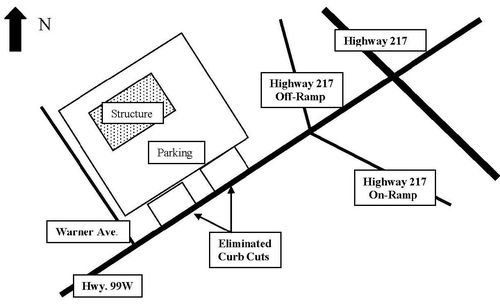
Bottom line is that the Oregon Supreme Court concluded that a property owner does not have a right of direct access to a highway, only a right of reasonable access. Thus, when a project to improve Highway 99 cut off Alderwoods’ driveways on Highway 99, it was not a taking of access because Alderwoods still had access to Highway 99 via a driveway on Warner Avenue:

The above cases demonstrate three governing principles regarding the common-law right of access of a property owner to an abutting public road. First, it is well

Continue Reading Oregon: Cutting Off Direct Highway Access Is OK, Provided Property Isn’t Totally Landlocked

ALI-CLE-2016-masthead

Here’s our second day of highlights from the upcoming American Law Institute-CLE Eminent Domain and Land Valuation Litigation / Condemnation 101 Conference, which will be held in Austin, Texas, from January 28-30, 2016.  

This is the first time the conference has been to Austin, and we’re hoping for a good turnout. Here’s the full agenda for the program. 

  • We especially focused on the ethics component this year, and are looking forward to the session on “Ethics: Tips and Traps for the Eminent Domain Practitioner” at the first plenary session on the second day, taught by Jamila A. Johnson (Schwabe, Williamson & Wyatt, Seattle), Robert B. Neblett, (Jackson Walker L.L.P., Austin). and Joseph V. Sherman (Waldo & Lyle, P.C., Norfolk, Virginia). 
  • Pipeline takings are a huge issue, and we’ve got the lawyers on the very tip of the spear on these cases. “Pipelines and Energy


Continue Reading More On The Upcoming ALI-CLE Eminent Domain Conference (Austin, Jan 28-30, 2016)

Barista’s note: last week, the Hawaii Supreme Court issued a 4-1 ruling in Friends of Makakilo v. D.R. Horton-Schuler Homes, LLC, No. SCAP-13-0002266, holding that the State Land Use Commission was not prohibited from adopting a boundary amendment (akin to a rezoning under Hawaii’s state-heavy land classification scheme) while the process for designating Important Agricultural Lands plays out. 

Earlier this year, on June 25, 2015, court heard oral arguments, and our colleague Paul Schwind, who has guest posted before on this and other important cases, kindly attended the arguments, and had the the following report, which we’re posting while we digest the majority and dissenting opinions.

According to the Judiciary web site summary of the case, here are the issues:

In this case, Appellants Sierra Club and Clayton Hee appeal from the Decision and Order of the Circuit Court of the First Circuit, which dismissed their appeal

Continue Reading Guest Post: HAWSCT Oral Arguments In Hoopili – Is The State Prohibited From Rezoning “Potential” Important Ag Land?

Lawprofs and other academics will tell you that nuisance law is about “negative externalities” and the like, but to us, it has always been about the smell.

Especially when it comes to nuisance claims about farms and ranches. Excessive noise, dust, weird hours. No question, those can be disturbing to neighbors and the public, but man, the smell. As one Indiana court put it about a pig farm, “so long as the human race consumes pork, someone must tolerate the smell.” Shatto v. McNulty, 509 N.E.2d 897, 900 (Ind. App. 1987). 

Deciding who has to tolerate the smells is of the main driving forces behind “right to farm” acts, adopted by many states. These laws generally restrict the ability to bring nuisance lawsuits, or even prohibit them, against farmers and ranchers for the usual “negative externalities” which result from normal farming operations. Hawaii has a right to farm

Continue Reading Pa Supreme Court Loves The Smell Of Biosolids In The Morning: “Normal Agricultural Operation” Under Right To Farm Act For Judge, Not Jury

Here’s one in a land use case we’ve been following, both because it is a huge issue and because our partners Greg Kugle and Matt Evans represent the prevailing land owner.  

All Hawaii land users need to read this, a 4-1 decision (Justice McKenna writing for the majority, with Justice Pollack in in dissent) that involves the LUC, the “Important Agricultural Lands” process, and reclassification. We haven’t yet read it in detail, but here’s the holding:

This appeal involves a long-standing issue in this state: balancing agricultural and urban land uses.

Pursuant to Save Sunset Beach Coalition v. City & County of Honolulu, 102 Hawaii 465, 476, 78 P.3d 1, 12 (2003), Article XI, Section 3, standing alone, is not self-executing; rather, its mandate is carried out through the provisions of Part III. Therefore, the plain language of Article XI, Section 3 does not require the LUC

Continue Reading HAWSCT: Land Use Comm’n Need Not Impose Moratorium Until After “Important Ag Lands” Process Is Complete

We always enjoy reading the briefs filed by the Center for Constitutional Jurisprudence because they reference “first principles” and are usually heavy on the history. We like history. 

This amicus brief, filed by CCJ today in support of the cert petition in Arrigoni Ent., LLC v. Town of Durham, No. 15-631 (cert. petition filed Nov. 10, 2015), is no different. It argues that the “state procedures” prong of Williamson County should be overruled, or at least confirmed as a prudential (and not jurisdictional) requirement:

Apart from the procedural trap that Williamson County creates, Amicus Curiae urges this Court to reexamine the state litigation rule because the requirement is not firmly established in the text of the Takings Clause and it represents a significant departure from the original understanding of the right at issue. Stated succinctly, the Fifth Amendment requires that compensation be paid when the government takes property

Continue Reading Amicus Brief: Williamson County’s State Procedures Requirement Is Ahistorical

Here’s one more amici brief supporting the the cert petition in Arrigoni Ent., LLC v. Town of Durham, No. 15-631 (cert. petition filed Nov. 10, 2015). (Here is the first amicus brief filed today, and here’s the second.) 

This one — on behalf of the National Federation of Independent Business Small Business Legal Center, and lawprof Ilya Somin — we assisted on, with the heavy lifting being undertaken by NFIB’s Luke Wake. Our brief takes a slightly different approach than the others, although we too call for the Court to revisit Williamson County:

Thirty years ago, in Williamson County Regional Planning Commission v. Hamilton Bank, 473 U.S. 172 (1985), this Court pronounced a new and unfounded rule that a property owner must sue in state court in order to ripen a federal takings claim. This marked a radical departure from the historic practice. There

Continue Reading One More Amici Brief (Ours): Time To Ditch Williamson County’s State Procedures Requirement