Here’s the amicus brief we filed last week in a case we’ve been following closely, Cedar Point Nursery v. Hassid, No. 10-104 (cert. petition filed July 29, 2020). 

That’s the case in which a 2-1 Ninth Circuit panel affirmed the dismissal of a complaint for failure to plausibly state a takings claim under Twombly/Iqbal.  At issue was a regulation adopted by California’s Agricultural Labor Relations Board which requires agricultural employees to open their land to labor union organizers. The regulation is framed as protecting the rights of ag employees to “access by union organizers to the premises of an agricultural employer for the purpose of meeting and talking with employees and soliciting their support.”

The panel majority viewed the complaint as alleging a Loretto physical invasion taking, and held the plaintiffs did not plausibly state a claim because they could not allege the invasion
Continue Reading New SCOTUS Amicus: In Physical Invasion Takings, The Duration Of The Occupation Is Less Important Than Interference With The Right to Exclude (John Maynard Keynes Alert!)

Please join us and a panel of expert speakers including our friend and colleague Tony Della Pelle (see the flyer for the complete list), this Thursday, September 10, 2020 at 1pm Eastern Time for the ABA-produced webinar “Governmental Emergency Powers and the Constitutional Implications Arising from Pandemic Orders.”

Free to ABA members, a modest cost for those who are not. Register here.

Here’s the plan:

In the wake of the unprecedented global pandemic, every level of government has taken steps to address the public health crisis. These steps have manifested in orders which impact businesses and individuals alike including quarantine orders, travel restrictions, occupancy limitations, and restrictions on movement. This is the not the first pandemic, nor the first national crisis, faced by the United States. There have been several lawsuits filed challenging the constitutionality of the COVID-19 orders, including challenges based on the right to

Continue Reading This Thursday, Sept 10: “Governmental Emergency Powers and the Constitutional Implications Arising from Pandemic Orders” (Free to ABA Members)

In Hawaii we employ a phrase, “how can?” as a shorthand response when you’re wondering how something can be. It’s easy, short, and more efficient than saying “I’m sorry, I don’t understand how you think you can accomplish this.”

Thus, “how can?” was our first response when the U.S. Department of Health and Human Services’ recently-released agency order establishing a covid response nationwide residential eviction moratorium crossed our desk yesterday. By what authority does the federal government purport to dictate (yes, we’re going to use that word) whether state and local governments (and state courts) allow evictions for not paying rent? We thought that property law was one of those local things?

Just as we were about to dive in, our friend and colleague Tony Della Pelle produced an analysis more cogent than “how can?” In “COVID Eviction Freezes – Who Is Supposed To Pay?,” Tony asks, “Did

Continue Reading How Can? U.S. DHS: National Eviction Moratorium (Roscoe Filburn Could Not Be Reached For Comment)

Here, the ruling of the Massachusetts Superior Court (Suffolk County) in Matorin v. Commonwealth of Massachusetts, No. 2084CV01334 (Aug. 26, 2020).

The short story is that the court denied the plaintiffs’ motion for a preliminary injunction on the grounds that they were not likely to succeed on the merits of their as-applied regulatory takings challenge to the Commonwealth’s series of moratoria on residential evictions. The moratoria allow the property owners to recover possession after expiration, and the tenants are not freed from the eventual obligation to pay rent.

Skip forward to page 17 for the court’s takings analysis (although it would be a shame to not read the intervening pages, because the opinion also deals with the related separation of powers and access-to-the-courts questions). The court first rejected the argument that the moratoria allowed physical occupations (based on Yee), because it isn’t “permanent,” merely temporary. And (also based

Continue Reading Mass Super: State’s Temporary Eviction Moratorium Is Not Likely A Taking

Ainalea

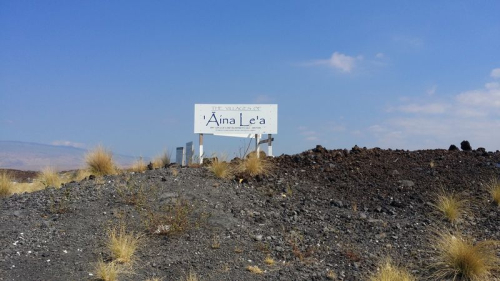
A short while ago, we featured the cert petition in a case from the Big Island that we’ve been following as various pieces of it went up and down through both the state and federal court systems. See “New (Mike Berger) Cert Petition: ‘This case is the proverbial ‘Exhibit A’ of much that is wrong [with takings law].

Now, after the State of Hawaii waived its right to file a BIO, five briefs of amici curiae (including one in which we played a small part) have been filed in support of the petition, urging the Court to review the Ninth Circuit’s opinion. We wrote about the case in a recent issue of the American Planning Association’s magazine. The short story is that a federal jury concluded that the State of Hawaii Land Use Commission took the owner’s property under both a Lucas and a

Continue Reading No Shortage Of Amicus Support For Takings Cert Petition (Lucas and Penn Central!)

Property owners sued the State of Ohio Department of Transportation’s Director (in his official capacity) in federal court after ODOT’s highway project resulted in flooding of their land. They raised two claims: the first, a taking under the Fifth (and Fourteenth) Amendments, and the second a claim under 42 U.S.C. § 1983. The relief sought: a declaration that this is a taking along with just compensation, and damages for the section 1983 violation.

If you are thinking “what about the Eleventh Amendment?,” you would be thinking like the U.S. Court of Appeals for the Sixth Circuit. In Ladd v. Marchbanks, No. 19-4136 (Aug. 20, 2020), the appeals court affirmed the district court’s dismissal of the complaint. No federal court lawsuits against a state is the general rule. There are exceptions, of course, most notably when Congress abrogates the states’ immunity, but the Supreme Court has held that section 1983

Continue Reading Sixth Circuit: You Still Can’t Sue States In Federal Court For Takings, Even After Knick

Although the U.S. Court of Appeals for the Sixth Circuit declined to publish its opinion in Ostipow v. Federspiel, No. 18-2448 (Aug. 18, 2020), we wish it had for a couple of reasons.

First, the name: it just rolls off the tongue, melodiously. “Ostipow versus Federspiel.” We just like how that sounds. Second, the facts: the Ostipows’ son set up a weed growing operation in his mom and dad’s farmhouse, unknown to them (bad son!). the local county Five-O seized the farmhouse and other Ostipow property by civil asset forfeiture (including a 1965 Chevy Nova, the philistines!), and after eight years in state court, in 2016, they finally won a judgment as innocent owners.

Not content with waiting for enforcement of the judgment, “[t]he next day [after the court entered the judgment against the county sheriff], the Ostipows made a written demand to Saginaw County Sheriff William Federspied

Continue Reading CA6: A Wrongful Civil Asset Forfeiture Is Not A Taking

We know you are really busy, takings mavens, you don’t have to read all 47 pages of the California Court of Appeal’s opinion in Martis Camp Community Ass’n v. County of Placer, No. C087759 (Aug. 17, 2020). Instead, you can jump to page 44 for the good stuff.

Short story: the court held that the plaintiff — a community association for a residential subdivision — did not state a valid claim for inverse condemnation for a taking of access rights because it did not own property actually abutting a public road. The court acknowledged that abutting landowners have a property right to access the streets, a “property right in the nature of a private easement in the street upon which the property abuts.” Slip op. at 44.

But the Association did not actually own any of the parcels abutting the street in question. Instead, the Association alleged that it

Continue Reading Cal App: In Order To Have Standing To Raise An Inverse Claim For Loss Of Street Access, The Plaintiff Must Actually Own Property Abutting The Street

IMG_20200817_104808

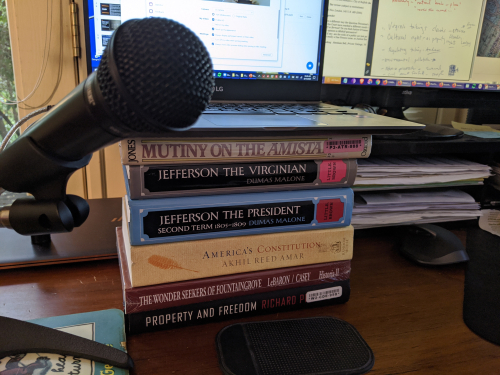
We’re done with our first day of class for the upper-level students at William and Mary. We’re teaching two courses this semester, the usual Eminent Domain and Property Rights, but also Land Use Law. We were set to begin a semester of “hybrid” instruction (some students in the classroom, with distancing in place, while others attend remotely). But late last week, due to some administrative difficulties unrelated to the law school, we had to postpone the in-person part until next week.

So we did our first two classes today via Zoom. It went as well as you might expect. We’ve had to make some adjustments to the usual law classroom, but so far, everyone is taking it in stride and adapting well. We expect to do the same and adjust and readjust as the semester progresses.

What you’re looking at above is our set-up, a remote “podium” on which we

Continue Reading What Books Do You Use For Your Remote Podium?

PENDULUMPODCAST

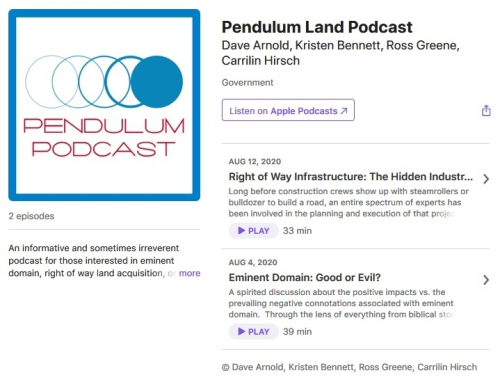
Check this out, a new podcast for your dirt lawyer types to follow, Pendulum Podcast. As it describes itself:

An informative and sometimes irreverent podcast for those interested in eminent domain, right of way land acquisition, or infrastructure development. Topics for discussion frequently include condemnation of real property for public use, just compensation, the Uniform Relocation Act, as well as your hosts’ hot takes on popular culture.

Uniform Relocation Act? Right of way and eminent domain? Be still our hearts.

Two eps are posted so far, “Eminent Domain: Good or Evil?” (embedded above), and “Right of Way Infrastructure: The Hidden Industry. From the Uniform Relocation Act to Eminent Domain.” We’ve listened to the first one, and will soon do so with the second.

Count us as subscribers. Highly recommended you become one as well. Continue Reading New Property/Eminent Domainey Podcast: Pendulum Land Podcast